
Adventure dogs
How to teach a dog an emergency stop
The dog is forty metres ahead on the verge of a gravel road, and a truck is coming up behind you. Recall would bring him down the road toward it. The useful cue is one that pins him to the verge until it passes. That cue is the emergency stop, and it is taught in a quiet hallway long before any road. Here is how to build one.
Last reviewed October 4, 2026
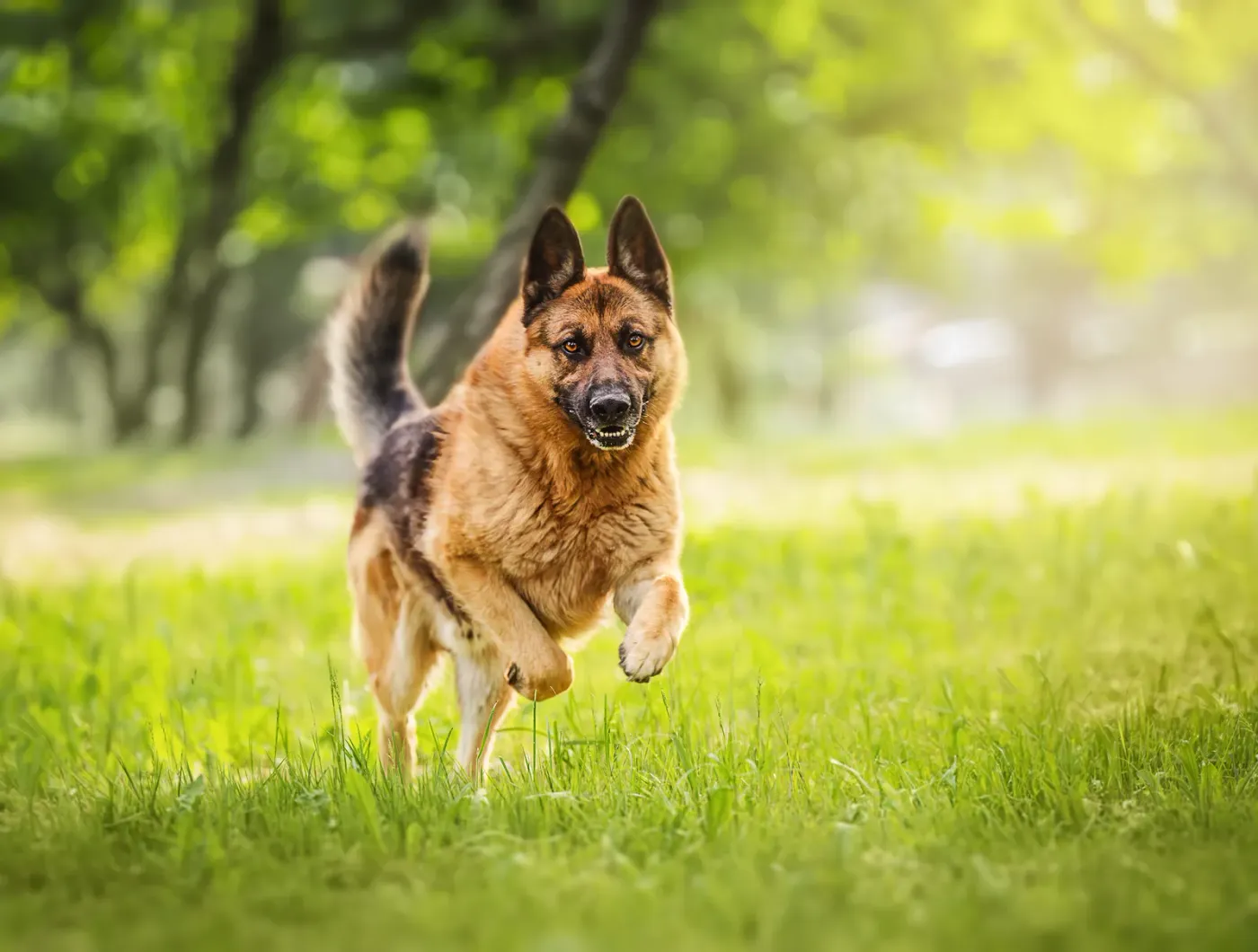
Build it close
Start in a hallway, not at the road.
Pick a word you use for nothing else, short and easy to shout; a fresh word carries no baggage. Start beside the dog in a hallway. Say it once, help him into a down with a hand signal, mark the instant his elbows touch, and pay with the best food you have, a handful of it, on the floor between his paws. When the word alone drops him, retreat a pace and ask again. Earn each new pace with an easy one before it.
Motion is the step that gets skipped. Toss a piece of food a few metres so the dog trots away, and say the word while he is still moving. Mark the stop, walk to him and pay on the spot; never call him in for the reward, or stop quietly becomes come. Then add distraction: another adult walking past, a ball rolling, all on a long line. Every stop gets paid as if it just saved his life, because one day it might.
- One word, nothing else
- Distance in small steps
- Cue while the dog moves
- Pay with the best food
Stop or recall
Stop when the way back is the danger.
Recall is for when the danger is where the dog is and safety is with you: a loose dog approaching, a drop-off he is drifting toward. The stop is for when the danger lies between you, or when moving at all is the problem: a road he would cross to reach you, a hare he has just spotted. If you want him to move, call. If you want him still, stop him. Practise the stop more; it is the one that decays unused.
Proof it on a ten-metre long line, held by an adult: a quiet sports field, a wide trail at a dull hour, then near other dogs. The line means a failed stop costs a reset, never a chase. Two failures in a row means the place is too hard. Keep it sharp by asking once on everyday walks and paying every time, and never follow the word with anything he dislikes, like a bath. A stop that predicts bad news stops working.
Asked and answered
The questions people ask us.
What is emergency stop dog training?
It is teaching one word that freezes a moving dog in place, usually as a down, at whatever distance he happens to be. It is built from a close, well-paid down, then distance, then motion, then distraction, and it is the cue for the moment when calling the dog would bring him through the danger.
How do you teach a dog to stop on command when he is running?
Running is the last layer, not the first. Build the stop standing still, then while he trots a few metres after a tossed treat, then on a long line in open space while he moves faster. A dog who does not stop at a trot is unlikely to stop at a sprint, so stay at the speed where he still succeeds.
Is an emergency down better than a recall?
Neither is better; they do different jobs. Recall moves the dog toward you, which is right when safety is with you, and the stop holds him where he is, which is right when the route back is the danger. A dog with both gives you a choice in the half-second you have.
The dog stops at home but not outside. What went wrong?
Probably nothing, just too big a jump: the word was learned in a quiet hallway and the outdoors is a different exam. Go back to a long line in a dull space, pay the stop like it matters, and add distraction one piece at a time. If the dog is chasing wildlife or traffic hard enough that the stop is not holding, that is the moment for a professional assessment, not more repetitions.
Keep reading
One word that holds
Down at distance is part of Advanced Off-Leash. Book a consultation and we will say whether it fits your dog.
From real owners
Rated 5.0 on Google.
Real Northline dogs