
The method
How to stop leash pulling
Every walk your dog pulls and still gets to the park is a training session for pulling. That is the uncomfortable truth behind loose-leash walking: the dog is not stubborn, it is being paid. This guide covers the mechanics of making pulling worthless, the rewards that make your side the best place on the street, and an honest look at equipment.
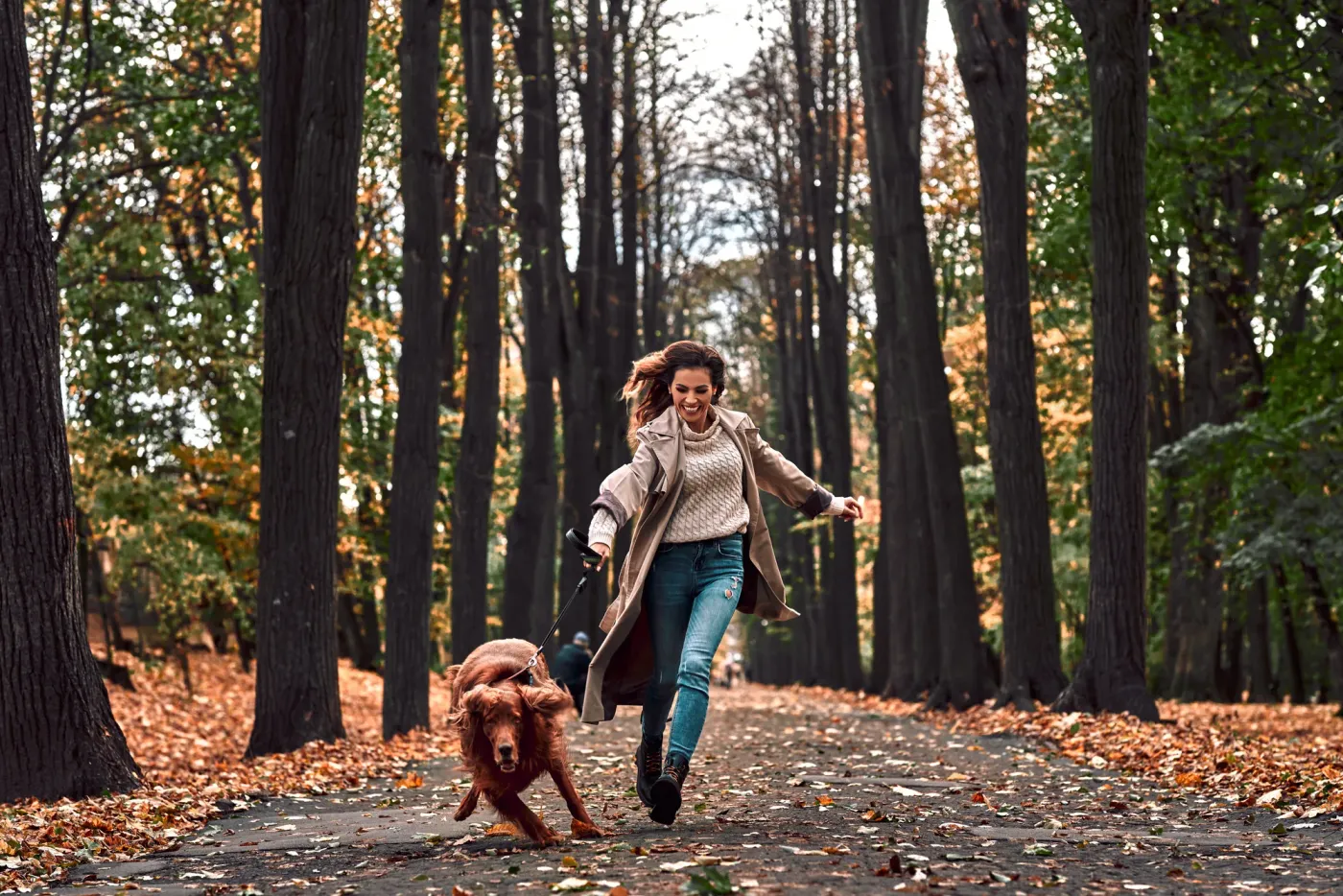
Kill the payoff
Forward motion is the paycheque.
Pick one rule and never break it: a tight leash means the walk stops. Either freeze like a lamp post until the leash slackens, or turn and walk the opposite way so the dog finds itself behind you. Both work; what matters is that forward motion only ever happens on a loose leash. Expect the first few walks to cover half a block. That half block is doing more training than a five-kilometre march ever did.
Next, pay the position you want. Mark and treat every time the dog drifts back to your left leg, generously at first, then at random. Keep sessions to ten minutes, a few times a day. Equipment is a tool, not a fix: a front-clip harness helps a mild puller, a properly fitted slip lead gives clearer communication, and a prong collar, introduced correctly, is fair on a powerful dog that drags people. We teach owners all three.
- Tight leash stops the walk
- Pay your side generously
- Short, frequent sessions
- Equipment introduced properly
Proofing it
From quiet street to real world.
A loose leash in your living room is not a loose leash outside the off-leash park. Build in layers: hallway, driveway, quiet street, busier street, then the sidewalk past the school at bell time. Raise one variable at a time and drop back a level whenever the leash goes tight twice in a row. Squirrels, other dogs, and skateboards are graduate-level material; do not test at that level until the easy levels are boring.
Some pulling problems are bigger than a lunch-break training session. If the dog outweighs the kids, if walks have been shrinking for months, or if your shoulder has opinions, the two-week route makes sense. Our Complete On-Leash Foundations board and train ($1,865 plus GST) builds loose-leash walking, heel, and the basics around everyday distractions, then a handover lesson and lifetime phone and email support keep it working at your end of the leash.
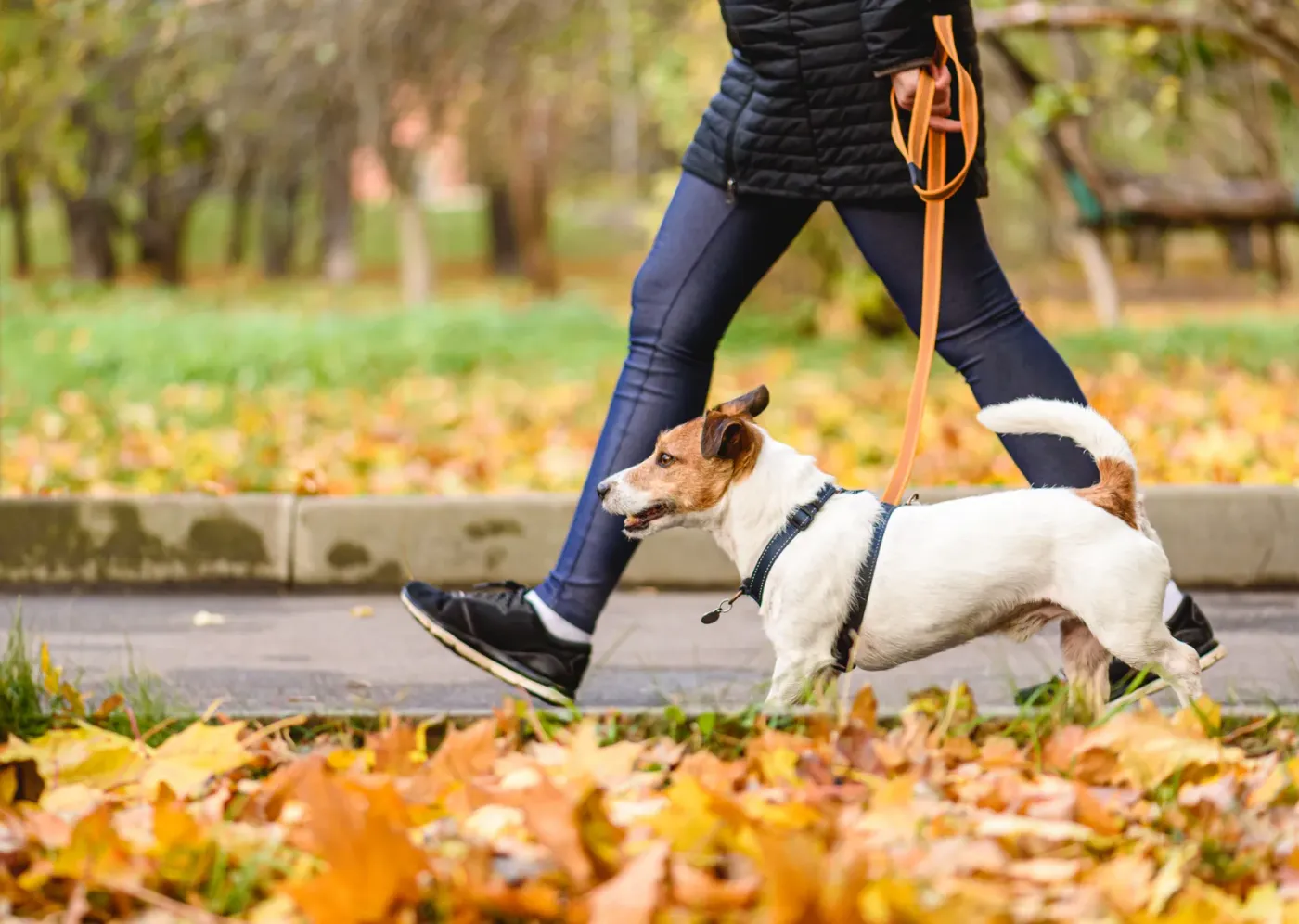
The programs
Walks, fixed professionally.
If the method above needs more hands, these formats rebuild the walk with us.
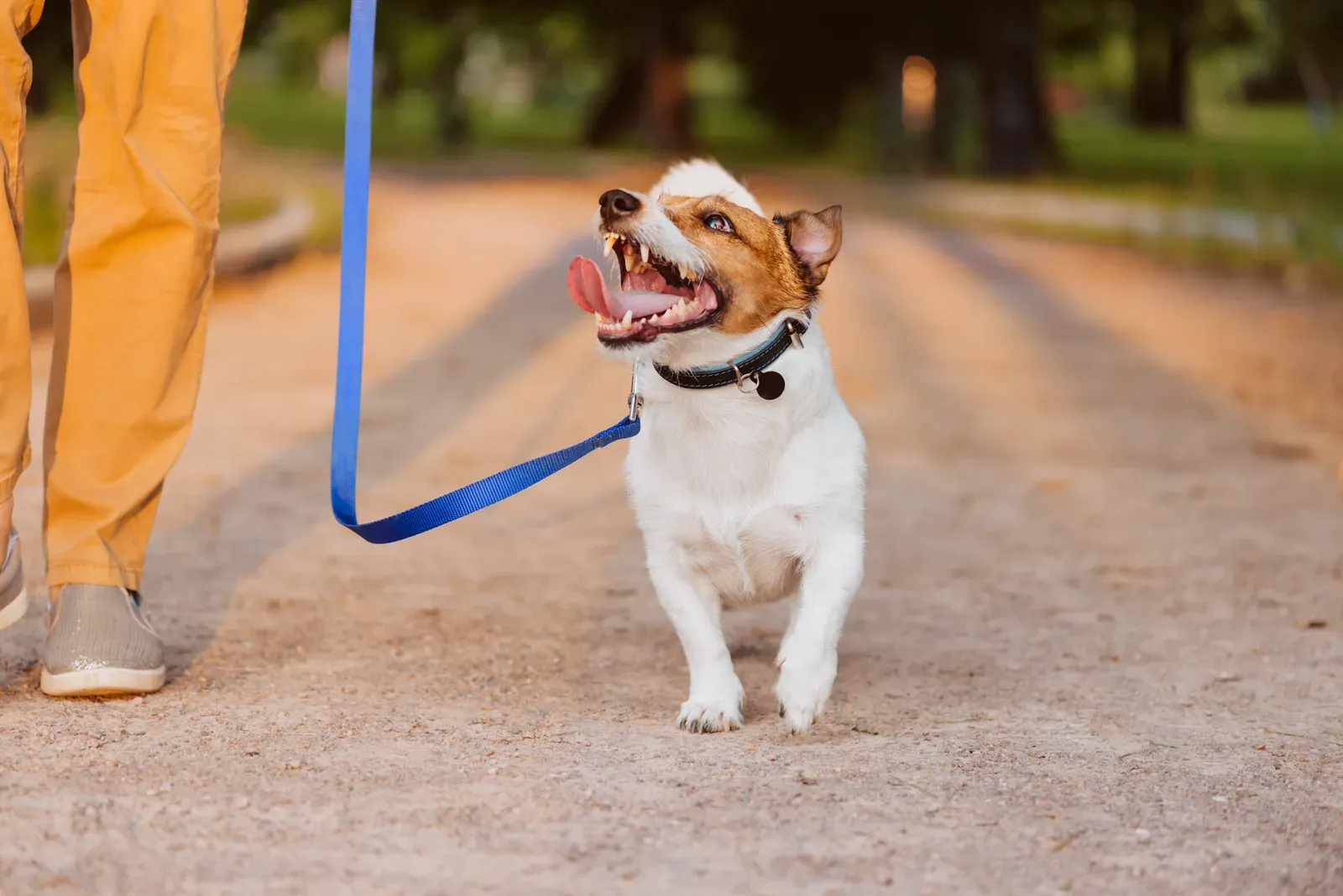
W · One-hour session
Private Training
One-on-one coaching with you on the other end of the leash.
Includes a written weekly plan to work from
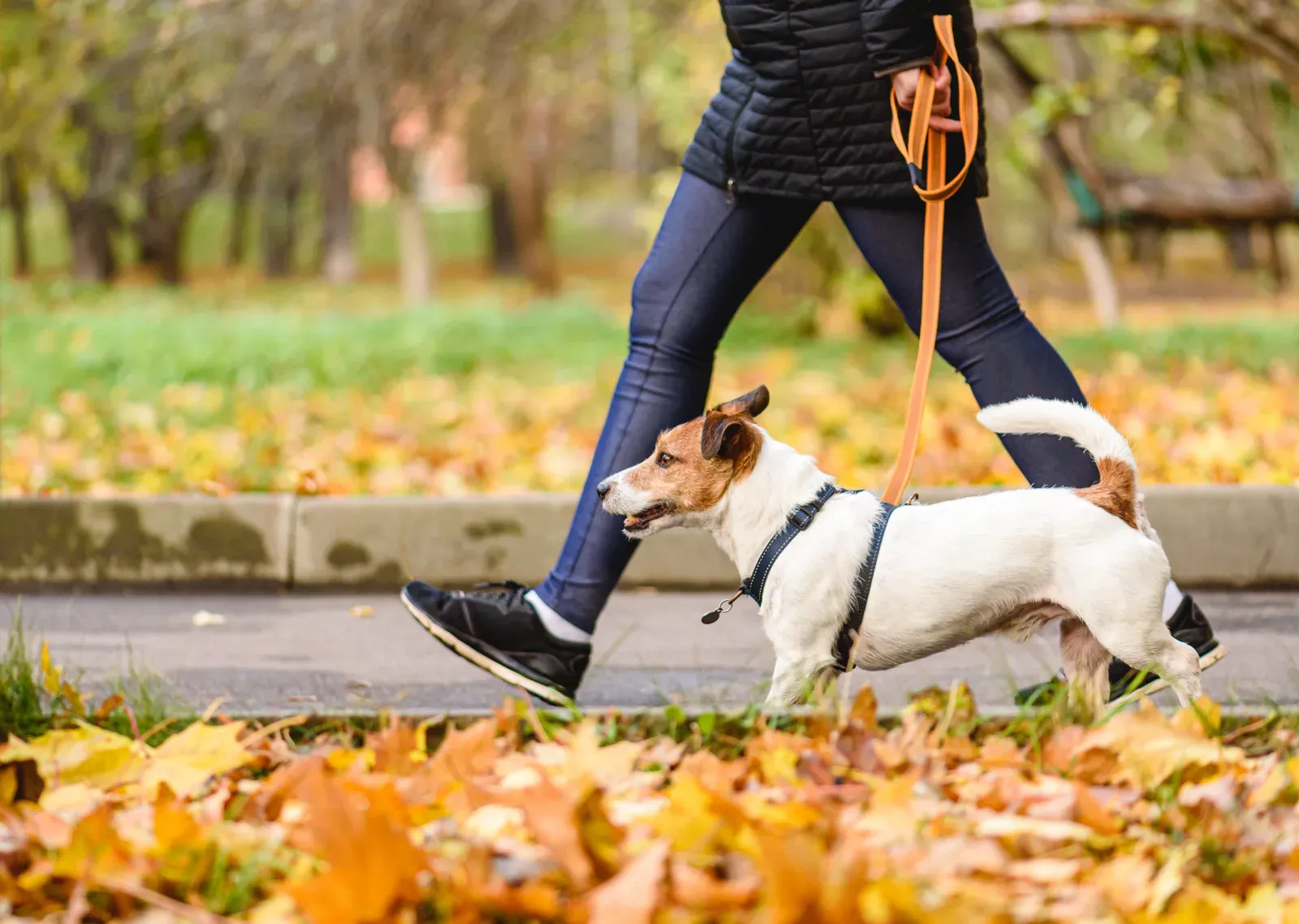
NE · 2-week board & train
On-Leash Foundations
If every walk is a wrestling match, pulling, barking, zig-zagging, this two-week program rebuilds the walk from the ground up with foundational on-leash obedience..
Includes handover lesson, follow-up session, lifetime support, slip lead + collar
Asked and answered
The questions people ask us.
How do I stop my dog from pulling on leash?
Make tightness end the walk, every single time: stop or reverse direction the instant the leash loads up, and reward heavily when the dog comes back to your side. Consistency is the whole method. One person letting the dog drag them to the park undoes everyone else's work.
How do I teach a dog loose leash walking?
Start indoors with no distractions, marking and treating the dog for hanging out at your leg. Add steps, then hallways, then the yard, then quiet streets. Loose leash walking is a position habit built in layers, not a correction applied on a busy sidewalk.
Why does my dog pull on the leash?
Because it works. Dogs walk faster than we do, and every step forward on a tight leash confirms that dragging gets them to the smells sooner. There is also opposition reflex: dogs naturally lean into steady pressure, so constant tension actually invites more pulling.
Do no-pull harnesses actually work?
Front-clip harnesses reduce leverage, which helps with mild pullers, but they manage pulling rather than train it away. Pair any tool with the stop-or-turn method and paid position. A determined dog can pull through anything if pulling still gets rewarded.
Keep reading
Tired of being towed?
Two weeks with us installs loose-leash walking around real distractions, then we teach you to keep it. Book a consultation.
From real owners
Rated 5.0 on Google.
Real Northline dogs