
The method
How to leash train a puppy
Most leash problems in adult dogs were installed in puppyhood, one rehearsed pull at a time. The good news is the reverse is also true. A puppy who learns that the leash predicts good things, and that walking near you pays, grows into a dog who is easy to live with on a sidewalk. Here is how to build that from the first week.
Day one basics
Make the leash boring and you valuable.
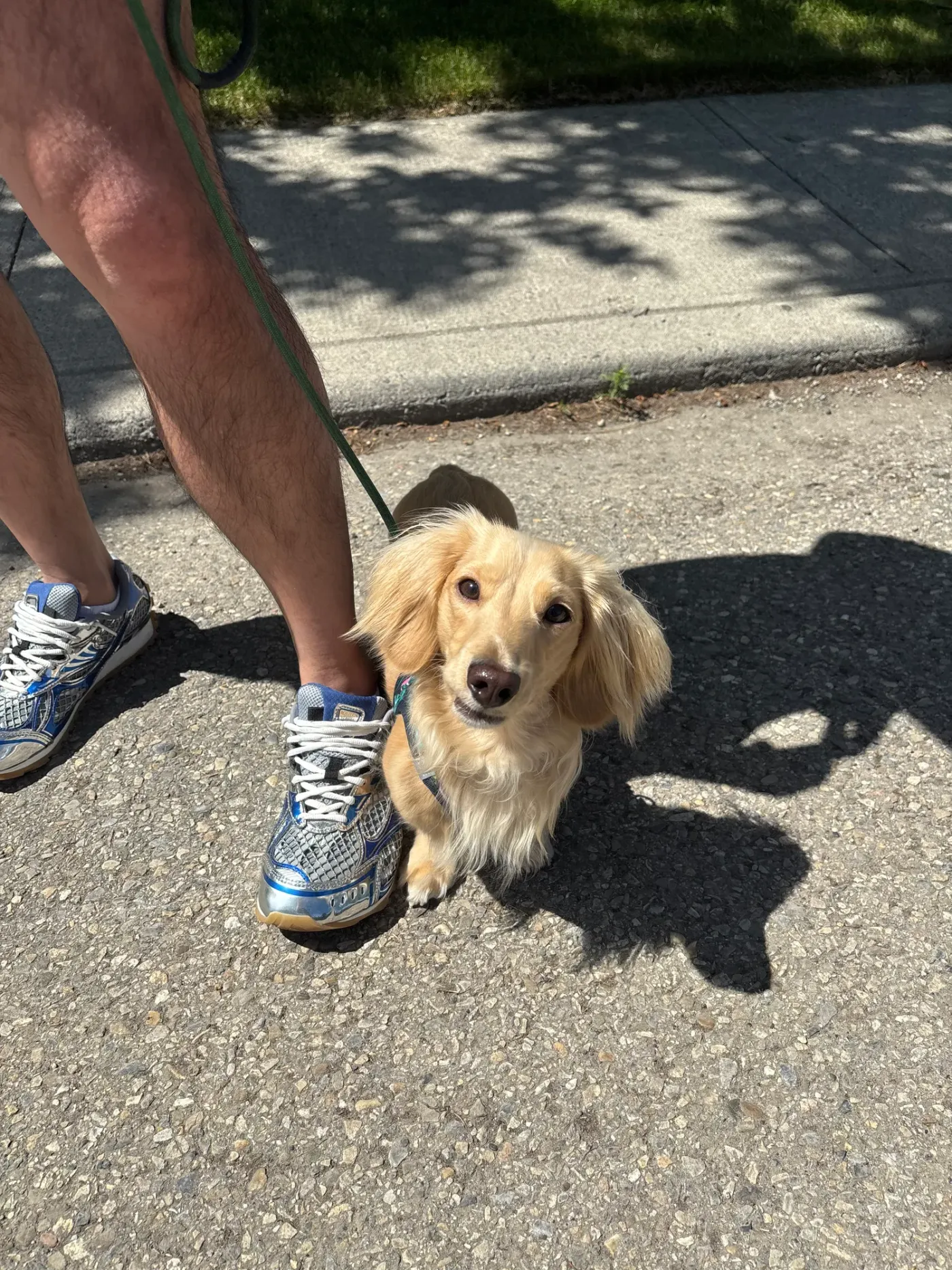
Clip a light leash on your puppy indoors and let them drag it around during play and meals. No hands on it yet. Within a day or two, the leash stops being an event. Next, pick it up and simply follow the puppy for a minute, then reverse the game: walk away, crouch, and pay generously when they catch up. Follow-for-treats teaches the core idea of every good walk, which is that staying with you is profitable.
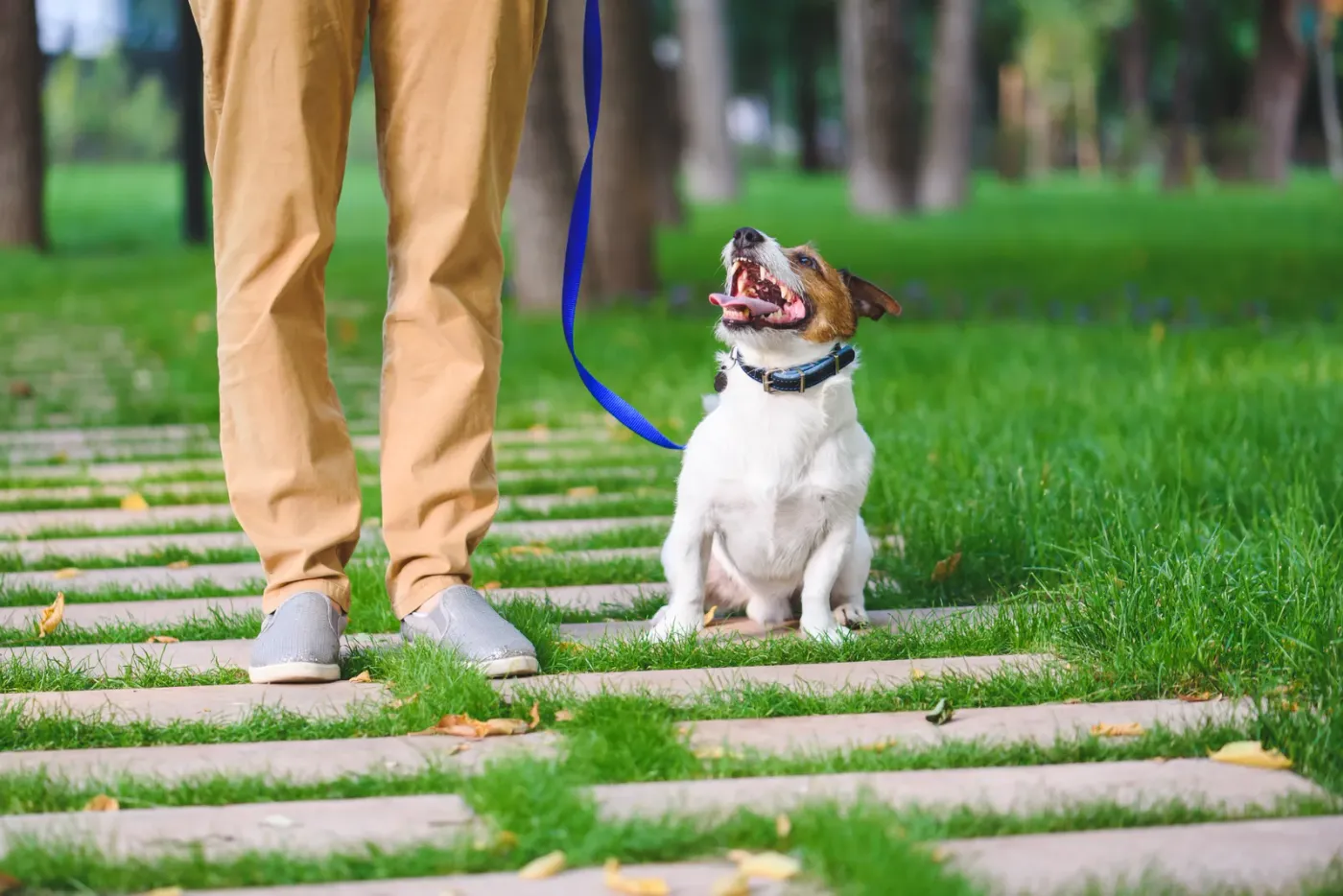
First outings are sniff-walks, not marches. Pick a quiet stretch, let the puppy investigate, and feed a treat beside your left knee every time they drift back to it. You are stamping in a position before pulling ever gets a chance to work. If the leash goes tight, stop, wait for slack, then move again. Ten relaxed minutes beats forty tense ones at this age.
- Drag-line play indoors first
- Follow-me games for treats
- Sniff-walks, not route marches
- Tight leash means we stop
Common snags
The pancake, the crocodile, and the fix.
The pancake puppy flattens on the sidewalk and refuses to move. Do not drag, and do not carry them home every time, or flattening becomes the exit strategy. Instead, wait it out with a loose leash, cheer any weight shift forward, and pay the first step like it won a prize. Often the pancake is just a puppy processing a big world, and thirty patient seconds solves it.
The crocodile grabs the leash and thrashes like it owes them money. Go still, because tug only works with a partner, then trade for a toy they are allowed to bite. Keep two standards from week one: the leash is not a toy, and pulling never moves us forward. If you would rather have the foundation installed while your puppy is young, our Puppy Fundamentals board and train covers leash manners in three weeks.
The programs
Walks, fixed professionally.
If the method above needs more hands, these formats rebuild the walk with us.
W · One-hour session
Private Training
One-on-one coaching with you on the other end of the leash.
Includes a written weekly plan to work from
N · 3-week board & train
Puppy Fundamentals
Your puppy's first months decide the habits of a lifetime.
Includes handover lesson, follow-up session, slip lead + collar
Asked and answered
The questions people ask us.
When should I start leash training a puppy?
As soon as they come home, usually around eight weeks. Start indoors with a dragging line and short follow-me games rather than real walks. By the time vaccinations allow outings, the leash is already old news.
Why does my puppy bite the leash?
Because it wiggles, it is attached to you, and biting it gets a reaction. Stop moving the moment teeth touch the leash, then trade for a legal toy. Chewing habits fade fast once the leash stops being fun to fight.
What do I do when my puppy refuses to walk?
Stand still on a loose leash and wait rather than pulling. Praise any forward movement and reward the first step warmly. If freezing happens on every outing, shorten the walks and move them somewhere quieter while confidence grows.
How long should puppy walks be?
Short. Five to fifteen relaxed minutes of sniffing and rewarded position beats a long march at this age. You are building an opinion about walks, not burning energy.
Keep reading
Want it built right?
Puppy Fundamentals installs leash manners, crate comfort, and early obedience in three weeks. Book a consultation to talk timing.
From real owners
Rated 5.0 on Google.
Real Northline dogs