
The method
How to socialize a reactive dog
The instinct is understandable: your dog struggles with other dogs, so surely it needs more other dogs. It does, but not the way most owners deliver it. Reactive dogs learn about dogs the way nervous swimmers learn about water, gradually, from the shallow end, with someone steady beside them. This page covers the method: thresholds, parallel walks, and the engage-disengage pattern.
The method
Distance first, then parallel motion.
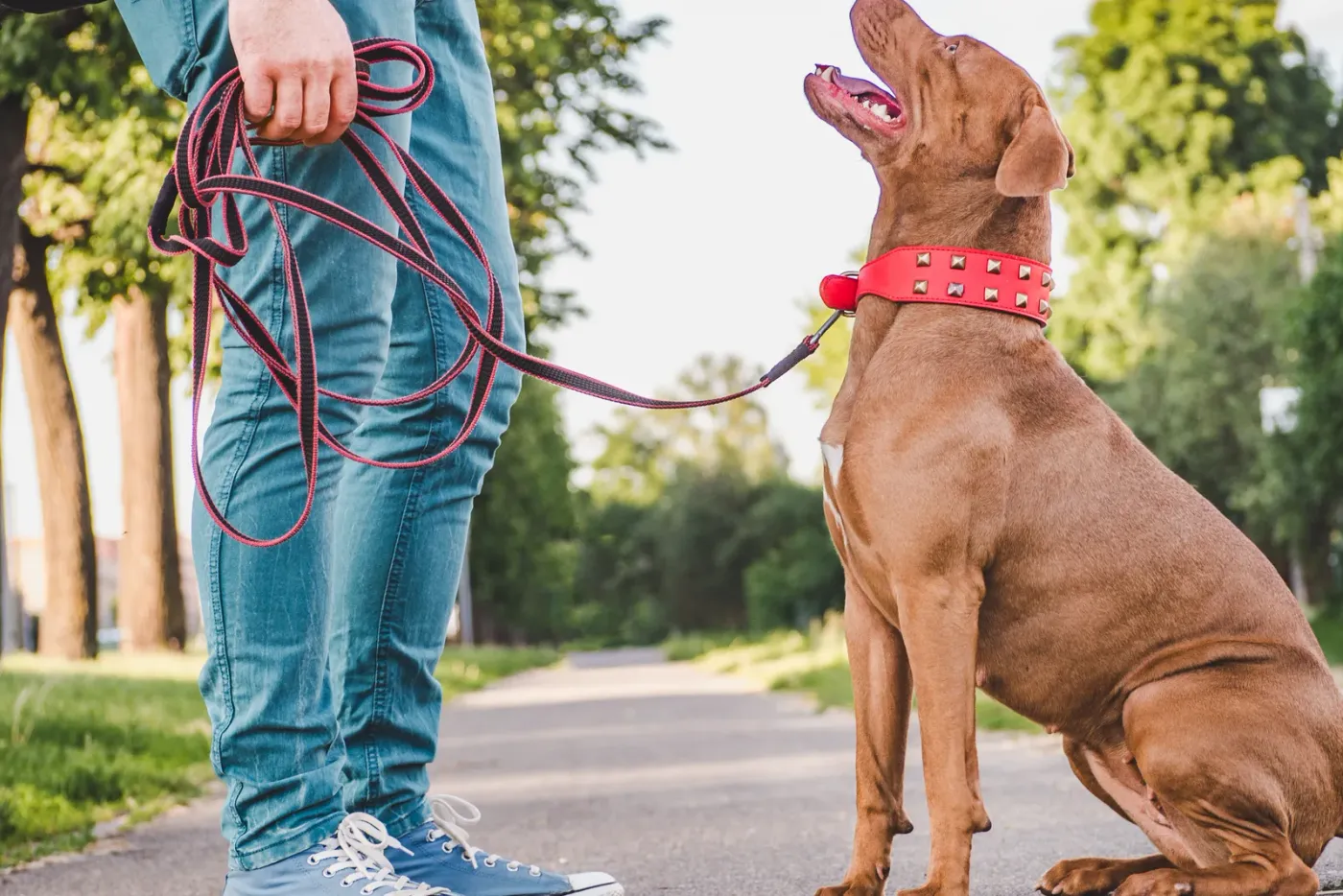
Find the threshold: the distance at which your dog notices another dog but can still eat, think, and look back at you. Work there, not closer. Run the engage-disengage pattern: your dog looks at the other dog, you mark, your dog turns back for the reward. Look, mark, pay. Over sessions the pattern becomes automatic, and the sight of a dog starts predicting a paycheque instead of a fight.
When your dog can watch calmly, add parallel walks. One stable, unbothered dog, both dogs on leash, walking the same direction with a road's width between them. Moving together is easier than facing each other: no stare-down, shared purpose, and the reactive dog gets to practise existing near a dog without an interaction being demanded. Shrink the gap across walks as the body language stays loose. Greetings come last, if they come at all.
- Work below the reaction threshold
- Look, mark, pay, repeat
- Parallel walks before greetings
- One stable dog, not many
Safety and progress
Progress looks boring, and that is good.
Safety rules are not optional. Both dogs leashed, handlers briefed, and never a face-to-face approach on a tight line. Choose helper dogs that genuinely do not care about other dogs; a bouncy adolescent is not a helper. End sessions early, on a success, before either dog is tired. And if your dog has bitten or you cannot read its warnings, bring in a professional before running any of this yourself.
Real progress is undramatic: a glance instead of a lunge, a faster recovery after a surprise, loose leash at a distance that used to mean chaos. It is measured in weeks, and it is easy to stall by pushing one step too far on a good day. When DIY plateaus, structure helps. Our Behaviour Rehab program is a five to six week board and train built for reactivity, customized after a full assessment, with deep owner education so the work transfers home.
The programs
Help built for worried dogs.
Fear work rewards structure and patience. These are the formats that provide both.
W · One-hour session
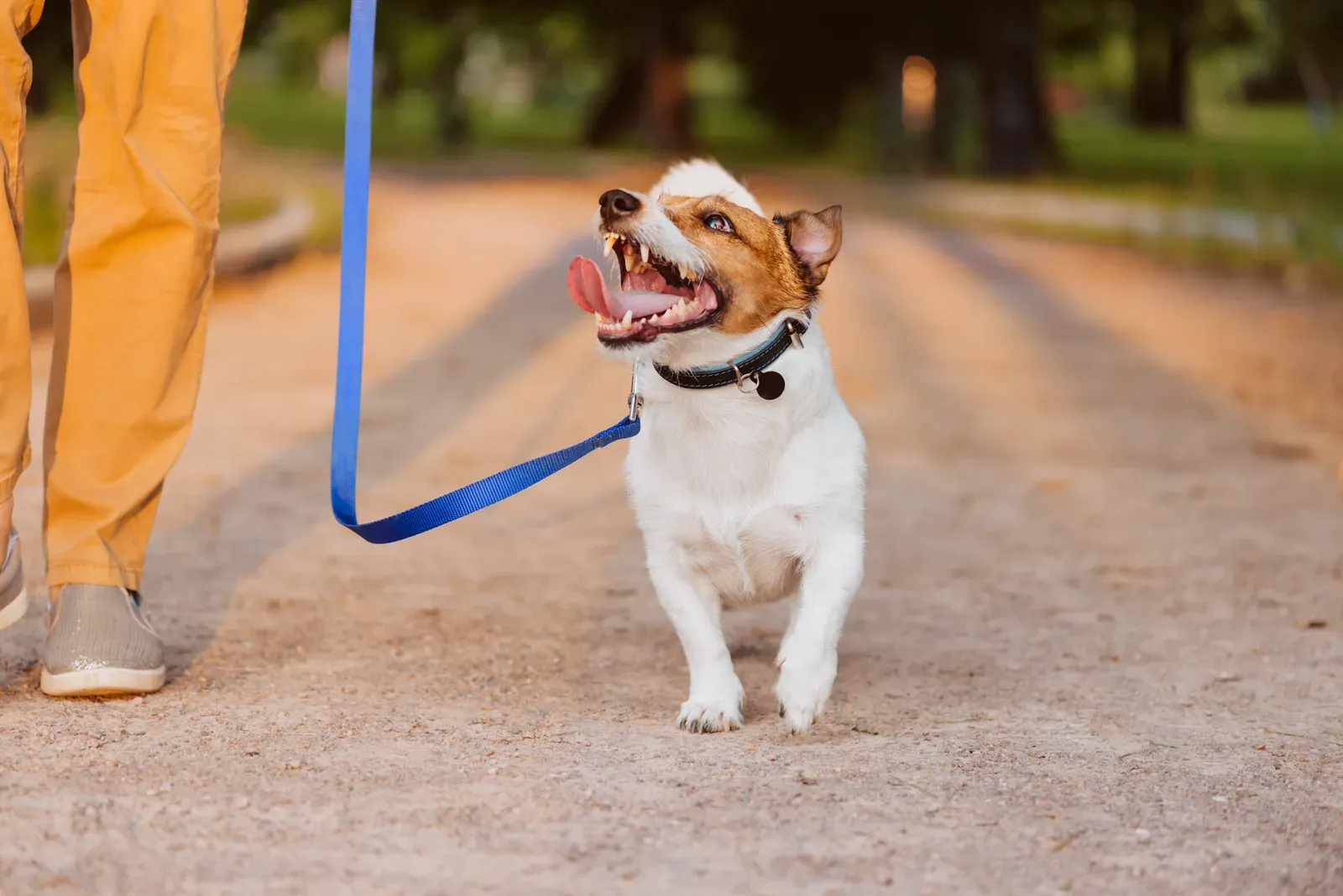
Private Training
One-on-one coaching with you on the other end of the leash.
Includes a written weekly plan to work from
S · 5–6 week board & train
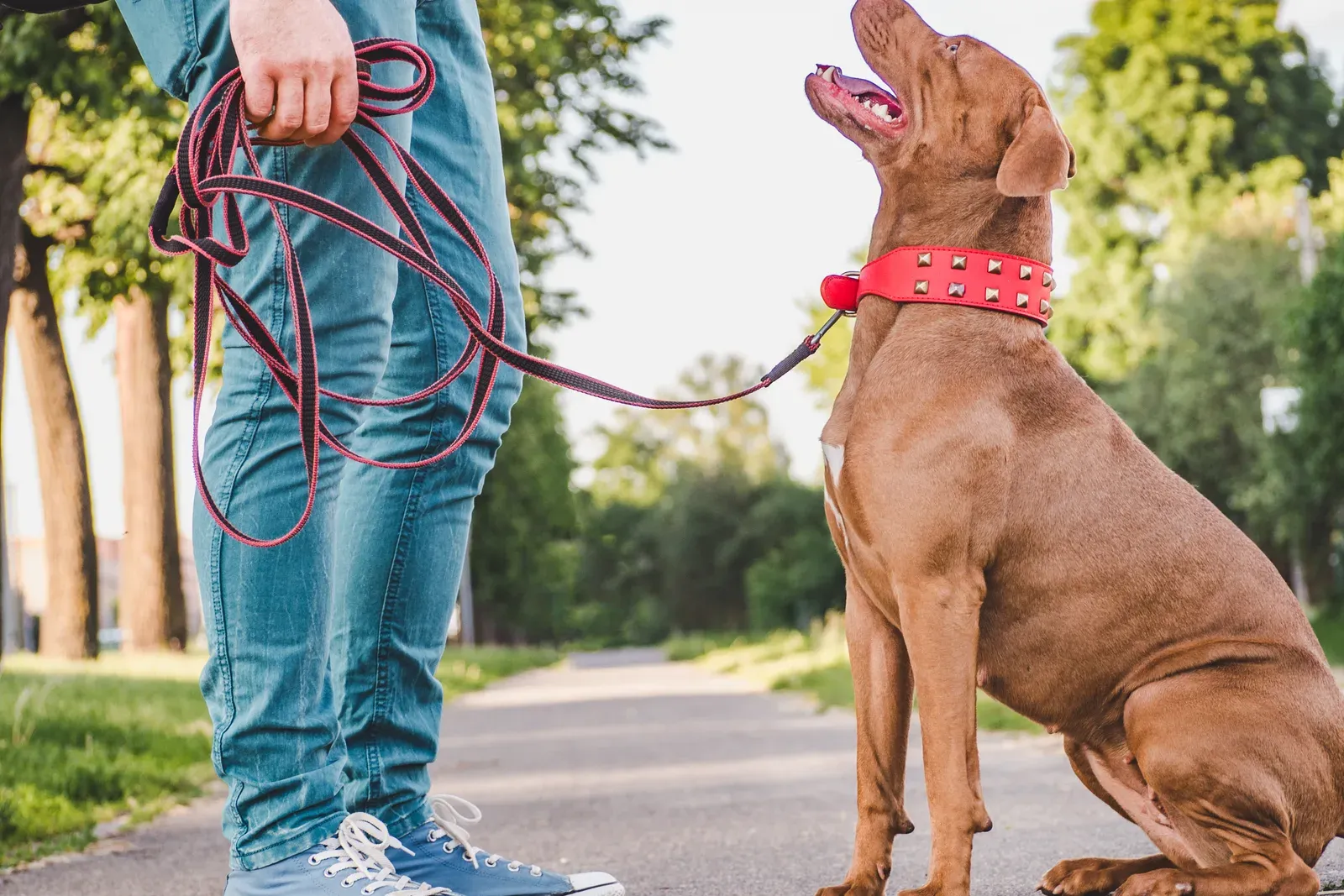
Behaviour Rehab
Kaitlin's specialty, and the work she loves most.
Includes assessment-built plan, 2 follow-ups, deep owner education
Asked and answered
The questions people ask us.
How do I safely socialize a reactive dog?
From a distance, with one calm helper dog and both on leash. Reward your dog for noticing and disengaging, and only close the gap when the body language stays loose. If there is a bite history, work with a professional rather than improvising.
Should my reactive dog meet other dogs?
Eventually, maybe, and briefly. Most reactive dogs need to learn to coexist near dogs long before they greet one, and many are happiest coexisting without greetings at all. Parallel walks deliver most of the benefit with a fraction of the risk.
Can I take my reactive dog to the dog park to get used to dogs?
No. Immersion floods a reactive dog past the point where learning is possible, and every rehearsed explosion makes the next one easier. The park also supplies rude greeters, which confirms exactly what your dog already suspects about dogs.
How long does socializing a reactive dog take?
Longer than anyone wants and faster with structure. The timeline depends on the dog's history, the quality of your helper dogs, and how consistently you work below threshold. An assessment gives you an honest read on your specific dog.
Keep reading
Want a calmer walking partner?
Behaviour Rehab pairs a customized board and train with deep owner education. Book a consultation for an honest assessment.
From real owners
Rated 5.0 on Google.
Real Northline dogs