
Puppy raising
How to introduce a puppy to a leash
A puppy's first leash is a strange thing: a weight on the neck that follows them everywhere and, eventually, a pull they did not choose. Introduce it in the wrong order and many puppies learn to brace, bite the leash or plant their feet. This page goes in a gentler order: drag it, follow it, pay the slack, then take the first walks.
Last reviewed October 4, 2026
Safe gear first
Fit the collar and let the leash drag, supervised.
Before any leash goes on, check the fit. A flat collar or harness should be snug enough that it cannot slip over the head, with room for two fingers underneath, and you will be refitting often as your puppy grows. Choose a light leash with a small clip. Never leave a leash or harness on an unsupervised puppy, because it can snag on furniture or crate bars.
Now let the leash drag indoors for a few minutes while you play, hand-feed part of a meal, or sit on the floor together. Many puppies decide that the thing following them is boring and comes with good stuff. If they chew it, swap in a toy instead of tugging back. If your puppy scratches at the collar constantly or seems sore around the neck, have your vet take a look.
- Two fingers under the collar
- Light leash, small clip
- Drag only while supervised
- Swap a toy for leash-biting
Follow, then lead
Pay the slack before you ever ask for a direction.
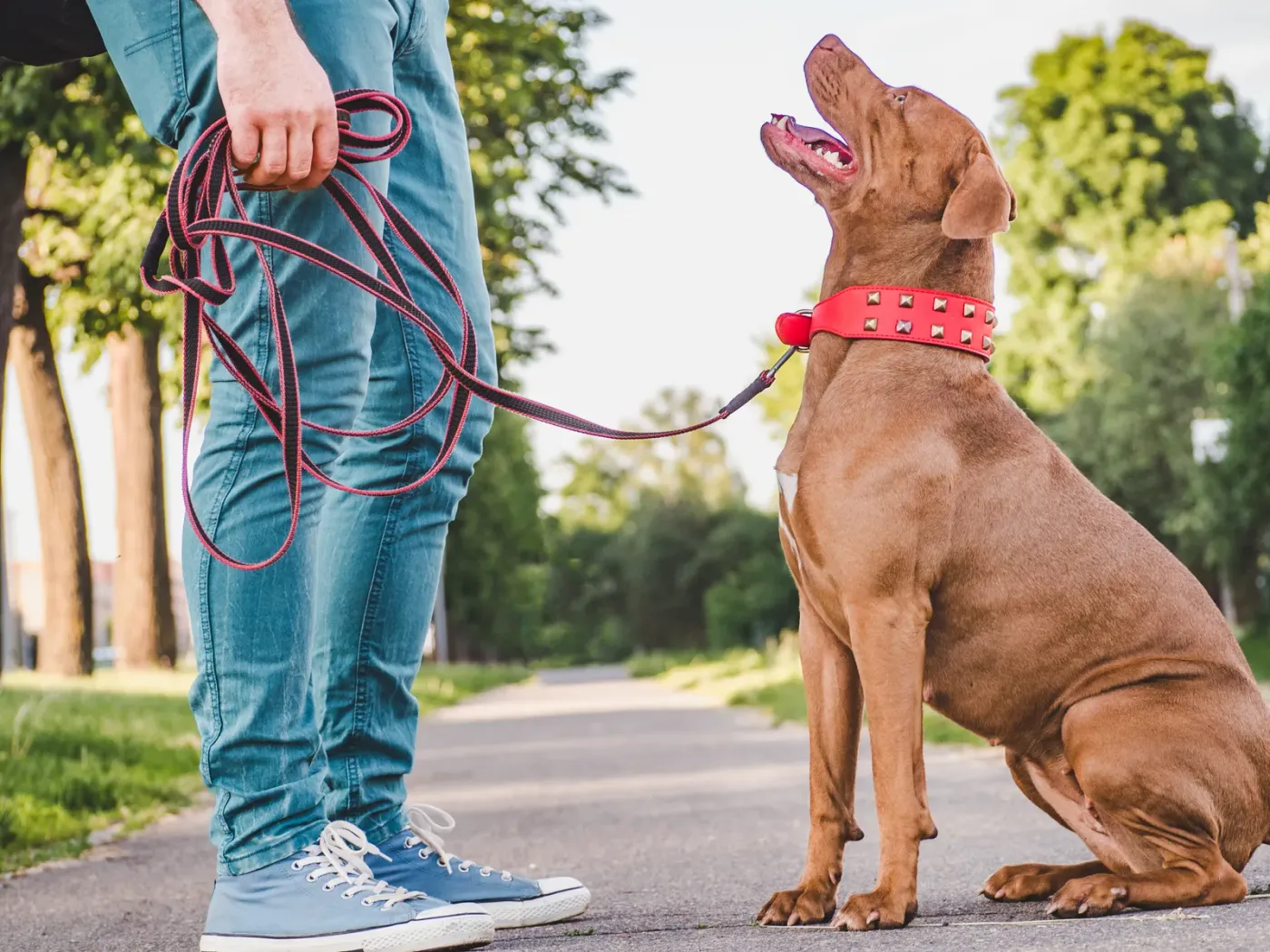
Pick up the end of the leash and simply follow your puppy around a quiet room, keeping your arm soft. Every time the leash hangs in a loose J, mark it and reward next to your leg. Then start walking a step or two away, and reward the moment your puppy moves with you. If they hit the end and pull, stand still, wait for slack, and pay it.
First walks belong in a familiar yard or quiet street, not a busy pathway. Keep them short, let your puppy sniff, and carry more rewards than you think you need. A puppy who plants their feet is often worried, not stubborn, so crouch, wait and make the next step easier rather than dragging. If your puppy panics, shuts down or limps, pause leash work and talk to your vet or a professional.
Asked and answered
The questions people ask us.
When can my puppy go on walks outside?
Your vet is the right person to ask about when public walks suit your puppy. Until then, the drag, follow and slack steps all work indoors or in your own yard.
What if my puppy bites the leash?
Leash-biting is common and often comes from excitement or play. Swap in a tug toy or chew, keep sessions short, and avoid a tug-of-war with the leash itself.
My puppy won't walk on a leash and just sits. What should I do?
Do not drag. Crouch, wait for any forward movement and reward it, and move the session somewhere calmer. If the freezing comes with signs of fear or pain, check with your vet or a professional.
Should I get help with puppy leash training?
If leash work keeps ending in panic or tantrums, a consultation is a sensible next step. Puppy Fundamentals is a 3-week board and train at $2,775 + GST that works on leash manners, crate comfort and new sights and sounds, and includes a slip lead and training collar to take home.
Keep reading
Leash habits from day one
Book a consultation and we will talk through your puppy's age, gear and first walks, then recommend what fits.
From real owners
Rated 5.0 on Google.
Real Northline dogs