The method
How to get a dog to ignore distractions on walks
A dog who lunges at every jogger, squirrel and passing dog is not being stubborn. He is over threshold: too close to something too exciting to think. The fix is not louder corrections or a tighter grip on the leash. It is distance, timing and a habit of checking in that you build deliberately, starting somewhere so quiet it feels almost pointless.
Last reviewed August 26, 2026
The distance game
Start where your dog can still think.
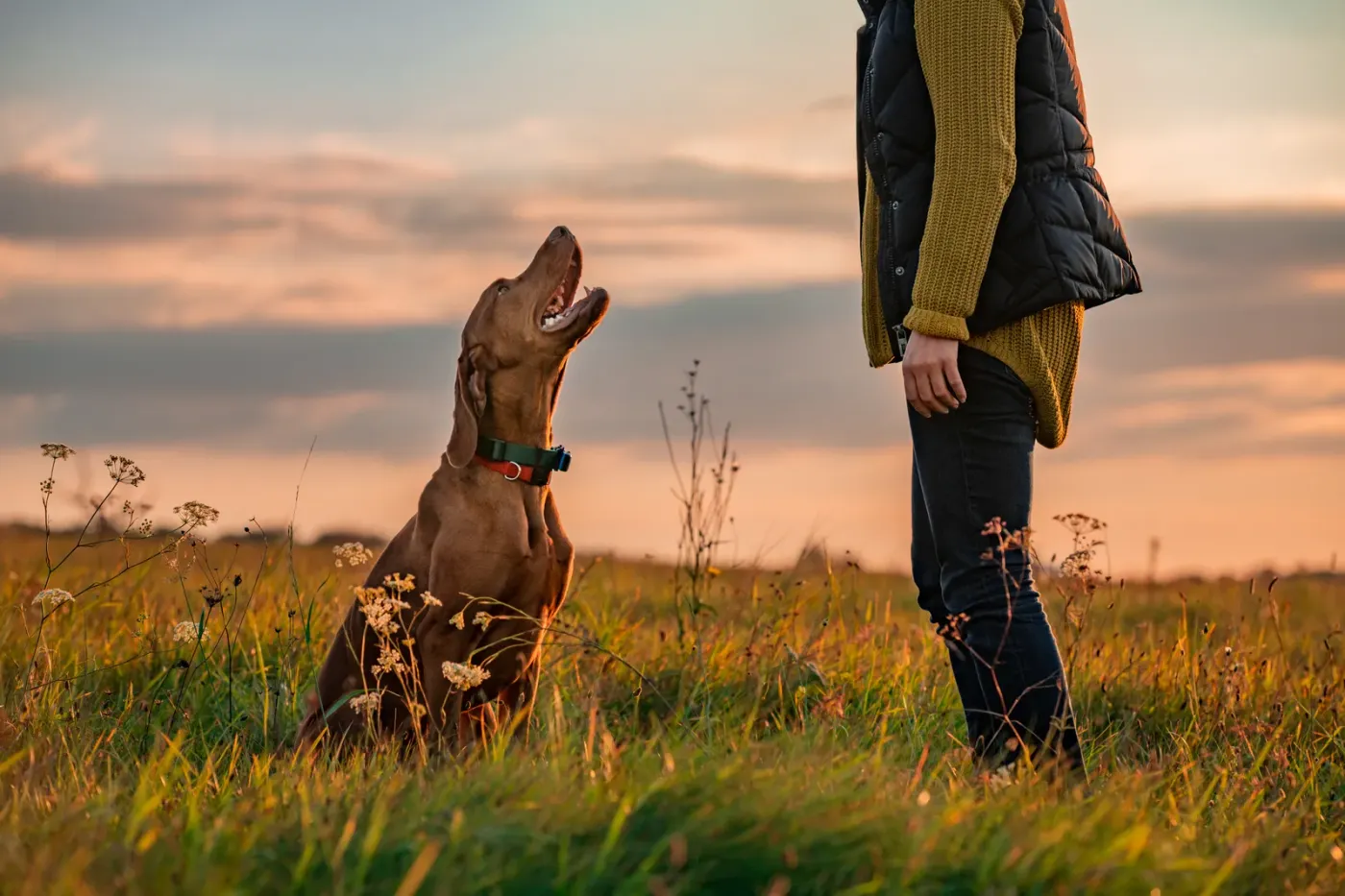
Every dog has a threshold: the distance at which a jogger or another dog is interesting but not overwhelming. Under that line, he can learn. Over it, nothing goes in. Find the line by watching his mouth: if he refuses food he took happily at home, you are too close. Back up until chewing returns, and treat that spot as your classroom for the week.
From there, play engage and disengage. The instant your dog notices the trigger, mark it with a calm yes. When his head swings back to you, pay generously. You are not bribing him to ignore the world; you are teaching him that noticing something and reporting back is the most profitable move he owns. Only when check-ins come fast and loose do you step a few metres closer.
- Find the distance where food works
- Mark the look, pay the look-away
- Close the gap in metres
- End sessions before he tips over
The Calgary ladder
Work up the pathway system one rung at a time.
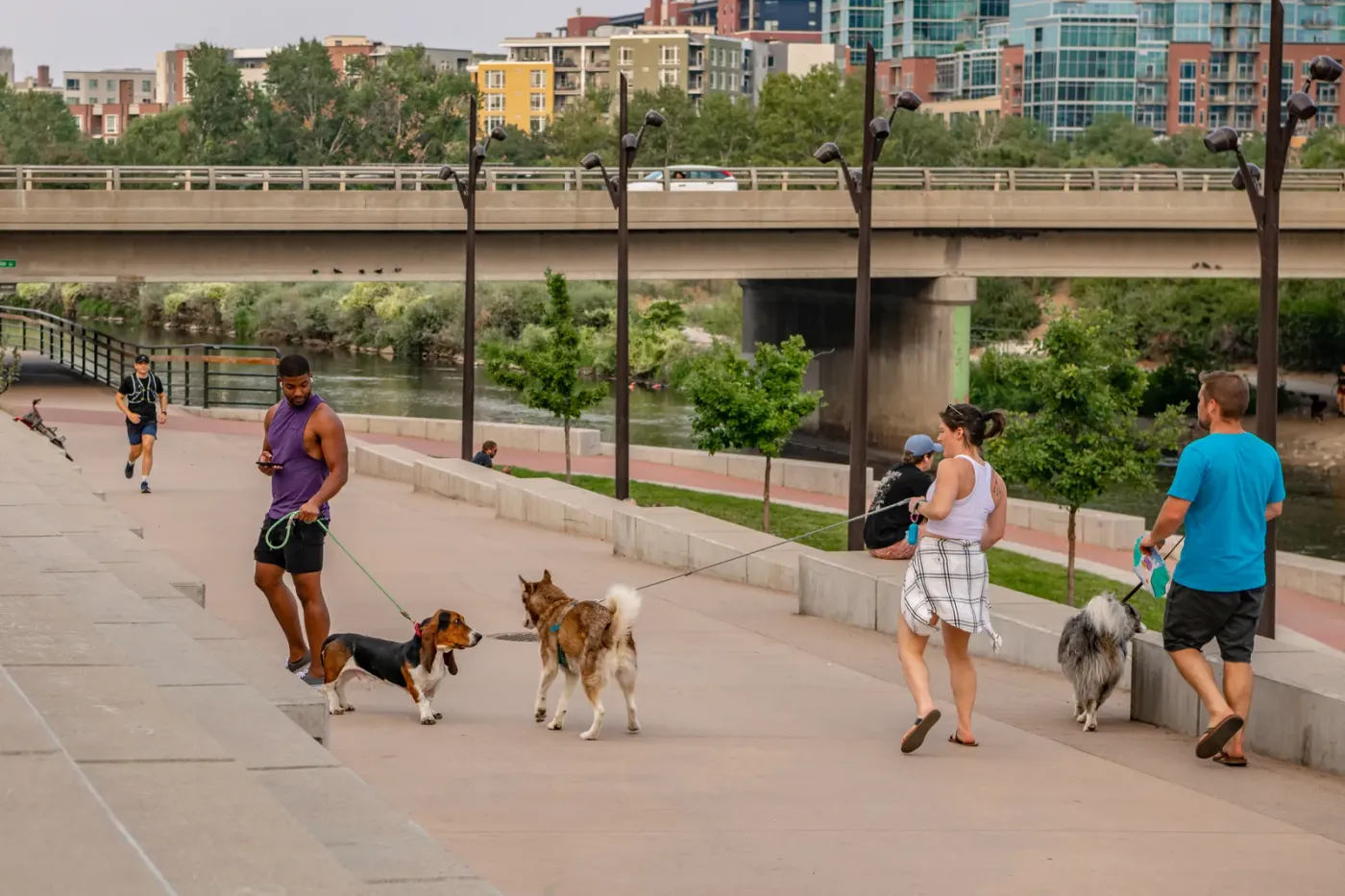
Calgary hands you a ready-made difficulty ladder. Rung one is your own quiet residential street at an off-peak hour. Rung two is a neighbourhood green space with the odd walker. Rung three is a regional pathway on a weekday, where bikes and joggers pass predictably in a line. Each rung should feel boring before you climb, and one clean week beats three chaotic ones.
The top rung is the perimeter of a busy off-leash park such as Sue Higgins, where loose dogs, flying balls and excited greetings stack on top of each other. Work the edges at a distance first; do not march through the middle and hope. If your dog can hold attention there on a Saturday morning, an ordinary sidewalk will feel like a rest day.
The programs
Walks, fixed professionally.
If the method above needs more hands, these formats rebuild the walk with us.
W · One-hour session
Private Training
One-on-one coaching with you on the other end of the leash.
Includes a written weekly plan to work from
NE · 2-week board & train
On-Leash Foundations
If every walk is a wrestling match, pulling, barking, zig-zagging, this two-week program rebuilds the walk from the ground up with foundational on-leash obedience..
Includes handover lesson, follow-up session, lifetime support, slip lead + collar
Asked and answered
The questions people ask us.
How do I get my dog to ignore other dogs on walks?
Add distance until your dog can see the other dog and still take food, then reward every voluntary glance back at you. Cross the street early rather than late; a wide arc is training, not avoidance. Over weeks, the arc shrinks on its own.
How do I get my dog to ignore people on walks?
People are easier than dogs for most pups, so start there. Ask passersby not to greet him, mark the moment he notices someone, and pay him for choosing you instead. If he pulls toward people, stop moving so the pulling never buys the greeting.
How do I train my dog to look at me while walking?
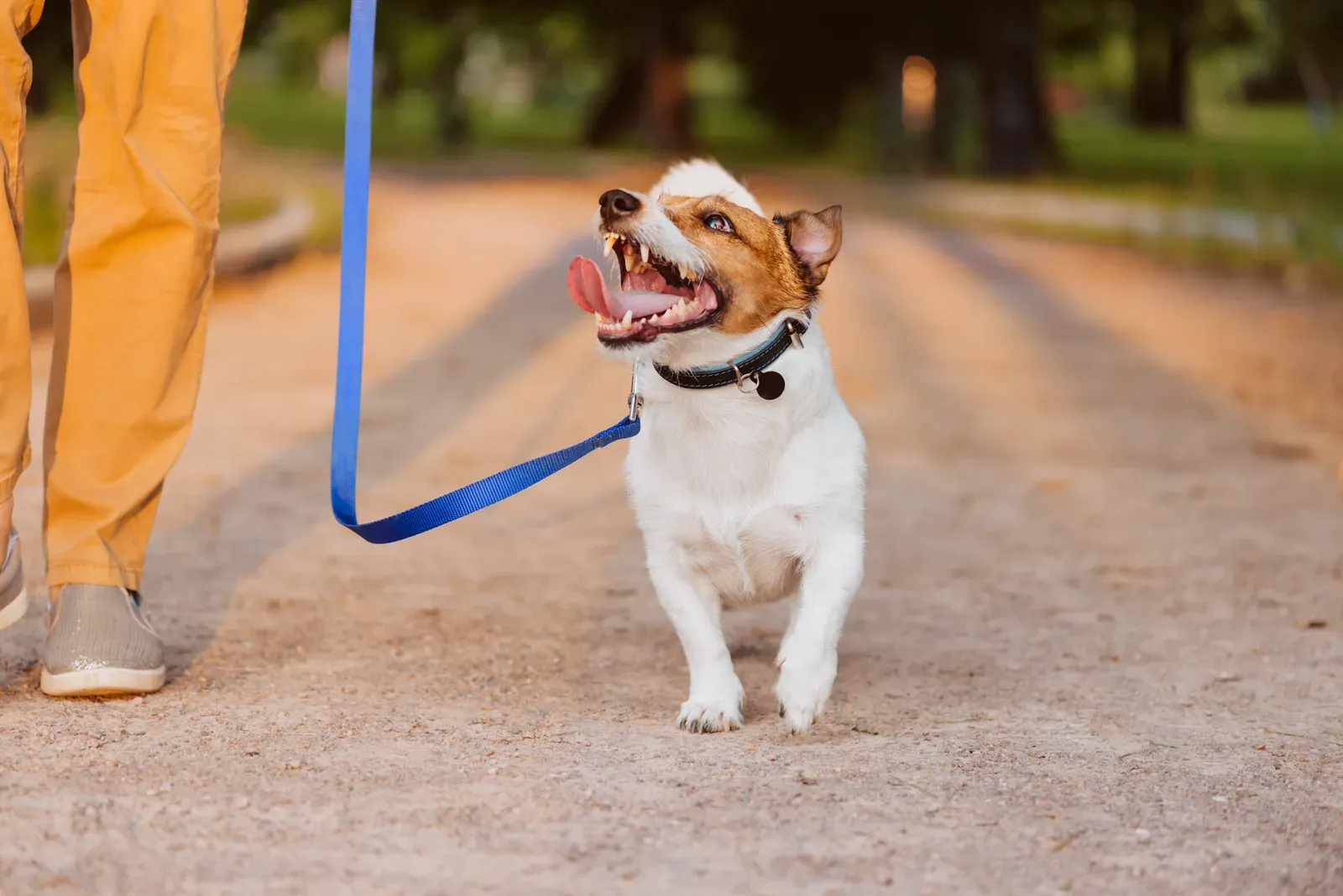
Charge a check-in habit at home first: say his name, pay the head turn, repeat until it is reflexive. On walks, reward every unprompted glance for the first few weeks. Attention you pay for generously early becomes attention you get for nothing later.
How do I get my dog to pay attention to me on walks?
Lower the difficulty until attention is possible, then make yourself worth watching: better food than kibble, changes of direction, a marker the dog trusts. If he cannot focus anywhere outside the house, that is a starting-point problem, not a stubbornness problem, and it is very fixable.
Keep reading
Walks feel like a fight?
We build engagement on real Calgary pathways and hand you the finished habits. Book a consultation.
From real owners
Rated 5.0 on Google.
Real Northline dogs