
The method
How to get a dog to go on walks
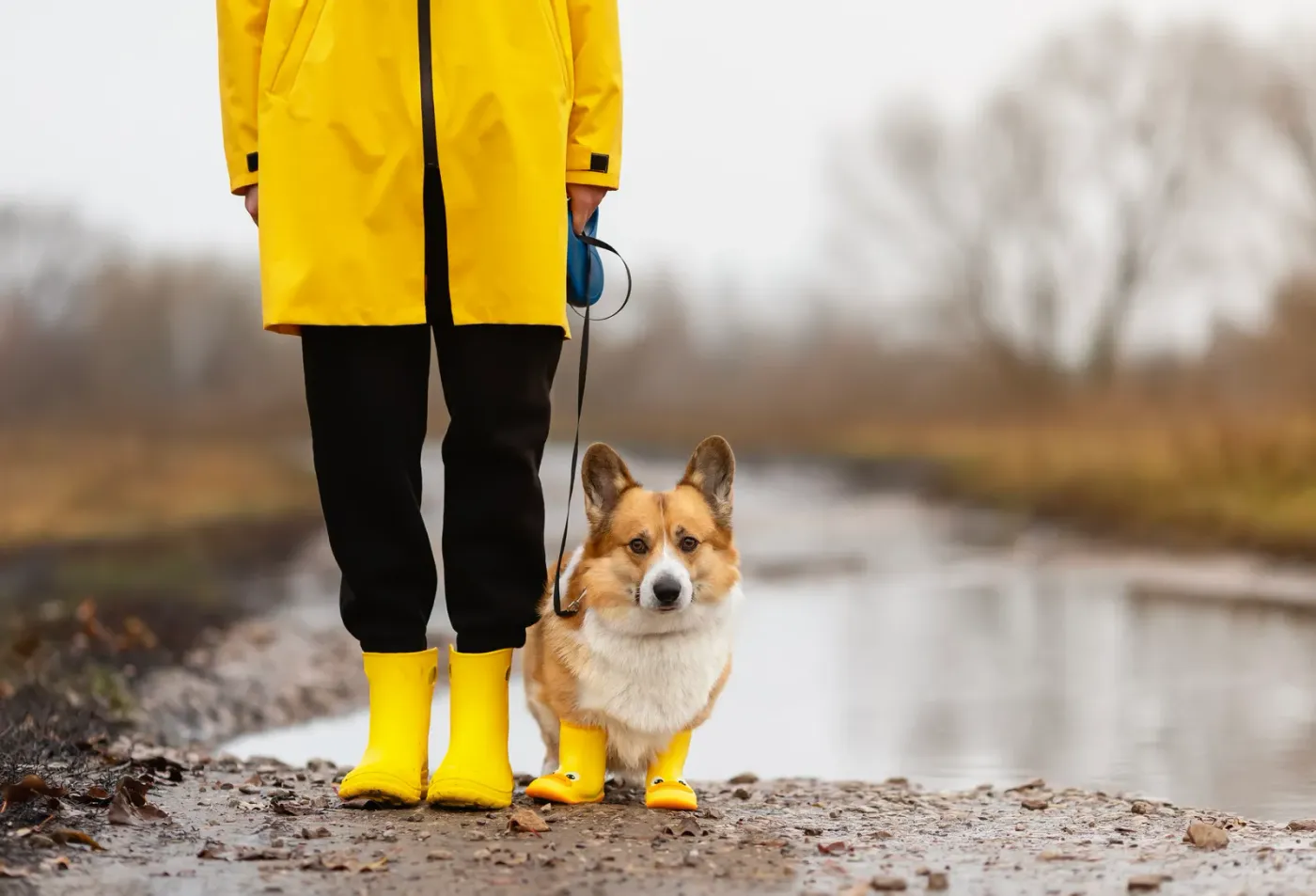
A dog who refuses to walk is answering a question nobody asked him. Something about the outing is wrong: it hurts, it frightens him, the gear pinches, the sidewalk burns or freezes, or a bad moment out there taught him the door leads to trouble. Refusal is information, and once you read it correctly the fix is usually straightforward.
Last reviewed August 26, 2026
Read the refusal
Five reasons dogs refuse, five different fixes.
Work through the list in order. Pain first: arthritis, a torn pad or an ear infection can all surface as sudden reluctance, so a dog who quit walking out of nowhere sees the vet before the trainer. Equipment second: watch him as you pick up the harness. If he flattens or hides, the gear itself has a bad history and needs reintroducing with food, off the clock.
Fear, weather and bad experiences round out the list. A frightened dog needs smaller outings: sit on the front step together, pay calm observation, go back inside before he asks to. Weather refusal means adjusting the conditions, not the dog. And if one specific event soured things, a garbage truck, a loose dog, an icy fall, rebuild on a fresh route so the old movie does not replay.
- Vet check before training
- Reintroduce scary gear with food
- Shrink the walk, then rebuild
- New route after bad experiences
Winter and puppies
Cold paws and planted puppies get separate plans.
Calgary winters give dogs honest reasons to refuse. Ice-melt salt stings bare pads, wind chill bites short coats, and a deep freeze can make a sit at the corner genuinely painful. Fix the conditions: boots or paw balm, a proper coat for thin-coated dogs, shorter outings at the warmest part of the day, and indoor games on the worst days. A chinook week is for rebuilding mileage.
The puppy who plants is a different animal. The world is brand new, his legs are short, and dragging him teaches him the leash means losing. Instead, stop, relax the leash, and wait him out; pay any forward step, and let him sniff his way along at glacier speed. Ten minutes of confident exploring builds a better walker than forty minutes of towing, and the planting phase passes faster when nobody fights it.
The programs
Walks, fixed professionally.
If the method above needs more hands, these formats rebuild the walk with us.
W · One-hour session
Private Training
One-on-one coaching with you on the other end of the leash.
Includes a written weekly plan to work from
NE · 2-week board & train
On-Leash Foundations
If every walk is a wrestling match, pulling, barking, zig-zagging, this two-week program rebuilds the walk from the ground up with foundational on-leash obedience..
Includes handover lesson, follow-up session, lifetime support, slip lead + collar
Asked and answered
The questions people ask us.
How do I get my dog to walk?
Diagnose before you train: vet check for pain, gear check for discomfort, then assume fear and make the outing smaller. Reward willing movement and stop while he is still keen. Most refusers restart within a couple of weeks once the real cause is addressed.
How do I train a dog to walk on a leash from scratch?
Start indoors where nothing competes with you: clip the leash on, wander the hallway, pay him for coming along. Move to the yard, then the block. A dog who has only ever won on leash has no reason to plant.
How do I train my dog to jog with me?
Wait until he walks politely first, since a puller at walking speed becomes a hazard at running speed. Ask your vet before running a young dog, because growing joints need protection. Then build distance gradually with warm-up walking on either end.
How do I train my dog to run with me?
Teach one side and stick to it, keep early runs short with sniff breaks, and watch for lagging, which usually means tired or sore, not stubborn. Skip hot afternoons and icy sidewalks. A dog who finishes a run still jaunty is a dog who will want the next one.
Keep reading
Walks stalling at the door?
We find the reason behind the refusal and rebuild the walk step by step. Book a consultation.
From real owners
Rated 5.0 on Google.
Real Northline dogs