
Adventure dogs
Hiking with a reactive dog
A trail can be the kindest place a reactive dog goes all week: space to breathe, room to move off, nothing coming at them from behind a parked car. It can also be the worst, with blind corners, narrow switchbacks and other people's dogs arriving at speed with no owner in sight. Which one you get depends mostly on choices you make before you leave the house.
Last reviewed October 4, 2026
Choose the trail
Pick trails for sightlines, go at odd hours, and keep the line on.
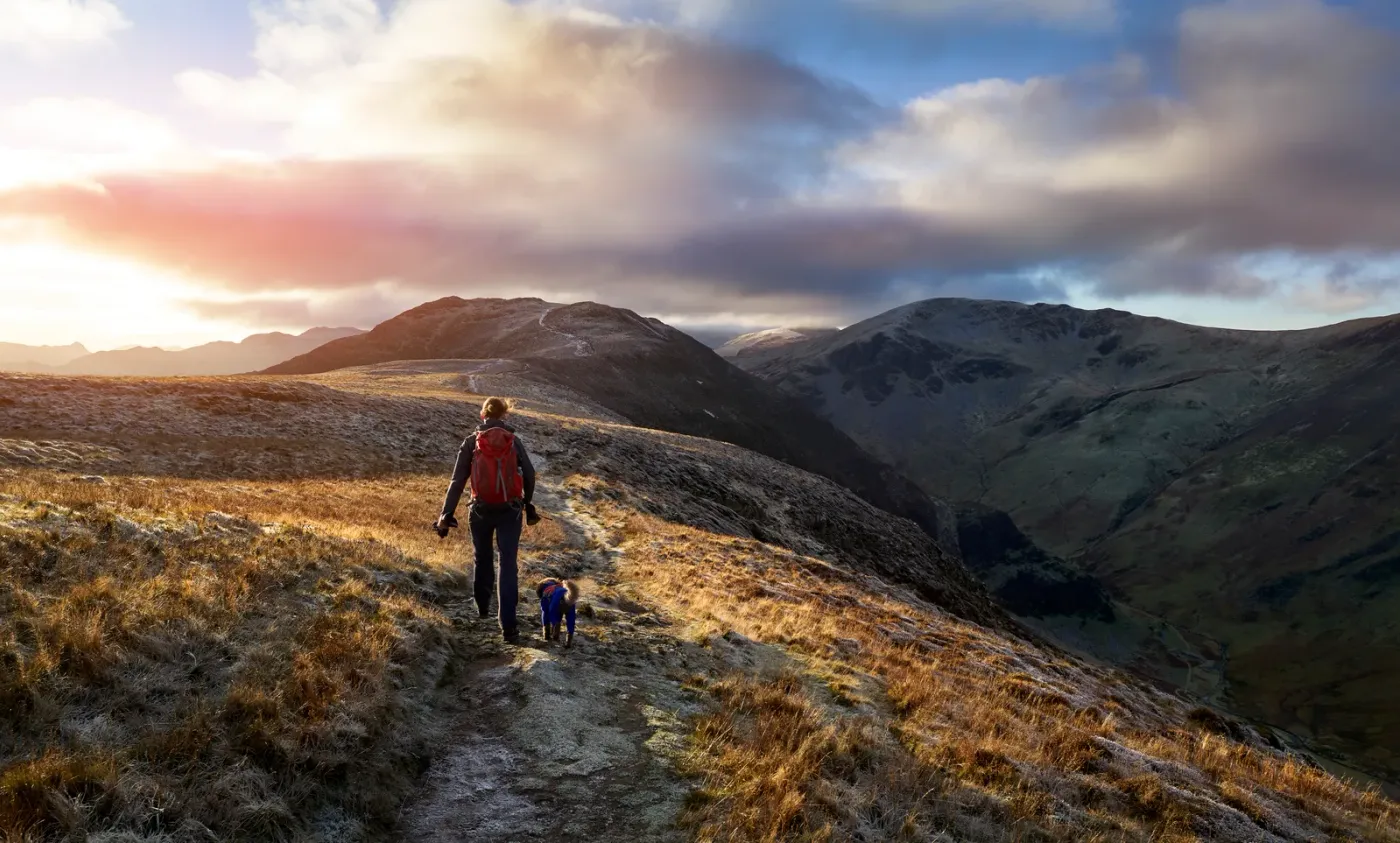
Management comes before any training on a trail. Pick wide paths where you can see well ahead, and go early on a weekday rather than Saturday at noon. Walk the loop once without the dog if you can, noting blind corners, creek crossings where people bunch up, and places you could step well off the path. Those become your bail-out points. A reactive dog on a long line, not loose, keeps the space the trail offers without betting on a recall under pressure.
Two behaviours earn their keep out there, and both get rehearsed in the backyard before they get tested on a switchback. The first is a cheerful U-turn: say the word, pivot, and move off briskly with food appearing the moment the dog turns with you. The second is an emergency sit at your side, facing you, so the dog's eyes land on you rather than the trail. Bring food that outranks the trigger: kibble will not, soft and smelly might.
- Wide trail, long sightlines
- Off-peak hours only
- Long line, never loose
- U-turn rehearsed at home
When it goes wrong
Loose dogs, blown thresholds, and the dog who needs more.
Sooner or later a dog with no leash and no owner in view comes round the bend. On a trail your best move is usually sideways: step off the path on the uphill side, shorten the line, and get yourself between the two dogs while you call out, early and clearly, that your dog needs space. Keep moving away if you can; standing still invites a greeting. Do not punish your dog for growling or barking while this happens; the noise is information you need.
Management keeps everyone safe, but it does not change how your dog feels about other dogs. If outings keep ending in a blown threshold, or the reactions are growing rather than shrinking, that is the signal to stop managing alone and get a full behaviour assessment. Behaviour Rehab, a five to six week board and train at $4,850 to $5,760 plus GST after assessment, is built for this: reactivity work at your dog's pace, confidence building, structured socialization, two follow-ups and in-depth owner education.

Asked and answered
The questions people ask us.
Is hiking with a reactive dog a good idea?
Often, yes, because trails offer space and sightlines a city sidewalk cannot. It is a good idea only when you pick the trail for width and quiet, keep the dog on a long line, and leave before the dog is over threshold rather than after.
What are the best trail tips for a reactive dog?
Go at off-peak hours on wide trails, scout bail-out spots before you need them, and rehearse a U-turn and an emergency sit at home until they are boring. Carry food your dog values more than a strange dog, and end the hike while it is still going well.
What do you do when off-leash dogs approach your reactive dog on a trail?
Step off the path, shorten the line, and put yourself between them while you call to the owner that your dog needs space. Keep moving away rather than standing to negotiate. Never punish your dog for reacting in that moment; deal with the loose dog first and the training later.
Long line or off leash for a reactive dog on quiet trails?
Long line. A reactive dog over threshold does not hear a recall, and two loose dogs closing on each other is the scenario you are trying to avoid. The long line gives room to sniff and move while keeping the choice in your hands.
Keep reading
Trails should feel like relief
If every hike ends in a meltdown, let us assess what is driving it and map the right next step. Book a consultation.
From real owners
Rated 5.0 on Google.
Real Northline dogs