
Adventure dogs
Dog-friendly road trips: training for the drive
The dog who is perfect on the ten-minute drive to the park is untested at hour six, at a highway rest stop with trucks idling, or at midnight in a hotel room when the hallway ice machine thumps. Road trips are a different sport. The good news is that every piece can be rehearsed in your own neighbourhood before you load the car.
Last reviewed October 4, 2026
Highway skills
The car-door wait matters more than anything else on the list.
Safety first, because a highway rest stop is a terrible place for a loose dog. Open the door only far enough to clip the leash on, with an adult holding it, before it opens any further. Then the dog waits, in a sit or a down, while the door swings wide, and exits only on a release word. Practise in your driveway, then a quiet parking lot, then a busy gas station. The wait is the habit that stops a bolt into traffic.
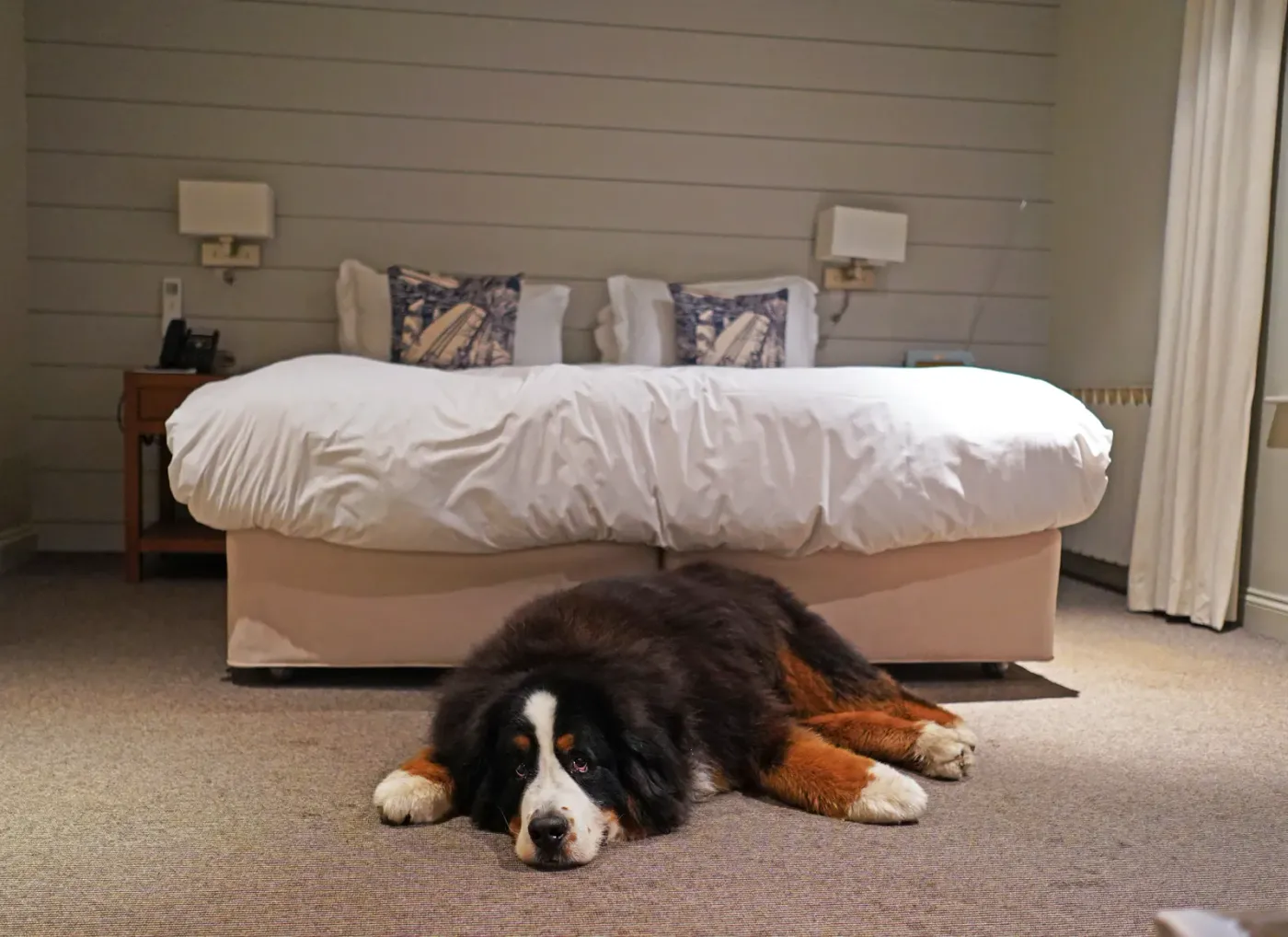
The other three are quieter. Calm in the vehicle comes from a settle in a secured crate or on a harness, rewarded on short drives until lying down is what the car means. A toilet cue is taught at home by naming the act as it happens, then asked for on leash at every stop, on gravel, grass and snow, so a strange rest area is nothing new. Hotel quiet is place on the dog's own bed from home, with a walk before check-in.
- Leash on before the door opens
- Release word, never a bolt
- Toilet cue on gravel and grass
- Own bed in the hotel room
Gear and rehearsals
Crates, car sickness and the trips your dog should sit out.
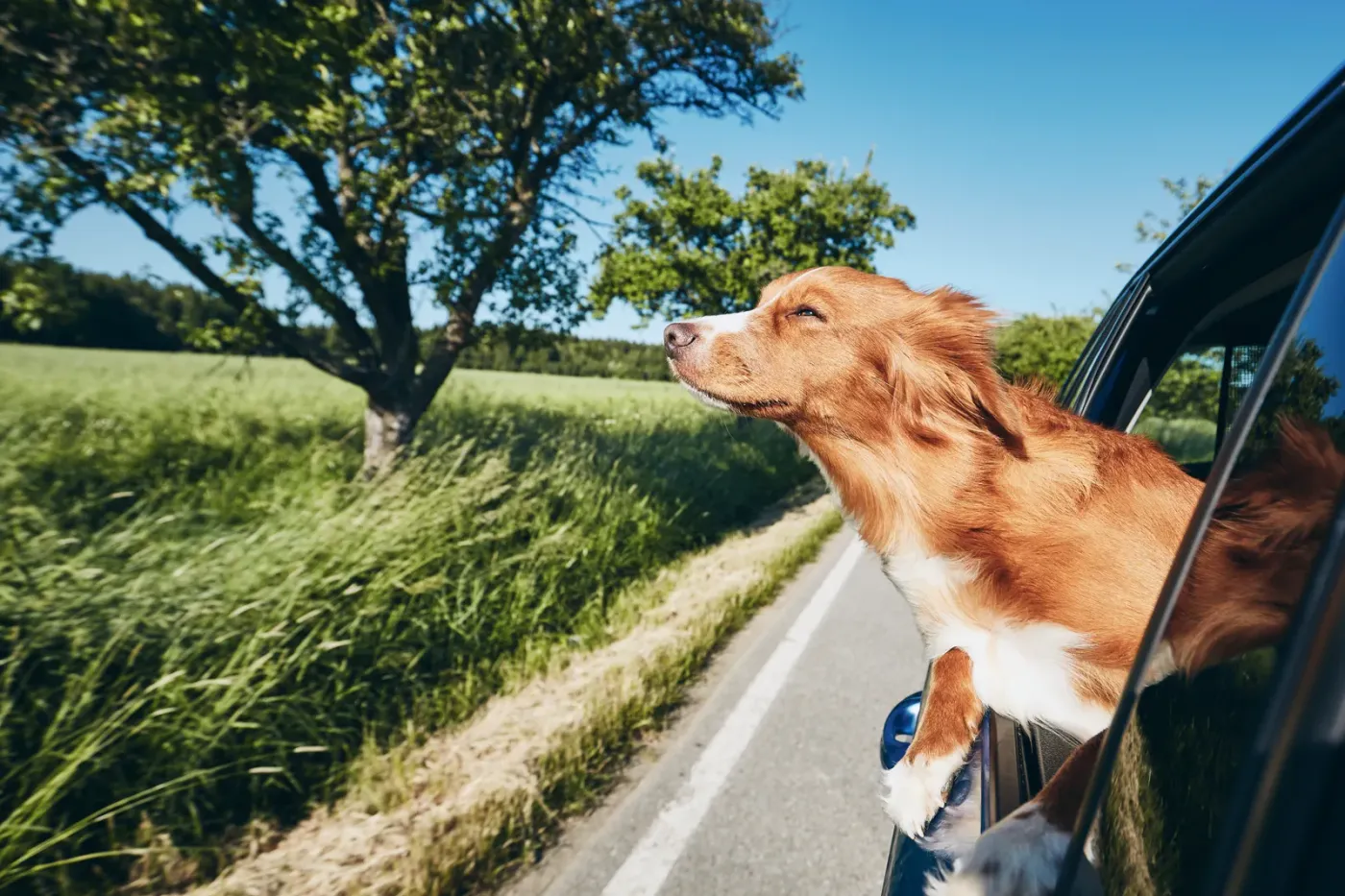
A loose dog in a vehicle is a hazard in a hard stop and a bolt risk at every door, so choose a restraint before the first rehearsal: a crate strapped down so it cannot slide, or a harness clipped to the seatbelt. The crate doubles as the hotel bed. If your dog drools or vomits once the car is moving, ask your vet about motion sickness before any training, because a nauseous dog cannot learn to relax.
Rehearse the whole routine on short drives: load, settle, one stop with the door wait and the toilet cue, home. Add distance only when the short version is boring. A dog who panics in the car, a hotel that will not take dogs, or a schedule of long days indoors can make leaving the dog kinder than bringing it. For graduates and existing clients, graduate boarding is $65 + GST per night, in a place your dog already knows, with optional refresher work.
Asked and answered
The questions people ask us.
How do I train my dog for long car rides?
Secure the dog in a strapped-down crate or a seatbelt harness, then build the settle on short, dull drives that end at home. Add the rest-stop routine, a door wait and a toilet cue on leash, before adding hours. If the dog is sick in motion, see your vet first.
What training does a road trip with a dog need?
Four skills: calm in the vehicle, a wait at the car door until released, a toilet on cue in unfamiliar places, and quiet in a hotel room. Rehearse each one near home. The door wait is the one that matters most at a highway rest stop.
Why does my dog bark in the hotel room, and how do I stop it?
Hallway footsteps, doors and voices on the other side of a thin wall are new, and many dogs bark at what they cannot see. Bring the dog's own bed, run a fan for sound cover, walk before check-in, and reward quiet on place. If barking escalates, a professional assessment is the next step.
Is it better to leave my dog behind for a long road trip?
Sometimes, yes. A dog who panics in the car, or a trip full of long days indoors, is harder on the dog than a stay somewhere familiar. For graduates and existing clients, graduate boarding is $65 + GST per night, with optional refresher work.
Keep reading
Planning a long drive?
Tell us where you are headed and how your dog rides now. Book a consultation and we will plan the rehearsals.
From real owners
Rated 5.0 on Google.
Real Northline dogs