
Behaviour
Adolescent-onset reactivity in dogs
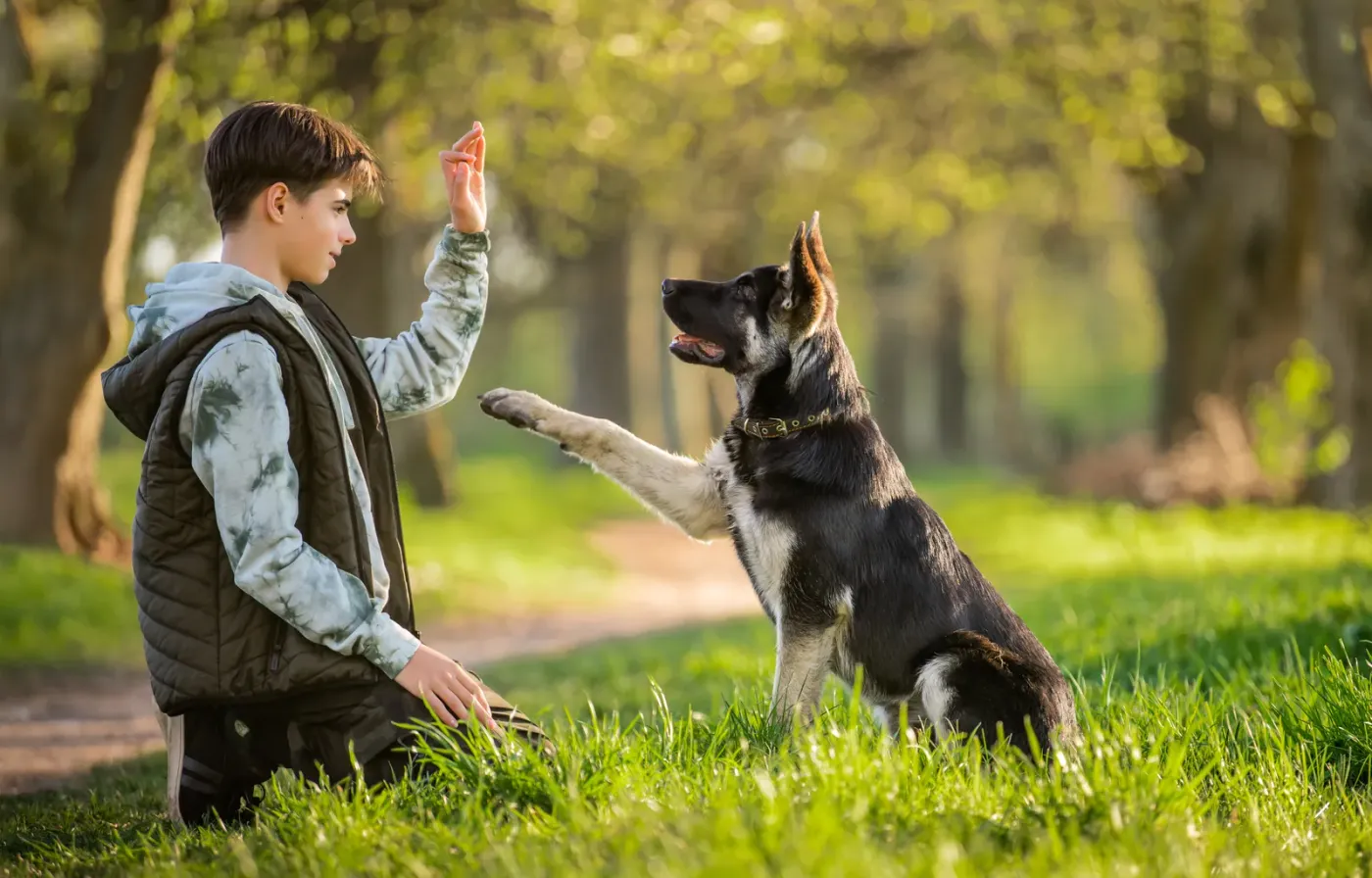
The puppy who played with everyone a few months ago is now hitting the end of the leash at a dog across the street. Owners often ask what they did wrong. The honest answer varies by dog: adolescence, earlier experiences, a few bad greetings and temperament tend to combine, and no two histories match. This guide covers why reactivity can surface now, what we change first, and how we assess the options.
Last reviewed September 25, 2026
Why it starts now
Growing confidence and a few bad greetings often arrive together.
Adolescence tends to stack several things at once. In our experience confidence often grows faster than judgement, so a bigger dog may stop deferring and start testing. Many young dogs have collected a few rough greetings by then: a tight-leash nose-to-nose that went sour, or a park pile-on they could not leave. With daily over-aroused free play on top, barking at the next dog can become, for some dogs, the quickest way to make space. Earlier experiences and temperament shape how much of that lands.
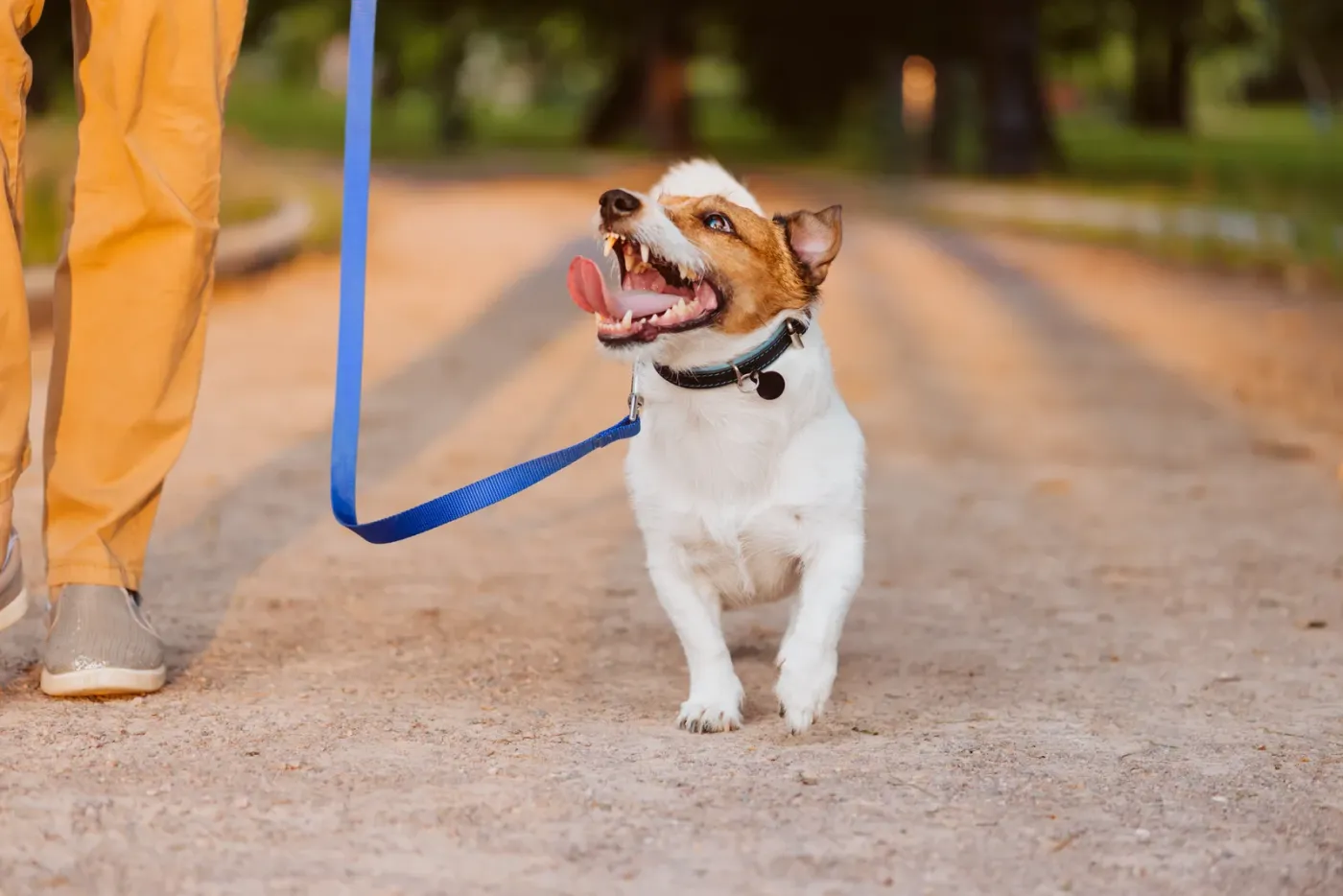
Management comes first, and it depends on the dog's triggers. We often recommend pausing on-leash greetings, because a leash limits the dog's ability to choose distance, and skipping dog-park free play for now, since every over-aroused session rehearses the state we are trying to change. On busy shared pathways, bikes, runners and scooters arrive fast, so quieter routes and crossing early when another dog appears help. If the change was sudden, or the dog seems sore or stiff, a veterinarian comes before any training.
- Pausing on-leash greetings for now
- Skipping the dog park for now
- Crossing early to keep distance
- Vet check for sudden change
What a program adds
Assessment first, then a plan matched to the dog.
The work itself is easy to describe and hard to run alone. We look for the distance where the dog notices a trigger and can still take food, mark and reward the glance back, and shrink that distance gradually, at the dog's pace, through structured exposure we control rather than loose encounters. Progress is not linear and it varies by dog. Adolescents are still changing, which in our experience is a reason to assess early rather than wait and see.
Everything we run is one-on-one. Behaviour Rehab is our 5 to 6 week board and train for reactivity, $4,850 to $5,760 plus GST, customized after a full assessment, with reactivity work at the dog's pace, two free follow-ups and in-depth owner education. Private Training is a one-hour session at $150 plus GST with a written weekly plan, for owners who want to do the work themselves with a professional alongside. The consultation decides which, and we are honest when the smaller option covers it.
Asked and answered
The questions people ask us.
My puppy became reactive at 8 months. Did I miss the socialization window?
Not necessarily, and we would not conclude that from age alone. Reactivity that surfaces in adolescence can reflect rough greetings, rising confidence, earlier experiences and the individual dog, in any mix. We look at the whole history at an assessment rather than guessing at a cause.
Why is my teenage dog reactive to other dogs when he was fine as a puppy?
In our experience many puppies defer and many adolescents test, so a dog who once rolled over for every greeting may now have the size and confidence to argue. If a few greetings have gone badly, barking first can start to feel safer to the dog than waiting. We treat that as a pattern to interrupt, not a verdict on the dog.
Can a dog become reactive after puppyhood, or was it always there?
It can genuinely start later, and a single rough incident at a park can be the spark for some dogs. We do not assume it was always there, and we do not assume adolescence is the whole story either. If the change was abrupt or the dog seems uncomfortable, we ask owners to have a veterinarian rule out pain before anyone calls it behavioural.
What is the best program for reactivity in adolescent dogs?
There is no single answer, which is why the consultation comes first. Behaviour Rehab is our 5 to 6 week board and train built for the barkers and lungers, customized after a full assessment; Private Training is a one-hour session at $150 plus GST with a written weekly plan, for owners who want to do the work themselves. We recommend the smaller option when it is enough.
Keep reading
Catch it while it is new
Book a consultation, tell us what your adolescent is doing and when it started, and we will give an honest read on the options.
From real owners
Rated 5.0 on Google.
Real Northline dogs