
Socialization
Dog socialization in Calgary: classes, parks and what actually works
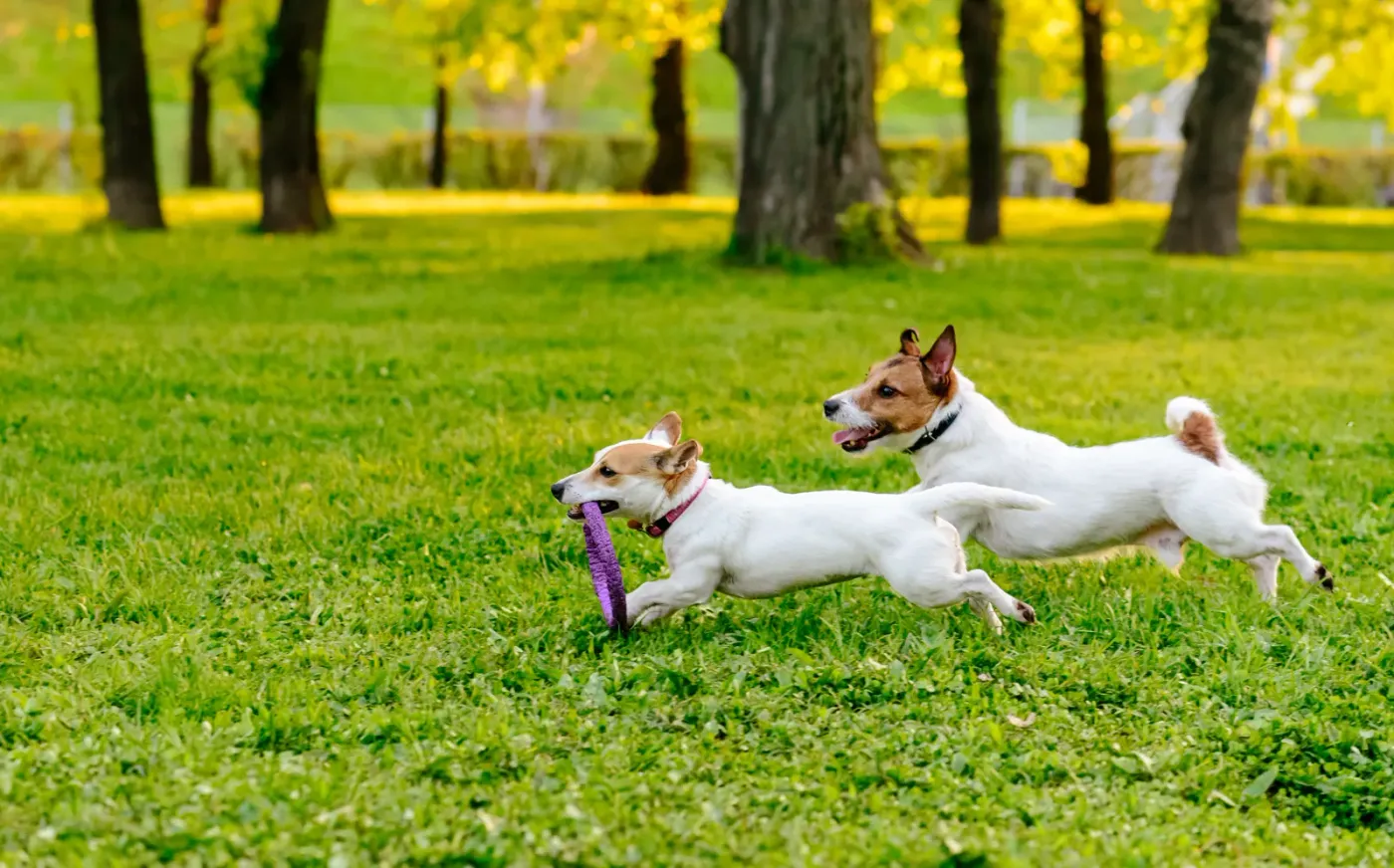
Most people picture socialization as a puppy meeting every dog in the neighbourhood before its first birthday. That version produces a lot of overstimulated dogs and a few frightened ones. The useful version is quieter: a dog learns that the world is ordinary, one calm exposure at a time. In Calgary that world includes pathways full of cyclists, off-leash parks, apartment elevators and a long winter, so it takes some planning.
Last reviewed August 26, 2026
What it means
Calm exposure beats maximum contact.
Socialization is a dog learning that new things are normal: a skateboard rattling past, a stranger in a parka, another dog walking by without a greeting. The learning only happens below threshold, which means the dog notices the thing, can still eat a treat and can still look back at you. Push past that point and the dog is not learning anything except that the world is loud.
Calgary makes this harder in specific ways. The river pathways are wonderful and relentless: runners, e-bikes, strollers and other dogs, often with nowhere to step aside. Off-leash parks drop a young or sensitive dog into a crowd with no exit. Then winter arrives and the world shrinks to a backyard and a dark sidewalk, so a dog that seemed fine in September can be baffled by a patio in May.
- Dog can still take food
- Notices the thing, then relaxes
- Distance is the dial
- Short outings, then rest
Formats that work
Where calm is learned, and where it is not.
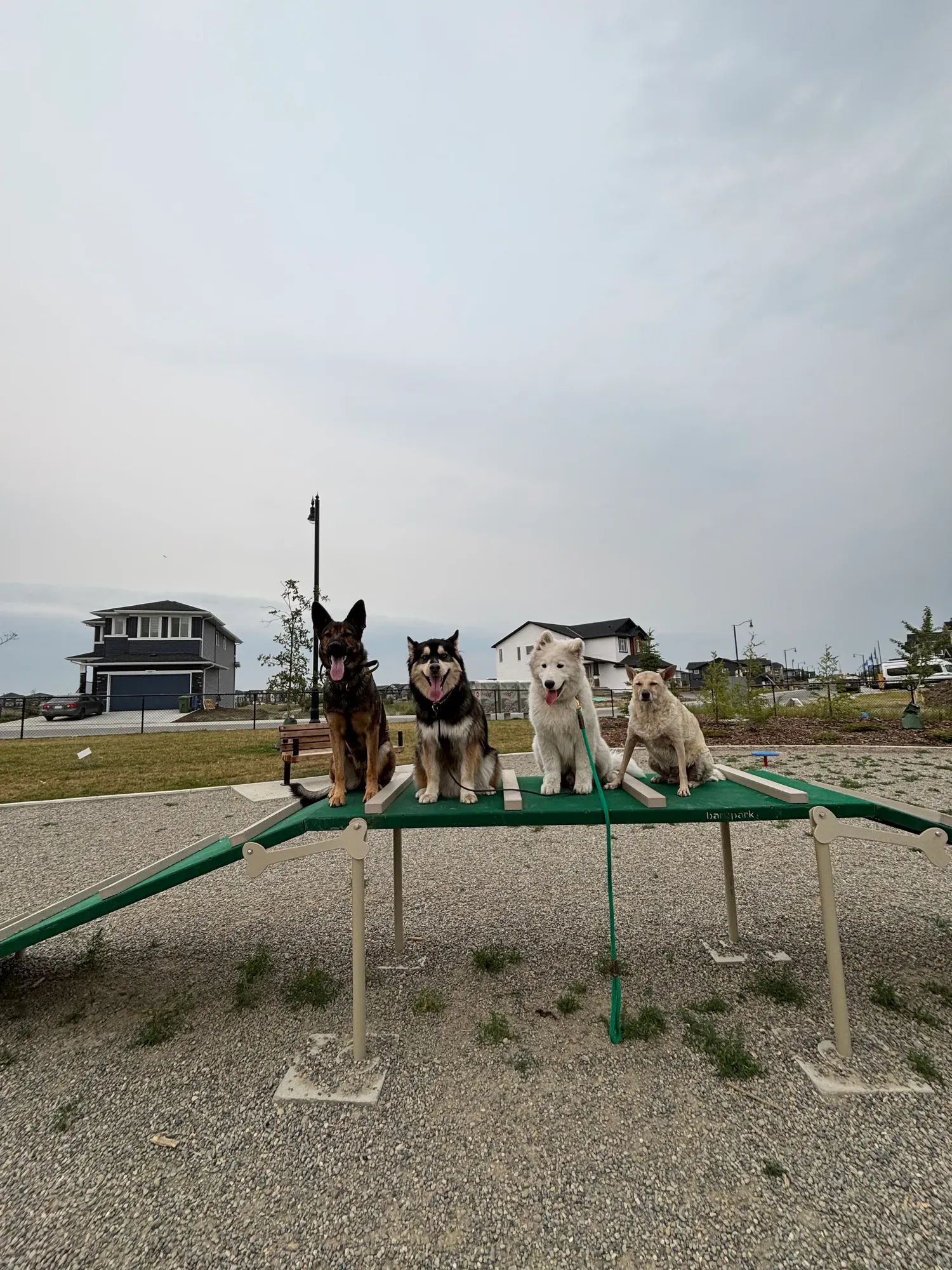
Structured board and train and day training socialize well because the dog is around stable dogs and a trainer who controls distance and duration. A nervous adolescent can watch a settled dog eat, rest and walk, then practise the same thing somewhere busier the next day. Every board and train here includes daily one-on-one training, a structured routine, socialization and enrichment, and day training does the same Monday to Friday with a one-hour go-home lesson each week.
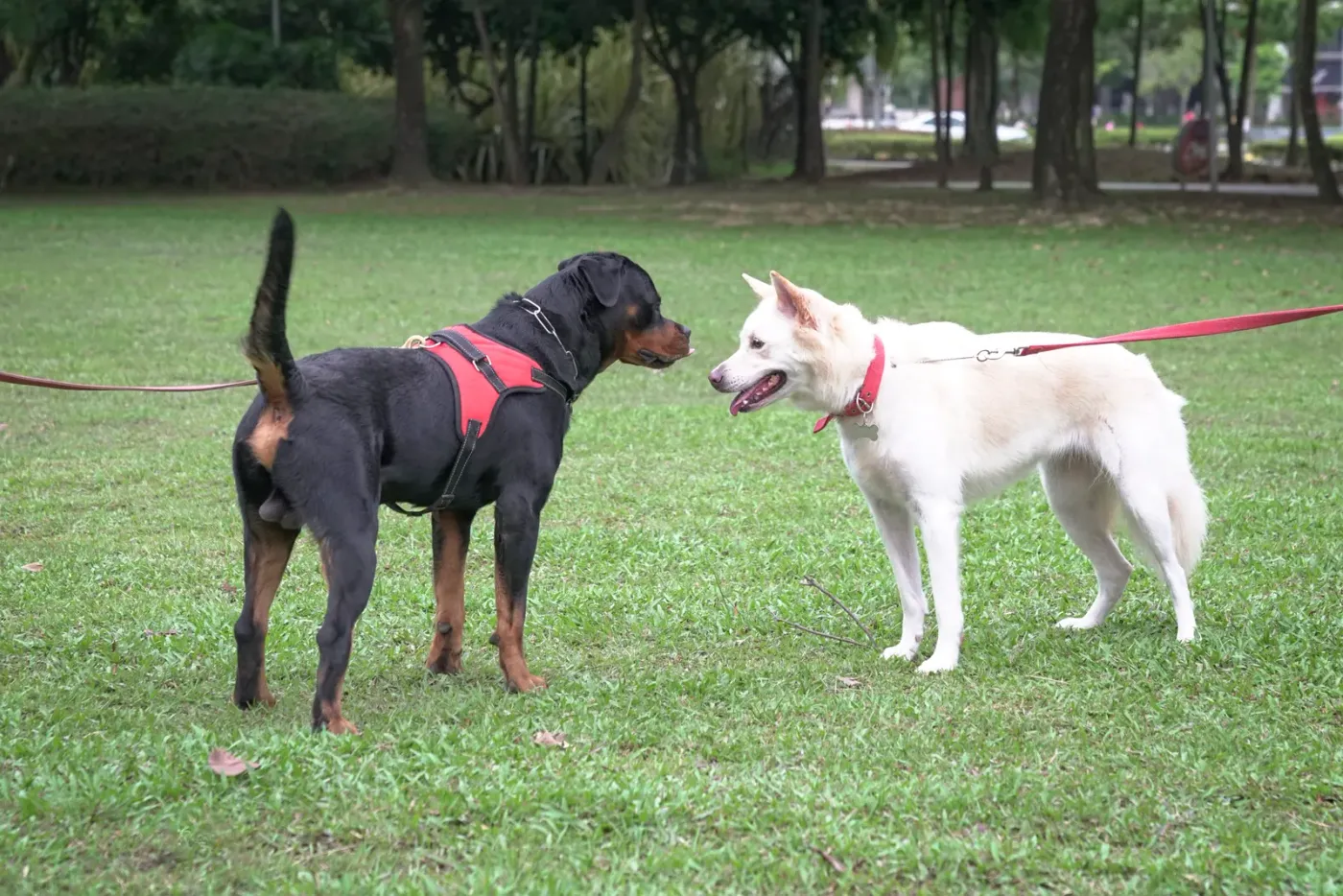
Dog-park immersion is the opposite: many dogs, no curation, and the most aroused dog sets the tone. Some dogs cope. Plenty learn to bark first and ask questions never. The reactive dog is the real exception. For a dog already lunging or growling at other dogs, socialization is not the fix, and more exposure can make it worse. That dog needs Behaviour Rehab, a 5 to 6 week board and train customized after a full assessment, before calm exposure is even on the table.
The programs
The puppy programs.
Both routes cover the window that matters; the consultation picks the right one.
SW · Weekdays, drop-off 8–10 am · pick-up 5–7 pm
Day Training
Professional training all day, your couch at night.
Includes weekly one-hour go-home lesson, daily structure
N · 3-week board & train
Puppy Fundamentals
Your puppy's first months decide the habits of a lifetime.
Includes handover lesson, follow-up session, slip lead + collar
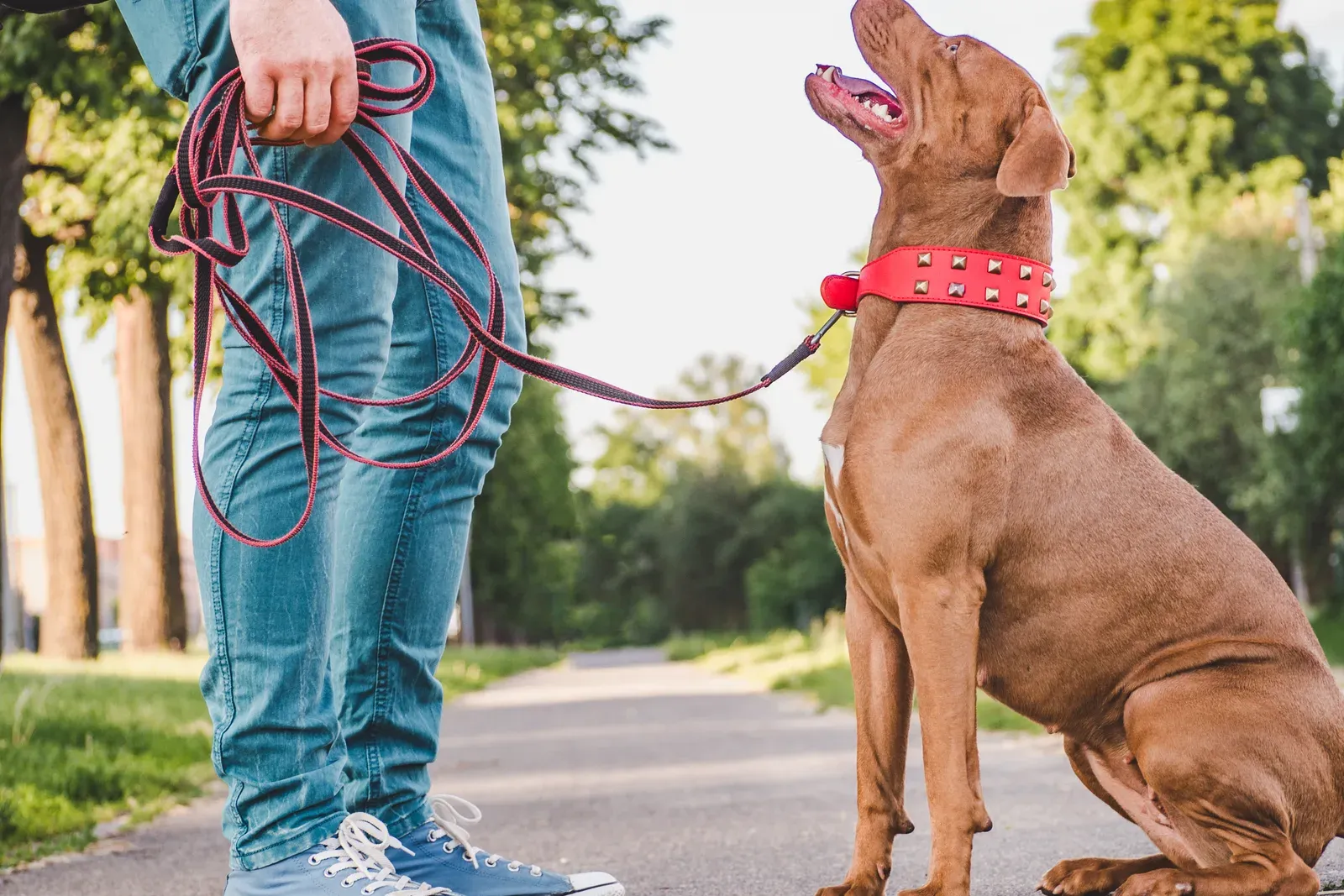
S · 5–6 week board & train
Behaviour Rehab
Kaitlin's specialty, and the work she loves most.
Includes assessment-built plan, 2 follow-ups, deep owner education
Asked and answered
The questions people ask us.
Are there dog socialization classes in Calgary at Northline K9?
No. We run no group classes, because a room full of excited puppies rarely teaches calm. Socialization happens inside one-on-one board and train and day training, around stable dogs and real environments.
How do you socialize a dog in Calgary during winter?
Keep exposures short and warm: a few minutes near a busy entrance, a walk past a snow-clearing crew, a car ride to a different neighbourhood. The goal is variety, not distance. Indoor errands where dogs are welcome count too.
What does puppy socialization in Calgary look like in Puppy Fundamentals?
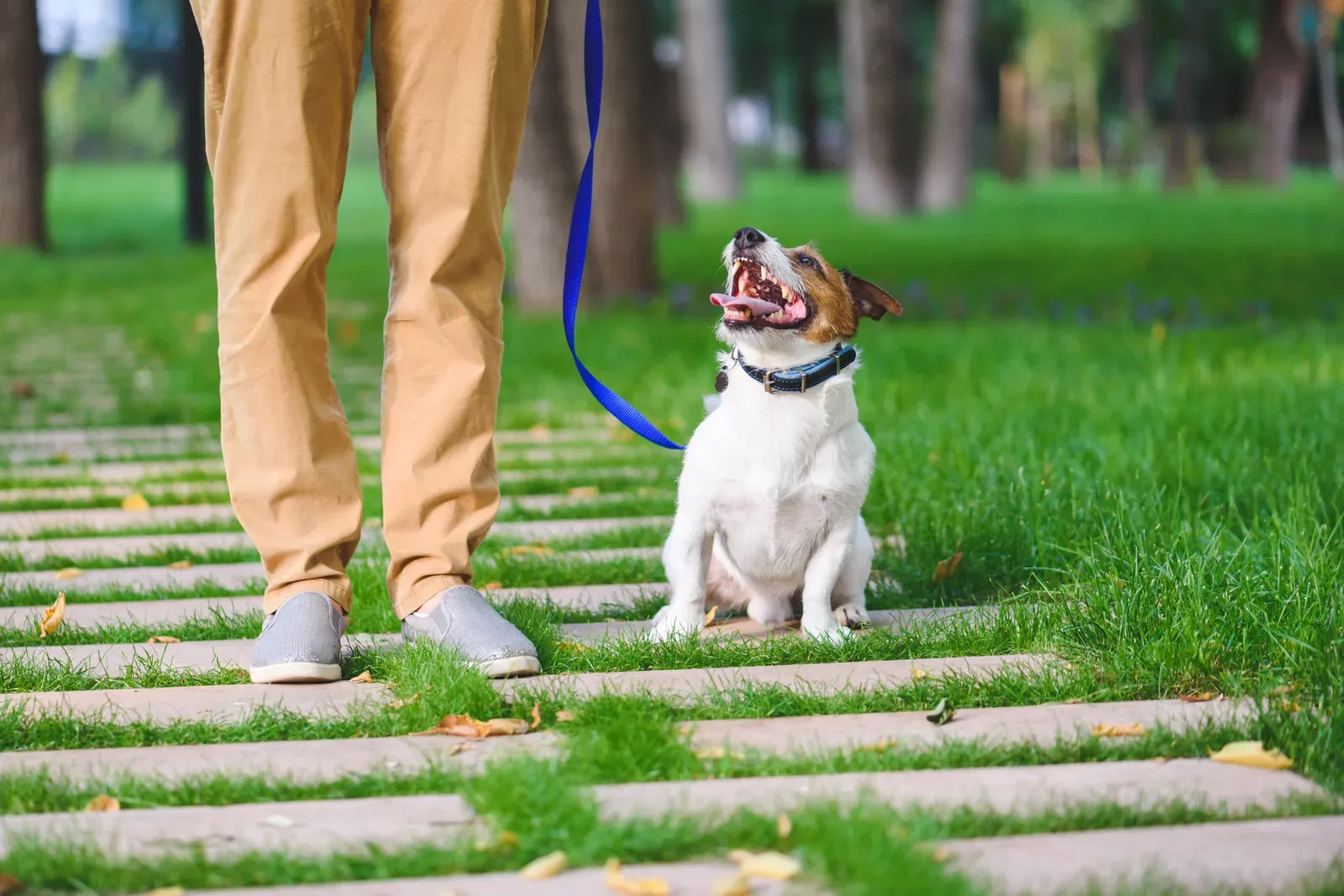
Puppy Fundamentals is a 3-week board and train at $2,775 plus GST that pairs structured socialization with crate comfort, leash manners and the basics. The puppy meets sights, sounds, surfaces and calm dogs at a pace set by a trainer, then you get a handover lesson and a follow-up within 60 days.
Is socialization the answer for reactive dogs in Calgary?
Usually not on its own. A reactive dog is over threshold before socialization can start, so we begin with a full assessment and often Behaviour Rehab. Calm exposure comes later, once the dog can hold itself together at a distance.
Keep reading
Start with calm exposure
Tell us your dog's age and what overwhelms it. Book a consultation and we will map out what socialization should look like.
From real owners
Rated 5.0 on Google.
Real Northline dogs