
Day training
Day training for adolescent dogs
Somewhere after puppyhood, many dogs start to weigh the offer before they take it. The recall that used to be automatic acquires a pause, the leash tightens when another dog appears, and attention comes and goes with whatever is in the wind. In our experience that is often ordinary adolescence, though a sudden change in behaviour is worth a word with your vet first. Day training gives those months a weekday routine.
Last reviewed September 29, 2026

Teenage months
Five weekdays of one-on-one work for a dog whose attention comes and goes.
Day training runs Monday to Friday, drop-off between 8 and 10 am and pick-up between 5 and 7 pm. The dog works one-on-one with us on obedience development and manners reinforcement, alongside structured socialization, supervised play and enrichment, and there are no group classes anywhere in it. An adolescent's focus can vary minute to minute. We treat that as the material to work with rather than a fault, keep the cues consistent, and keep the expectations fair for the dog's stage.
Structured socialization matters in this window. Many adolescents find other dogs and strangers newly fascinating, and fascination can lean towards pushy or towards wary depending on the dog. Supervised play and enrichment are part of every day. At the weekly one-hour go-home lesson we go through the handling with you, because a dog that is bigger and stronger than it was in spring often needs to be asked differently than it was at half the weight.
- Monday to Friday routine
- One-on-one obedience development
- Supervised play and enrichment daily
- Weekly one-hour go-home lesson
Bigger than manners
When adolescence is not the whole story.
Some behaviour that appears in the teenage months is not adolescence. Lunging and barking at other dogs on leash, growling at visitors, hiding from ordinary household sounds, or any change that arrived suddenly deserves a closer look, and a sudden shift can have a physical cause, so ask your vet first. In the meantime, management helps: keep the distance your dog copes with, skip the busiest trail for now, and treat a growl as information rather than something to punish.
The consultation is where we recommend the program. Day training is built for dogs who need consistent work and owners who want them home every night. Behaviour Rehab is built for anxiety, reactivity and aggression: a five to six week board and train, $4,850 to $5,760 + GST, customized after a full assessment. Private Training, $150 + GST per one-hour session, suits hands-on owners who want to do the work themselves. A smaller program, when it is enough, is what we recommend.
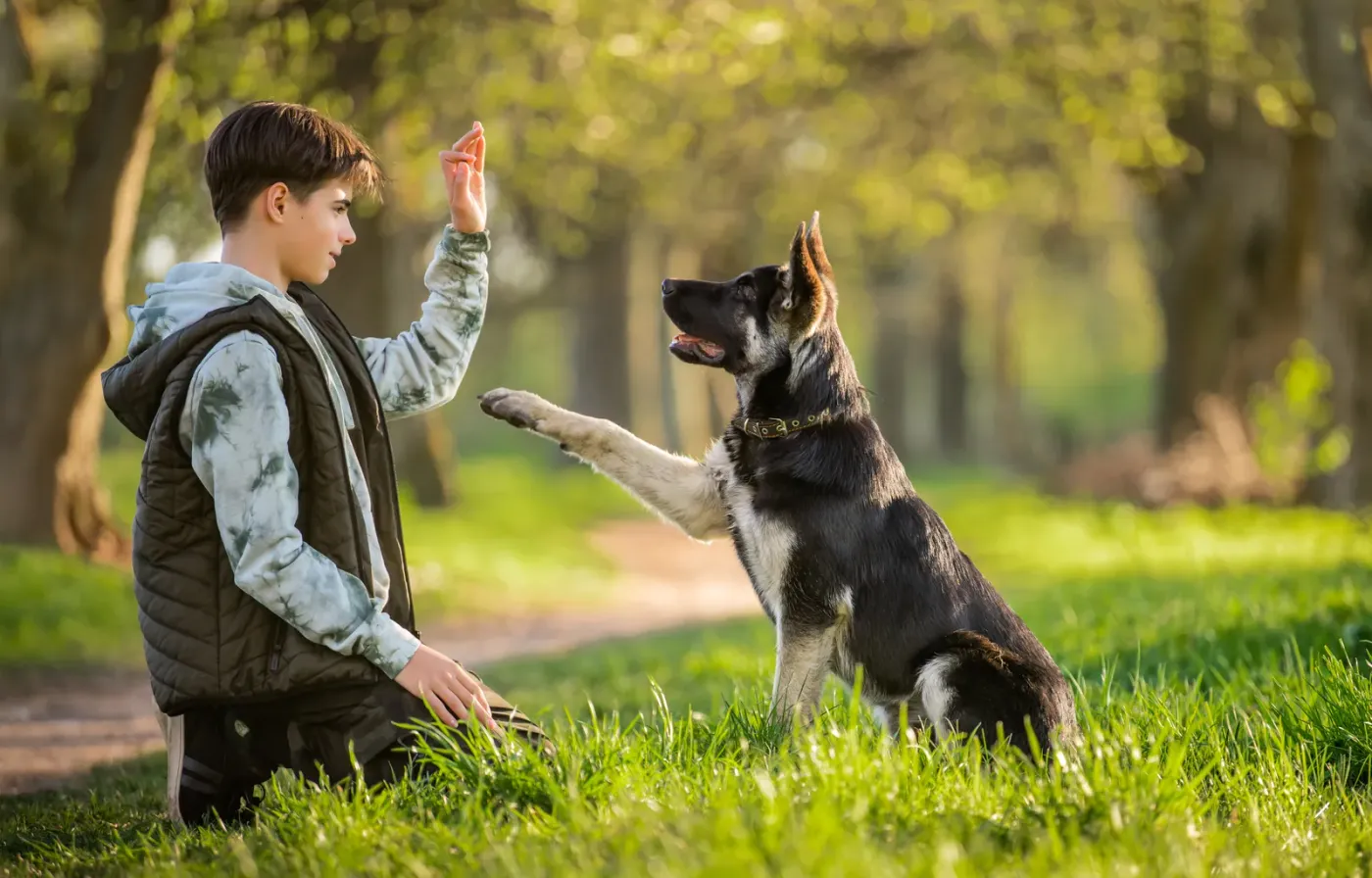
The programs
Programs and prices
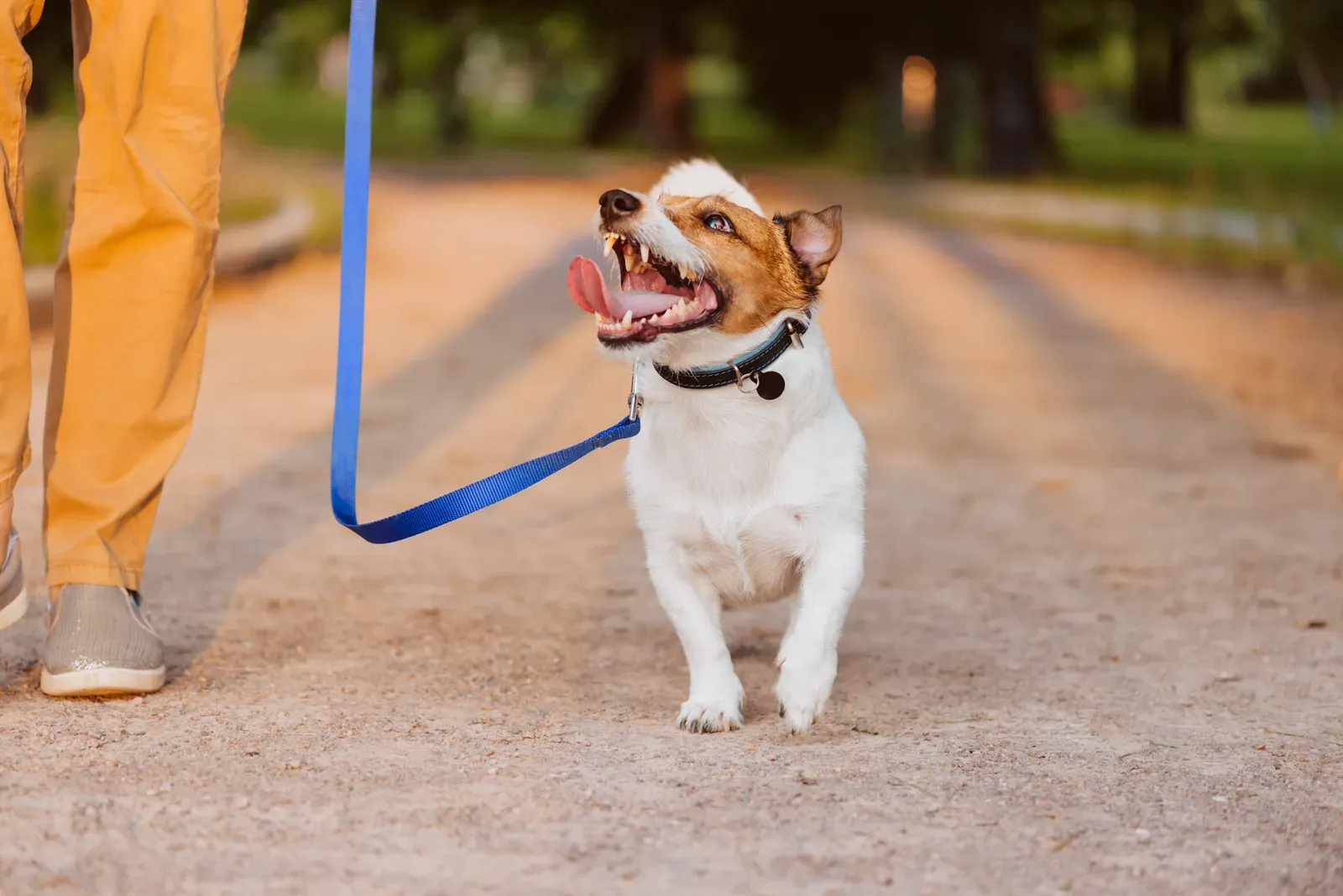
W · One-hour session
Private Training
One-on-one coaching with you on the other end of the leash.
Includes a written weekly plan to work from
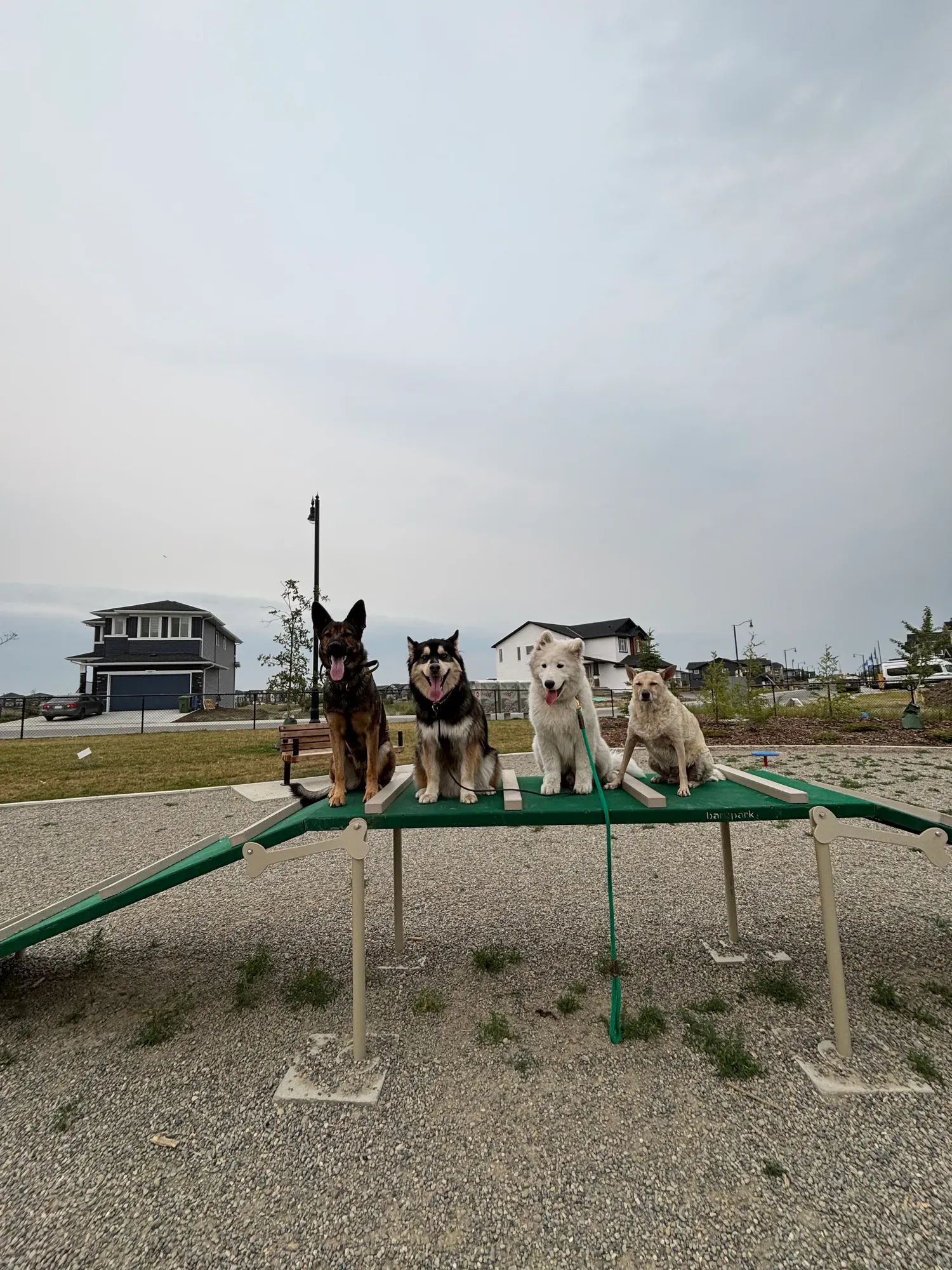
SW · Weekdays, drop-off 8–10 am · pick-up 5–7 pm
Day Training
Professional training all day, your couch at night.
Includes weekly one-hour go-home lesson, daily structure

NE · 2-week board & train
On-Leash Foundations
If every walk is a wrestling match, pulling, barking, zig-zagging, this two-week program rebuilds the walk from the ground up with foundational on-leash obedience..
Includes handover lesson, follow-up session, lifetime support, slip lead + collar
Asked and answered
The questions people ask us.
Is day training suitable for an adolescent dog?
It is built for dogs who need consistent work while going home every night, and many adolescents fit that description. The dog gets daily one-on-one obedience development, manners reinforcement and structured socialization Monday to Friday. Whether it is the right program for your dog is decided at the consultation.
What does teenage dog day training involve day to day?
Drop-off is between 8 and 10 am and pick-up between 5 and 7 pm, Monday to Friday. In between, the dog works one-on-one with us on obedience and manners, with structured socialization, supervised play and enrichment. Once a week you join us for a one-hour go-home lesson.
Is there a day school for a young dog that is not a puppy anymore?
Day training is that: a weekday, one-on-one program at $650 + GST per week for a dog who has outgrown puppyhood but not the pulling. Nothing about it is a group class. The consultation is where we look at your dog and recommend the program.
How many weeks of day training does an adolescent dog need?
We do not put a number on that before meeting the dog, because it depends on the dog and on what happens at home between lessons. The consultation is where we recommend the program and the shape of it, including a smaller option when that is enough.
Keep reading
Structure for the teenage months
Tell us what your adolescent has started ignoring and we will recommend the program that fits. Book a consultation.
From real owners
Rated 5.0 on Google.
Real Northline dogs