
Board & train
Board and train for Dobermans
A Doberman reads the room and, often, takes it personally. The breed was built to watch and stay close, so the alert at the window and the long look at a visitor are not surprises. Then comes the teenager: a dog that was easy as a puppy starts hesitating at strangers, testing the leash and reacting to things it used to ignore. That is the dog a live-in program is designed around.
Last reviewed October 4, 2026
Structure first
Why a predictable routine suits a sensitive breed.
Many Dobermans are handler-soft: a raised voice or a yank on the leash lands hard, and the dog gets worried instead of educated. Each training day leans on markers and rewards, with tools matched to the dog and introduced properly. Structure tends to settle the breed: a predictable routine, a place command the dog can retreat to when visitors arrive, and a heel that gives a watchful dog a job other than scanning. On-Leash Foundations, two weeks at $1,865 + GST, covers those pieces.
Adolescence is where off-leash work earns its keep. Functional Off-Leash, three weeks at $3,030 + GST, works on reliable recall around distractions and off-leash house manners; Advanced Off-Leash, four weeks at $3,940 + GST, adds off-leash heel, distance commands and public manners, which for a striking dog means a down-stay on a patio nobody apologizes for. Fear-based reactivity is the exception: a Doberman who backs up, growls or lunges at strangers is assessed first, and Behaviour Rehab is the program built for anxiety, reactivity and aggression.
- Rewards first, tools matched
- Place when the doorbell rings
- Heel instead of scanning
- Assessment first for fear reactivity
The teenager at home
Set the house rules before the handover lesson.
The handover lesson passes you the cues, the tool and the routine, and with a Doberman the routine is what travels best. Decide beforehand where place lives, who answers the door while the dog holds it, and which walks are heel and which are sniffing. Follow-up sessions are included in every board and train, two of them in Advanced Off-Leash and Behaviour Rehab, so the first teenage slide after homecoming is reviewed by someone who knows the dog rather than guessed at.
Sensitivity cuts both ways at home, so keep the tone level and the rules identical every day. Our Doberman training guide goes into the method. A growl at a visitor is managed, never punished: the dog goes to place or another room, and the visitor is not sent over to make friends. Reactivity may spike while routines resettle; persistence or escalation calls for a professional reassessment. The consultation picks the program, and we will say so plainly when a smaller one covers it.
The programs
Programs and prices
NE · 2-week board & train
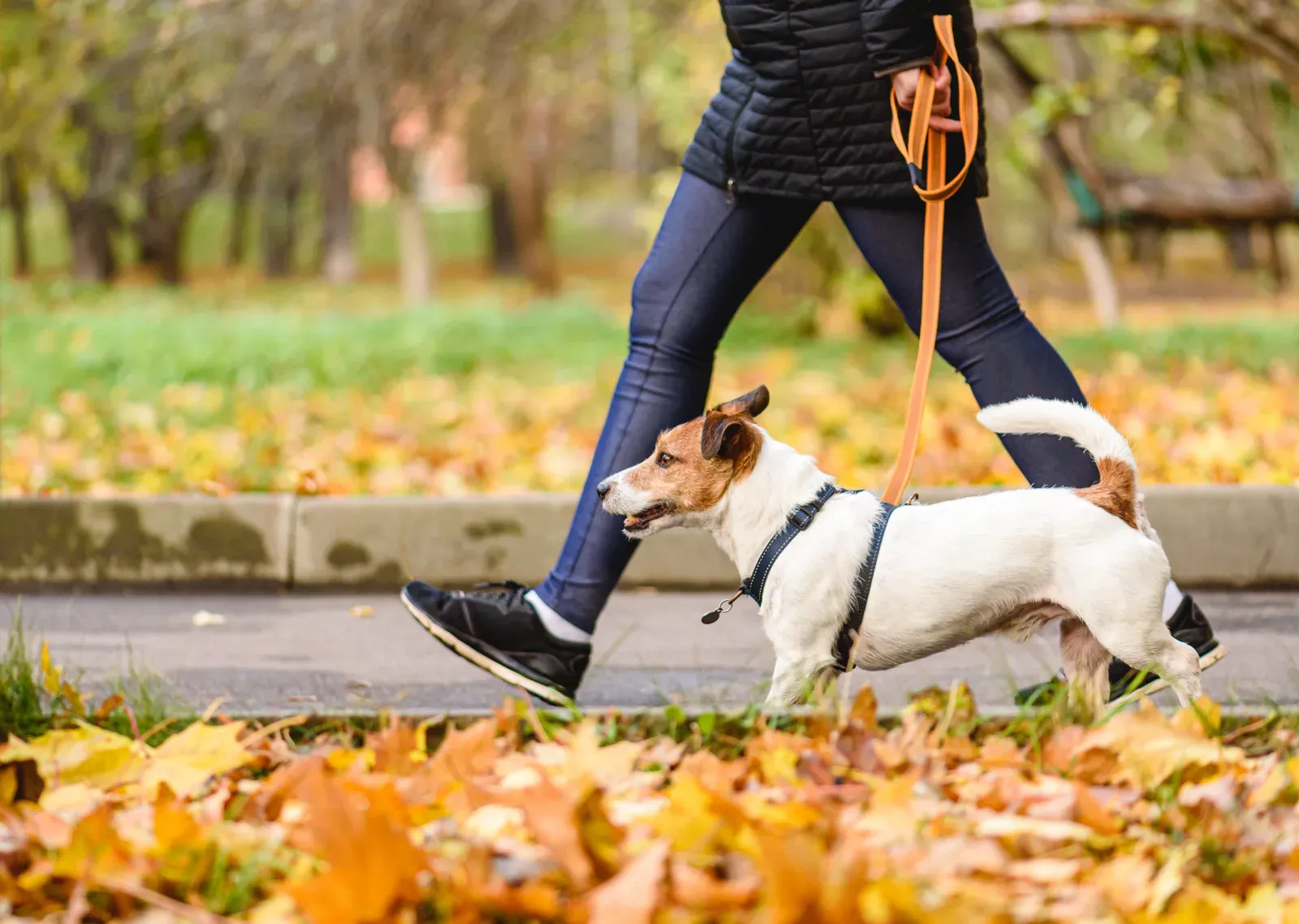
On-Leash Foundations
If every walk is a wrestling match, pulling, barking, zig-zagging, this two-week program rebuilds the walk from the ground up with foundational on-leash obedience..
Includes handover lesson, follow-up session, lifetime support, slip lead + collar

SE · 4-week board & train
Advanced Off-Leash
The full four-week build: from functional foundations to advanced reliability in public environments and around higher-level distractions.
Includes handover lesson, 2 follow-ups, Educator remote collar
S · 5–6 week board & train
Behaviour Rehab
Kaitlin's specialty, and the work she loves most.
Includes assessment-built plan, 2 follow-ups, deep owner education
Asked and answered
The questions people ask us.
Is board and train good for a Doberman?
It suits the breed's appetite for structure: daily one-on-one training, a predictable routine and clear rules delivered without heavy hands. If the dog's problem is fear, a full assessment comes before any curriculum, which is exactly what Behaviour Rehab starts with. Tell us at the consultation which dog you have.
Which Doberman training program fits an adolescent that has started reacting to strangers?
That depends on what the reaction is. Excitement barking with poor leash manners is close to what On-Leash Foundations and the off-leash tiers work on; backing away, freezing or lunging with a stiff body is what Behaviour Rehab is built for, 5 to 6 weeks at $4,850 to $5,760 + GST after a full assessment. Dogs with bite histories are accepted into Behaviour Rehab after that assessment, and the consultation recommends the program.
Do you use a prong or e-collar on a Doberman in board and train?
Tools are matched to the individual dog, and a sensitive Doberman often needs less than owners expect. Skills are taught with markers and rewards first; a slip lead, prong collar or Educator e-collar is only introduced properly, and you are taught to use it before the dog comes home. The off-leash programs include an Educator remote collar.
Does a Doberman board and train stop the guarding at the door?
The program works on it through place, heel and public manners, so the dog has a trained response to practise when the doorbell goes, and the handover lesson shows you how to run it. We will not promise an outcome, because the habit is also shaped by what the dog rehearses at home afterward. If the guarding has a fear edge, say so at the consultation; that changes the plan to assessment first.
Keep reading
Structure for the teenager.
A sensitive dog, a watchful breed, a teenage phase. Book a consultation and we will recommend the program, or the assessment, that fits.
From real owners
Rated 5.0 on Google.
Real Northline dogs