
Why dogs do it
Why does my dog yawn when I pet him?
A yawn mid-cuddle can feel like a review of your petting skills. Sometimes it is. Dogs yawn for more than tiredness, and the moment it happens, plus what the ears, eyes and body do around it, usually tells you which reason applies. Below we explain the likely causes, how to tell them apart, and when the yawn deserves a closer look.
Last reviewed October 4, 2026
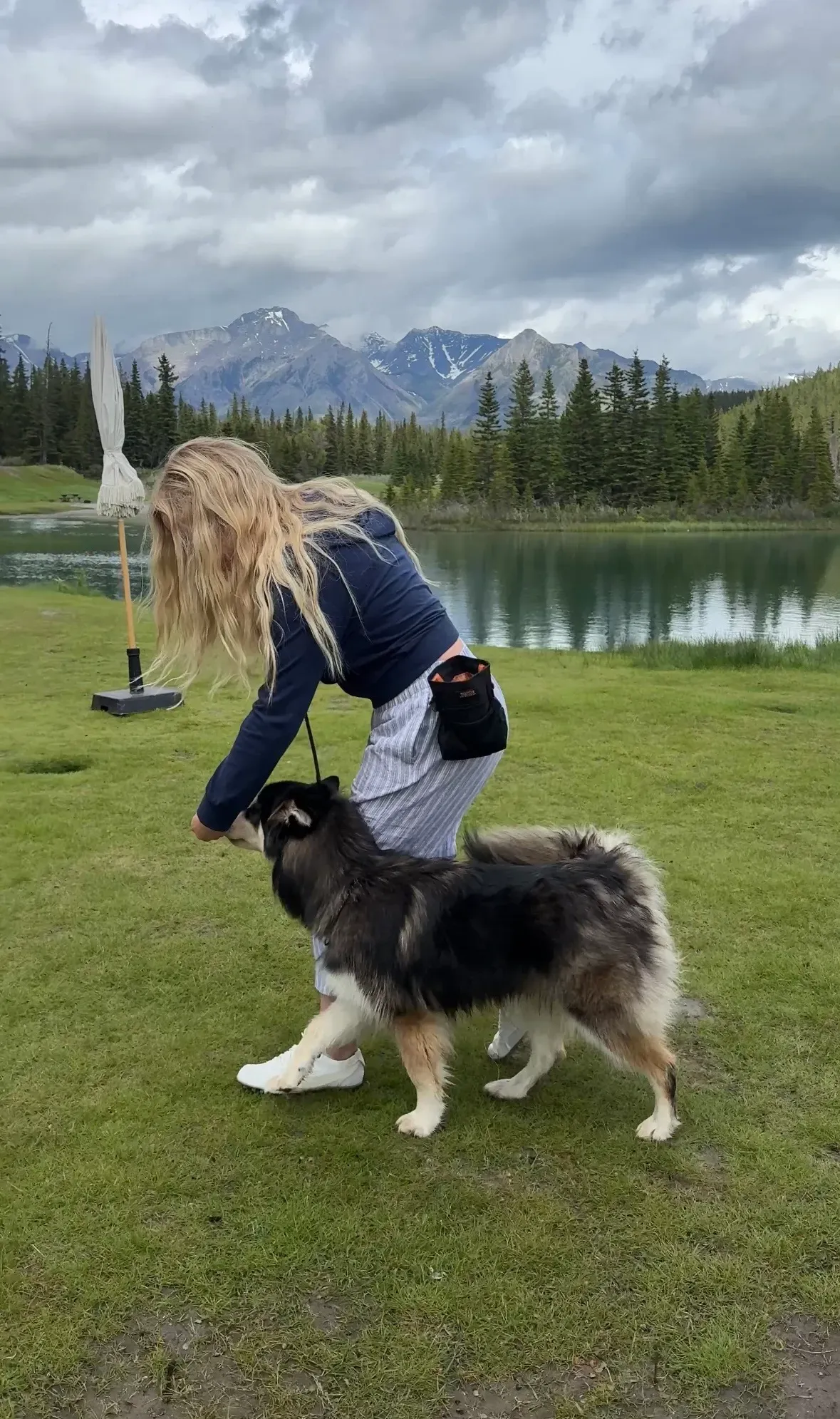
Reading the yawn
Tired, uneasy or just stretching: reading the yawn in context.
Many dogs yawn as a calming signal, a small way of easing tension when something feels a bit much. Petting that pats the top of the head, a hug around the neck, or a face leaning in close are common triggers. Other dogs yawn because they are drowsy, especially on the couch in the evening. And some yawn from mild conflict: they want your attention, just not quite this kind of it.
Context sorts them out. A sleepy yawn tends to come with a slow blink, a stretch and a body that sinks further into you. A calming yawn often arrives with a turned head, whale eye where the whites show, a quick lip lick or ears pulled back. A useful test is to stop petting and wait. A dog who nudges your hand back wanted more. A dog who shakes off or moves away was asking for a break.
- Slow blink and a stretch
- Head turned away from hand
- Lip lick or whale eye
- Nudges your hand after a pause
Vet or training
When the yawning needs a vet, and when it needs gentler hands.
Book a vet visit if yawning seems constant, or appears with drooling, pawing at the mouth, low energy or a change in appetite, or if your dog suddenly dislikes being touched in one spot. Discomfort can make petting unwelcome, and only a vet can rule pain in or out. If your dog has ever growled, snapped or frozen during handling, treat that as information, never something to punish, and get a professional assessment.
If health checks out, this is usually about how touch is offered. Our how-to guide on this behaviour covers the method. The first steps are simple: pet the chest or side instead of the head, keep it brief, and let your dog choose to stay. Private Training, $150 per one-hour session, works on reading your own dog's signals with a plan for home. Deeper handling worries are what Behaviour Rehab is built for, and the consultation will say if the lighter option is enough.
Asked and answered
The questions people ask us.
Is my dog stressed if he yawns when I pet him?
Not always. A relaxed, sleepy dog yawns too. Look for a turned head, lip licking or stiffness alongside the yawn, which point more toward mild unease.
Why does my dog yawn when I hug him?
Many dogs find hugs confining, and a yawn is often a calming signal in that moment. Try a chest scratch instead and see whether your dog leans in or moves off.
Should I stop petting my dog when he yawns?
Pausing is a good idea. If your dog nudges you to continue, carry on gently. If he walks away or shakes off, he was asking for a break, and respecting it builds trust.
When is yawning a reason to see a vet?
If yawning is frequent and comes with drooling, pawing at the mouth, low energy or touch sensitivity in one area, check with your vet. Discomfort is worth ruling out before any training.
Keep reading
Learn to read your dog
Book a consultation and we will help you read what your dog is saying with every yawn, lean and turn of the head.
From real owners
Rated 5.0 on Google.
Real Northline dogs