
Why dogs do it
Why does my dog pant when it is not hot?
Panting is how dogs shed heat, so it makes sense in July. In a cool living room at midnight, it raises a fair question. Dogs also pant when their body or mind is working hard: anticipation, worry, discomfort. This page separates the harmless reasons from the ones a vet should see, and explains how stress panting can be tackled once medical causes are off the table.
Last reviewed October 4, 2026
Reading the breath
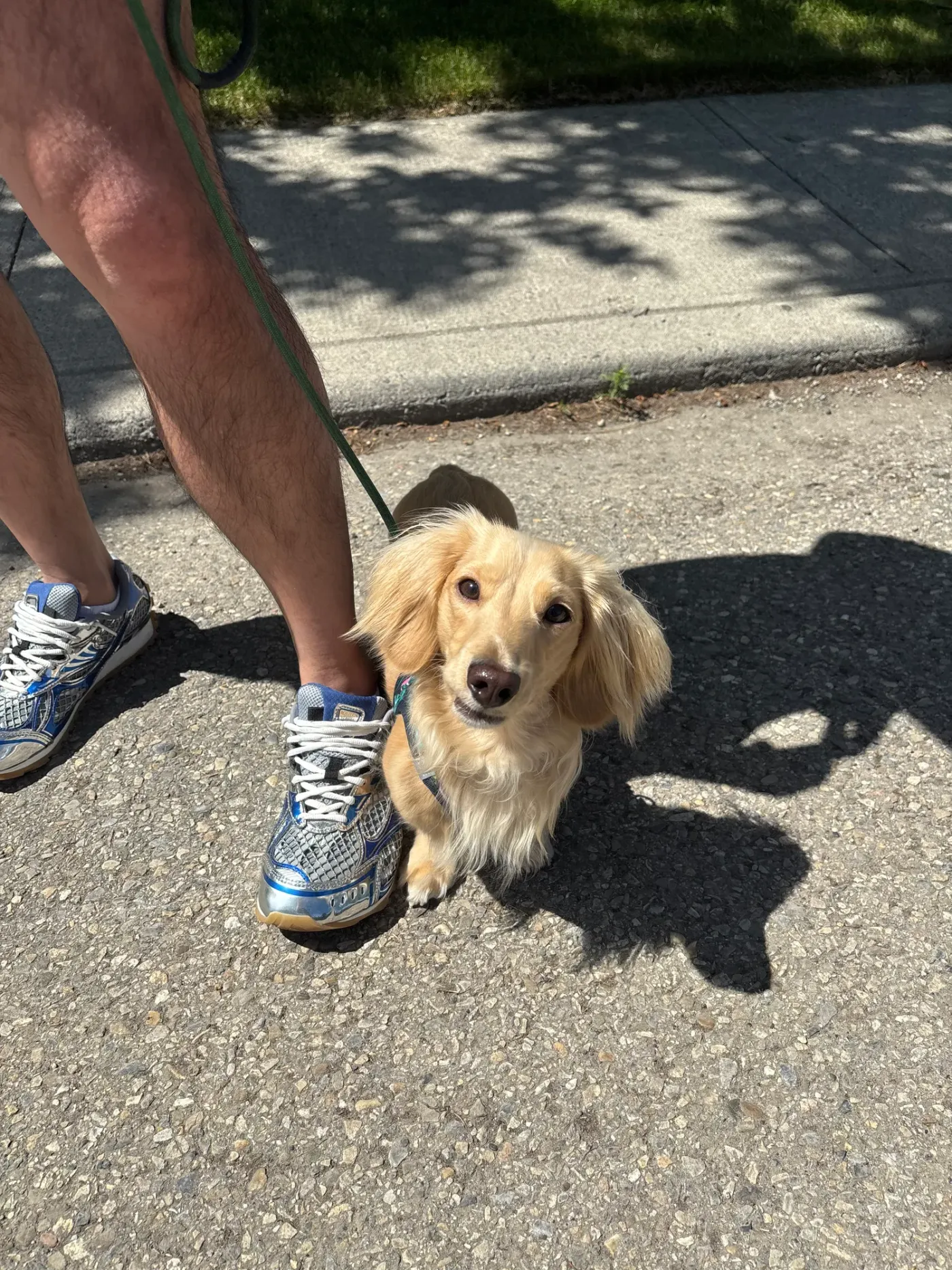
Excited panting, worried panting and sore panting sound different.
Excitement panting tends to be short and loose. It shows up as the leash comes off the hook or a visitor arrives, with a soft face and wagging body, and it settles within minutes once the moment passes. Stress panting looks tighter: the mouth pulled back at the corners, ears flat, pacing, yawning or refusing a treat. Car rides, storms, the vet's parking lot and being left alone are common triggers.
Pain or illness panting is the one to take seriously. It may happen while a dog is lying still, wake it at night, or come with restlessness, a hunched posture, trouble getting comfortable or a change in the sound of breathing. Older dogs and flat-faced breeds deserve extra attention here. Count breaths at rest when the dog is asleep and calm, and note any pattern you see. Your vet will want that information.
- Note the trigger, if any
- Watch for pacing or tight mouth
- Notice panting while lying still
- Count resting breaths while asleep
Medical before method
Rule out the body before treating panting as worry.
Call your vet if panting is new, happens at rest or at night, or comes with coughing, gums that look pale or blue, collapse, restlessness, a swollen belly, or vomiting. Some of those signs need same-day care. A dog that pants heavily for no reason should not be walked harder or crated to wait it out. Keep it calm and cool and get advice. We do not diagnose breathing.
Once the vet is satisfied, stress panting can be a training conversation. Our how-to guide gives the method; this page explains causes. A dog that pants through every car ride or every afternoon alone may suit a Private Training session with a weekly written plan. Panting that sits inside wider anxiety is the kind of case Behaviour Rehab works on, through anxiety rehabilitation and confidence building. The consultation weighs the options, and a smaller one gets recommended when it covers the need.
Asked and answered
The questions people ask us.
Why is my dog panting at night when it is not hot?
Night panting can come from stress, discomfort or a medical issue, and it is worth raising with your vet. Note how often it happens and whether your dog is restless.
Why does my dog pant in the car?
Car panting is often stress, anticipation or motion discomfort. A trainer can help with calmer car rides, but ask your vet if it comes with drooling or vomiting.
Is panting a sign of pain in dogs?
It can be. Panting while resting, with restlessness or reluctance to move, may point to discomfort, so a vet check is the right first step.
Why does my dog pant when I leave?
Panting at departures is often a sign of stress about being alone. A professional can assess it and build a plan, once your vet has ruled out other causes.
Keep reading
Calmer breathing, calmer dog
If your vet finds no medical cause, we can help with stress-driven panting at home or in the car. Book a consultation.
From real owners
Rated 5.0 on Google.
Real Northline dogs