
Why dogs do it
Why does my dog pace?
Pacing is the dog version of a hallway walk at 3 am. Back and forth, settle for a second, up again. Sometimes it is obvious why: a storm rolling in or someone about to leave. Often it is not, and that is exactly when it deserves attention. Pacing has medical causes as often as emotional ones, so here is how to read the pattern before you treat it as a training problem.
Last reviewed October 4, 2026
Patterns to notice
Worry, discomfort and the ageing brain.
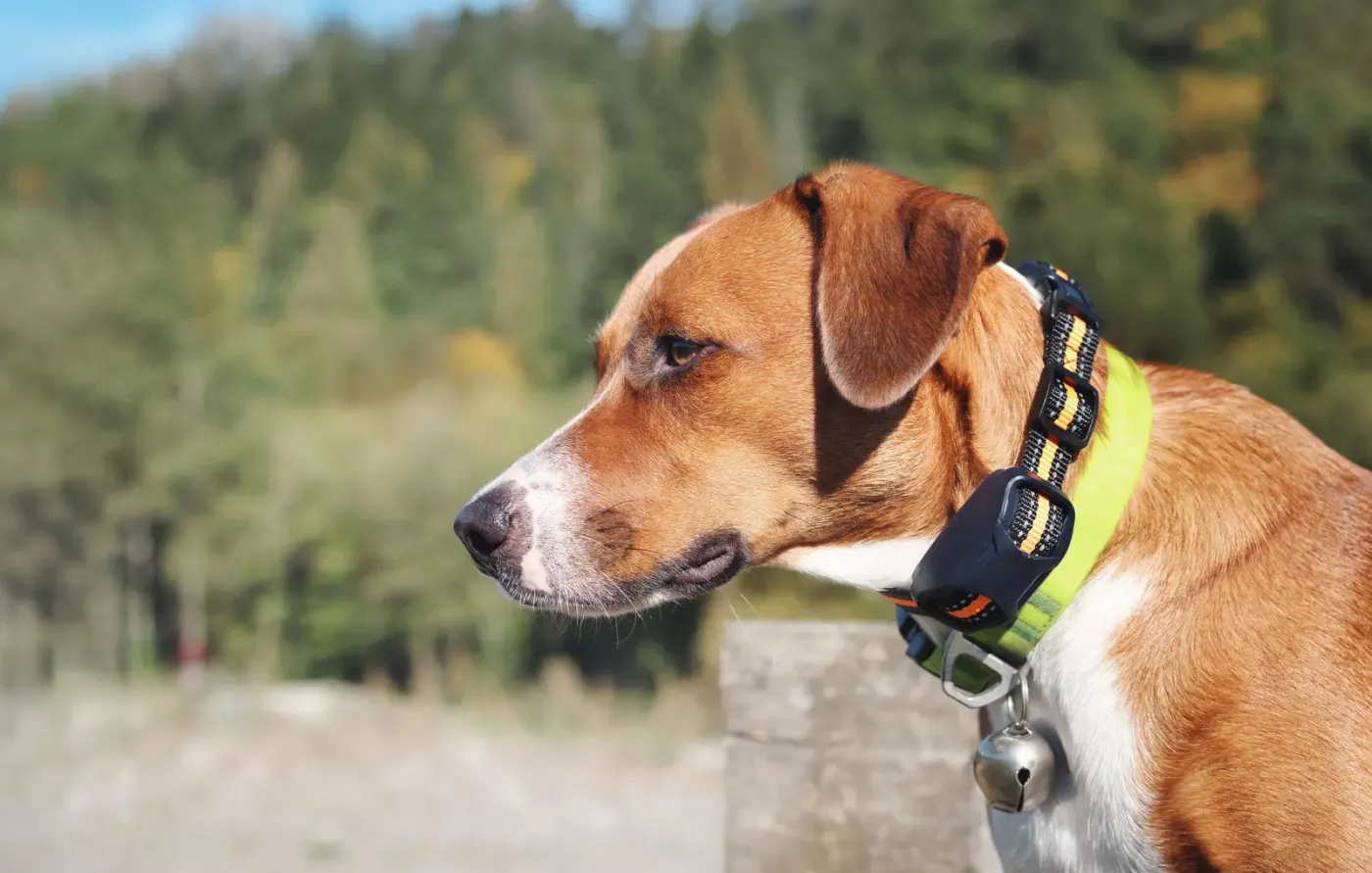
Anxiety-driven pacing tends to be tied to something: suitcases coming out, the hour before a person leaves, thunder or fireworks. Panting, whining and following you around often come with it. Physical discomfort looks different. A dog with an upset stomach may pace, lick its lips, stretch or try to get outside. A dog in pain may circle, lie down, get up again and struggle to find a comfortable position.
In senior dogs, pacing that appears in the evening or overnight can be linked to cognitive change. Signs often travel together: staring at walls, getting stuck behind furniture, waking at odd hours or forgetting routines that used to be automatic. Only a vet can sort these possibilities, so keep a short log of when pacing happens, how long it lasts and anything that comes with it, then bring it along.
- Linked to departures or storms
- Lip licking or restlessness
- Worse at night in seniors
- Cannot find comfortable position
Vet before training
Ruling out the body, then building calm.
Book a vet visit if pacing is new, happens most days, wakes the household at night, or comes with a bloated belly, retching, panting at rest, confusion or a change in appetite. Sudden restless pacing with a swollen abdomen or unproductive retching is an emergency. We cannot diagnose why a dog paces, and nobody should rule out medical causes without a vet. Once your vet is satisfied, training has something to work with.
For anxiety-linked pacing, the first steps are predictable routines, calm management around known triggers, and a settled place to rest. Our how-to guide covers the method for that in detail. Private Training at $150 per session includes a written plan built for your home. If pacing is part of wider anxiety or fear, Behaviour Rehab is built for that work, after a full assessment. At the consultation we recommend a format, and a smaller one when it is enough.
Asked and answered
The questions people ask us.
Why is my dog pacing at night?
Night pacing can come from needing to toilet, discomfort, anxiety or, in older dogs, cognitive change. Because several of those causes are medical, it is worth a vet visit, especially if it is new or getting more frequent.
Why is my dog pacing and panting?
Pacing with panting can point to stress, pain, overheating or nausea. If it comes with a swollen belly, retching without producing anything, or your dog seems distressed, contact a vet right away.
Why is my senior dog pacing?
Older dogs may pace because of joint pain, vision or hearing loss, or changes in cognition. Pacing in the evening alongside confusion is a pattern to describe to your vet. Training support can follow once health has been reviewed.
Can training stop a dog from pacing?
Training can help when pacing is driven by anxiety, routine or arousal, by building calm habits and predictable structure. It cannot fix a medical cause, which is why a vet check comes first.
Keep reading
Plan your next step
Once your vet has checked your dog, book a consultation and we will look at whether training can help.
From real owners
Rated 5.0 on Google.
Real Northline dogs