
Why dogs do it
Why does my dog lunge at cars?
A car is a strange thing from a dog's point of view: it moves faster than any animal, makes a roar, throws grit and wind, and never reacts back. Some dogs want to chase it. Some want it gone. Both end in the same frightening moment at the curb, which is why it pays to understand which one you are living with before you pick a plan.
Last reviewed October 4, 2026
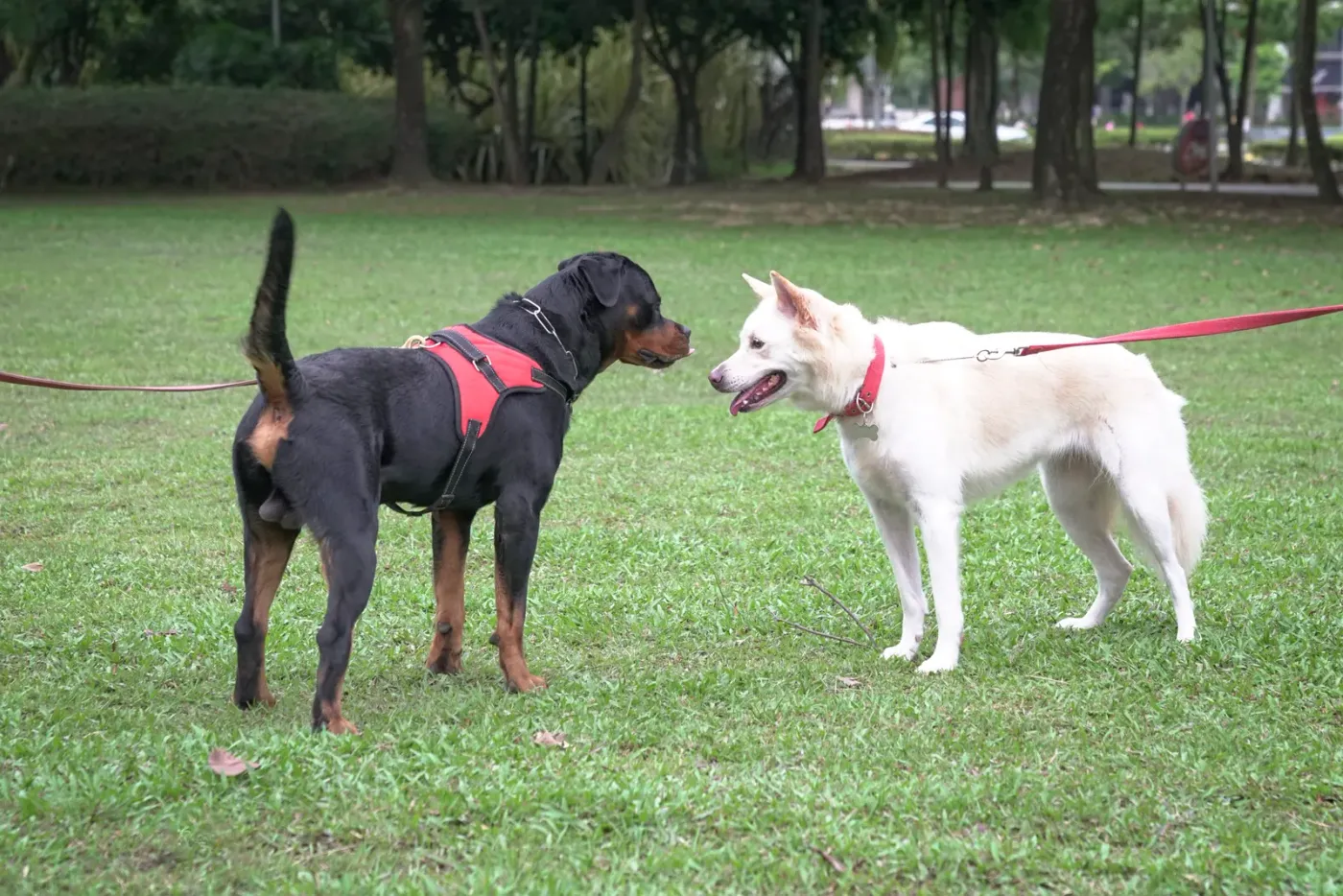
Chase or fear
Two very different dogs at the same curb.
Chase-driven lunging tends to look forward and eager. The dog often freezes or stalks as a car approaches, locks onto the wheels, then springs as it passes, sometimes silent, sometimes with a high excited bark. Herding breeds and sighthound mixes often show this pattern. The trigger is often motion itself, so the same dog may also fixate on bikes, skateboards or a rolling ball.
Fear-based lunging usually looks different. Ears go back, the tail drops, the dog may bark low and repeatedly, back up between lunges, or try to bolt away from the road. Loud trucks, buses and motorcycles are often worse than quiet cars. Many dogs show a bit of both, and a dog who began by chasing can grow wary after a near miss, which is one reason an outside eye helps.
- Stalking or staring at wheels
- Ears back and backing away
- Worse with loud trucks
- Also fixates on bikes
Where to start
Safety first, then the right kind of help.
Start with physical safety. Walk on the side of the path furthest from traffic, hold the leash with both hands near curbs, use a well-fitted collar or harness the dog cannot back out of, and choose quieter streets for now. If lunging appeared suddenly, comes with sensitivity to touch, or your dog seems to be in pain on walks, see your vet first, because discomfort can lower anyone's patience with noise.
If the vet has no concerns, it is a training question. Our step-by-step guide to stopping car lunging covers the method. On-Leash Foundations works on loose-leash walking, heel and everyday distractions. Behaviour Rehab is built for anxiety, reactivity and aggression, planned and priced after a full assessment. Private Training suits owners who want to do the work themselves. Picking the program waits for the consultation, and if a lighter one covers the need, that is what gets recommended.
Asked and answered
The questions people ask us.
Why does my dog try to chase cars?
Fast movement can trigger a chase response, especially in herding and sighthound types. The car never stops or turns around, so the chase can feel endlessly rewarding to the dog. That makes management and early training worth the effort.
Is my dog scared of cars or does he want to chase them?
Watch the body. Stalking, staring at wheels and springing forward suggest chase, while ears back, a tucked tail and backing away suggest fear. Many dogs mix the two, and a trainer can help you read it.
Should I correct my dog for lunging at cars?
A sharp leash pop at the curb rarely teaches anything useful, and with a fearful dog it can add to the worry. Safe management and structured training work on the cause instead. If you are unsure, book an assessment before trying tools on your own.
Can a dog get hurt lunging at traffic?
Yes. A dog can slip a collar, pull a handler off balance or reach the road. That risk is why safety steps come before any exercise and why fast escalation deserves professional help.
Keep reading
Walk past traffic calmly again
Book a consultation and we will look at whether your dog is chasing or worried, then recommend the program that fits.
From real owners
Rated 5.0 on Google.
Real Northline dogs