
Why dogs do it
Why does my dog herd children?
Your Border Collie circles the trampoline. Your Corgi body-blocks the toddler in the hallway. The Aussie drops low and stares while the kids play tag. This is herding, an instinct shaped over generations of work with sheep and cattle, now pointed at the smallest, fastest people in the house. Understanding what switches it on helps you give the instinct a job other than your children.
Last reviewed October 4, 2026
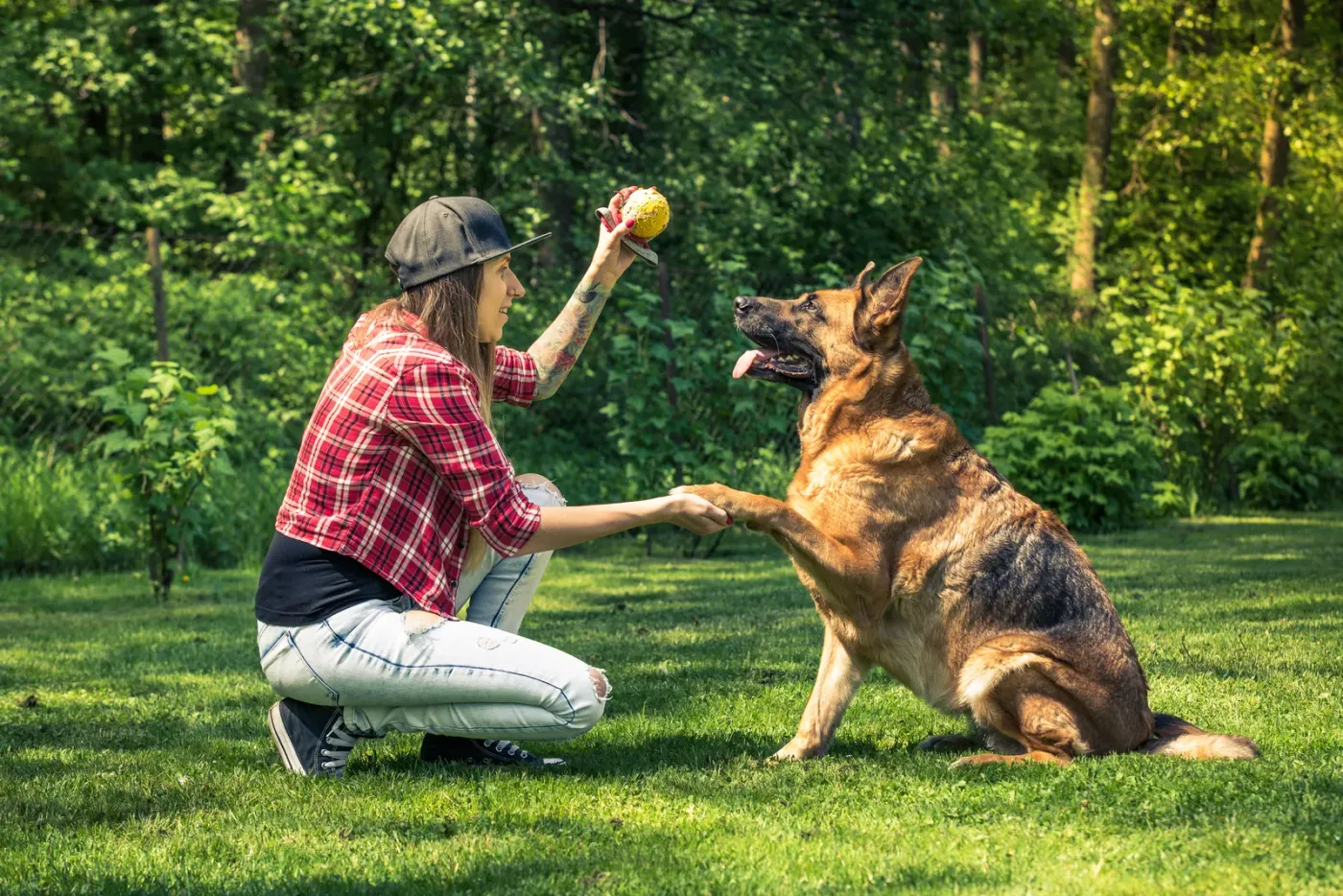
Instinct or anxiety
Pure herding, frustration or worry: how they differ.
Classic herding is calm and intense at once: the low crouch, the hard stare herders call eye, wide circles, and a dog that moves to cut kids off from the edge of the group. It switches on with movement and off when everyone sits down. Herding breeds such as Border Collies, Australian Shepherds, Corgis and cattle dogs tend to show it most, though plenty of mixes carry it too.
Frustrated herding looks busier: frantic barking, spinning and grabbing at sleeves, often in a dog with too little to do. Some dogs herd out of worry instead, trying to keep the family together, and show a tense body, pacing or whining when kids scatter. If the herding comes with stiffness, growling or snapping when a child approaches directly, it may be more about fear than instinct, and that changes the plan.
- Crouch and stare: instinct
- Barking and spinning: frustration
- Pacing and whining: worry
- Stiffness or growling: fear
Outlets and rules
Give the instinct a job that is not your kids.
Herding on its own is rarely a vet matter, but a sudden change in a dog's behaviour around children, or new irritability, is worth a vet check. Practical first steps are house rules and outlets: no chase games with the dog loose, a gate or leash during high-energy play, and daily work that uses the brain, such as structured fetch, scent games or pushing a herding ball. Children stay out of the training.
Our how-to guide covers the method step by step. For owners who want to teach impulse control at home, Private Training at $150 per session comes with a written weekly plan. Day Training runs Monday to Friday with one-on-one work plus supervised play and enrichment, while your dog still sleeps at home. If herding has turned into nipping or fear, an assessment comes first. The consultation suggests a format and leans toward the lighter one when it suffices.
Asked and answered
The questions people ask us.
Why does my Border Collie herd my kids?
Border Collies were bred to gather and control livestock, and children who run and squeal trigger the same pattern. The dog is doing a job nobody gave it. Structured outlets and clear rules around play help redirect that drive.
Is it dangerous when a dog herds children?
Herding itself is usually not aggressive, but it can escalate to heel nips or knocking small kids over. That is why an adult should supervise and pause running games around the dog. If nipping has started, treat it as a separate, more urgent problem.
Can you stop a dog from herding?
You cannot remove the instinct, but you can manage when it switches on and give it better outlets. Impulse control, a solid place command and calm rules around play are the usual building blocks.
Why does my dog herd the kids but not the adults?
Children move faster, more often and more unpredictably than adults, which is exactly what sets herding off. Adults also tend to walk in straight lines and ignore the dog's stare. The kids are simply the best flock in the house.
Keep reading
Give the herder a job.
Book a consultation and we will look at what drives the herding, then match your dog with a format that fits your household.
From real owners
Rated 5.0 on Google.
Real Northline dogs