
Why dogs do it
Why does my dog get worse at the dog park?
The park used to be the easy part of the week. Now your dog charges the gate, ignores you, maybe snaps at a dog who used to be a friend. That slide is common, and it usually has a reason you can see once you know where to look. Here is how we think about it, and when the honest answer is a break from the park.
Last reviewed October 4, 2026
Reading the slide
Four likely reasons, and the clues that separate them.
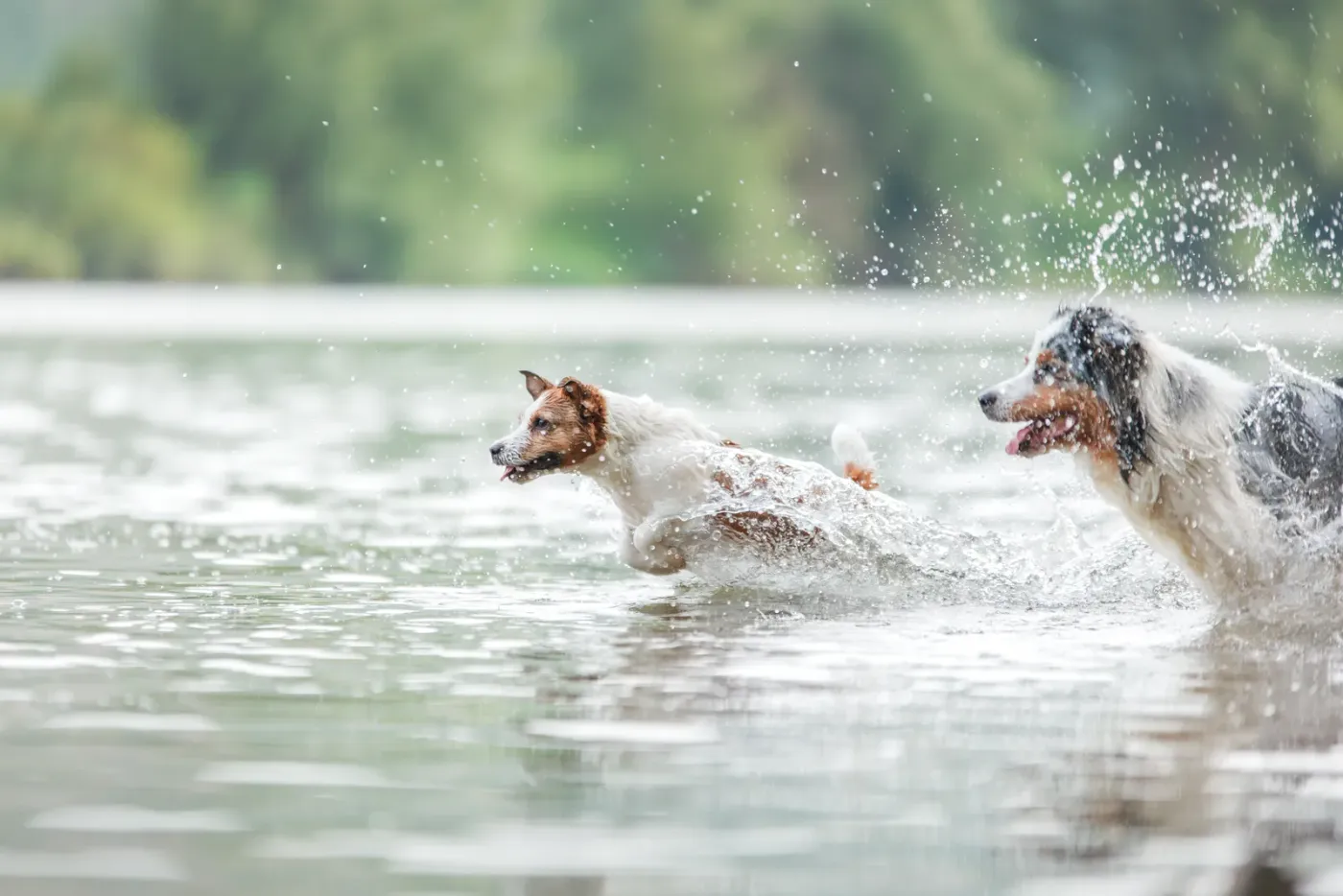
Arousal rehearsal is often the first suspect. A dog who spends every visit sprinting, body-slamming and guarding the fence line is practising a state, not just having fun, and the state tends to arrive earlier each time: whining in the car, spinning at the gate. Fear looks different. A worried dog may hover near your legs, tuck the tail during greetings, then snap when crowded, and the snapping often grows because it works.
Two other causes hide well. Pain can turn a tolerant dog short-tempered, especially with dogs who jump on hips or shoulders, so notice whether the grumbling targets bodies or simply arrives sooner. Maturity matters too: many dogs leave the free-for-all play of adolescence behind and grow less patient with rude strangers. Track the first minute, the tenth minute and the drive home; the pattern often points to one of the four.
- Arousal arriving earlier each visit
- Hovering near you, then snapping
- Grumbling when touched on hips
- Less patience with pushy players
Vet, training, or both
Sorting a vet question from a training question.
Book a vet visit first if the change came on suddenly, if your dog flinches when another dog touches a particular spot, or if stiffness, limping or licking shows up after visits. Training cannot fix a sore joint, and a professional assessment beats guessing. If the vet finds nothing, treat it as a training question, and take a break from the park while you work it out, since every tense visit adds another rehearsal.
Growling at the park is information, so never punish it; a dog stripped of warnings has fewer ways left to say no. For the method itself, our how-to guides walk through it step by step. As for formats: Private Training at $150 + GST per one-hour session suits owners who want to do the work, while Behaviour Rehab is built for fear, reactivity or aggression. The consultation recommends one, including a smaller option when that is enough.
Asked and answered
The questions people ask us.
Why is my dog fine on walks but bad at the dog park?
Walks rarely include a crowd of loose dogs running at full speed, so arousal tends to stay lower. The park stacks speed, body contact and competition for toys or water, and many dogs struggle once those pile up together.
Should I stop taking my dog to the dog park?
If visits keep ending in snapping, fixation or a dog who will not come back to you, a break is the kind call while you sort out why. Some dogs are happier with one or two known play friends, or a quiet walk, and that is a fine outcome.
Is my dog becoming aggressive at the dog park?
Not necessarily. Snapping often comes from fear, pain or overarousal rather than a lasting change in temperament. If you see stiff freezes, hard stares or bites that make contact, stop the visits and get a professional assessment.
Can a dog be too excited at the dog park?
Yes. A dog that cannot hear you, will not take a treat it loves, or keeps escalating play is past the point where it can make good choices. Leaving early, before that point, is a better habit than staying until it boils over.
Keep reading
Talk through the park problem
Book a consultation and we will look at what your dog is rehearsing at the park and recommend the format that fits.
From real owners
Rated 5.0 on Google.
Real Northline dogs