
Why dogs do it
Why does my dog follow me everywhere?
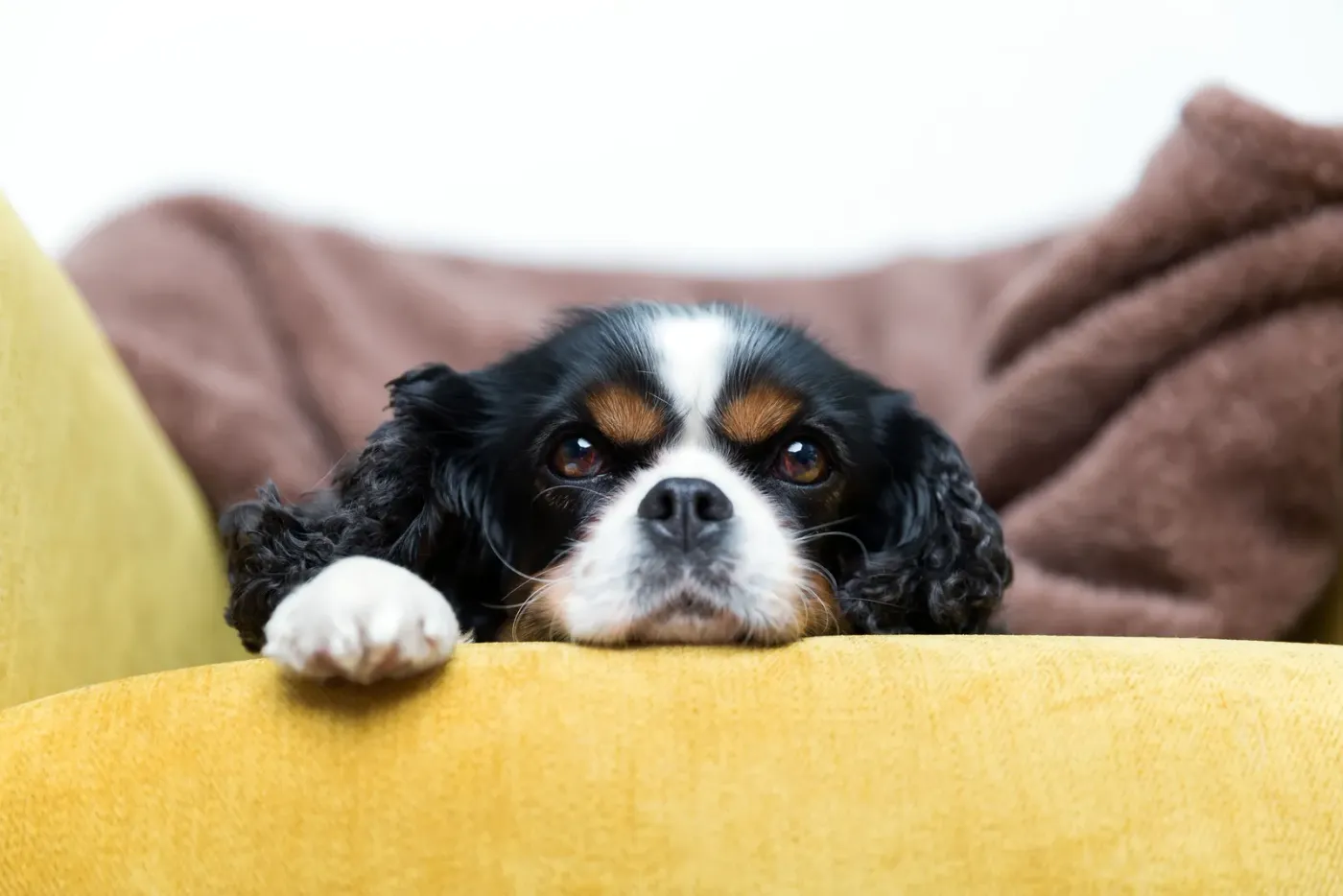
A dog trailing you from the couch to the kitchen to the laundry room is common, and often sweet. The real question is not whether your dog follows you, but how it feels when it cannot. A relaxed shadow and a dog in distress can look identical while you are home. The difference shows up when a gate goes across a doorway or you head out.
Last reviewed October 4, 2026
Shadow or worry
Attachment, breed and boredom, and how to tell them apart.
Many dogs simply like being near their people. Herding and companion breeds, such as border collies and many toy breeds, were selected for working close to a person, so tracking you can feel natural to them. Boredom plays a part too: in a quiet house, you are where things happen. Food, walks and attention tend to come from you, so following can be a perfectly sensible habit.
The tell is how the dog copes with separation. A contented follower settles when you stay in one room and can rest calmly behind a baby gate. A dog heading toward separation distress often cannot: it whines at barriers, watches for keys and shoes, paces as you prepare to leave, and may struggle to eat while alone. Filming a short absence is one of the clearest ways to see the difference.
- Settles when you stay put
- Rests calmly behind a gate
- Tracks keys, shoes and coat
- Panics or drools when alone
Next steps
Health checks, early structure and where we come in.
Call your vet if clinginess appears suddenly, especially in an older dog, or arrives with changes in sleep, appetite, vision or hearing. A dog who abruptly sticks close may feel unwell or unsure of its surroundings. For a healthy follower, first steps are gentle: build easy time apart while you are home, offer a chew in another room, and keep departures low-key. Our how-to guide covers building independence step by step.
If the following is mostly habit, Private Training gives you a one-hour session and a written plan for your home. The place command, worked on in Puppy Fundamentals and On-Leash Foundations, gives a dog a clear spot to settle. Where following comes with panic when alone, Behaviour Rehab is built for anxiety work after a full assessment. At the consultation we suggest a fit, and we will point you to the lighter option if it suits.
Asked and answered
The questions people ask us.
Why does my dog follow me everywhere all of a sudden?
A sudden change can follow a move, a schedule change or a scare. It can also signal illness or age-related change, so if it is new and out of character, see your vet first.
Is it bad if my dog follows me everywhere?
Not on its own. It matters when your dog cannot settle apart from you or shows distress when left alone.
Does my dog follow me because it sees me as the leader?
Following is more often about attachment, breed and where the good things come from than about rank. How your dog copes alone tells you far more.
Do certain breeds follow their owners more?
Many herding and companion breeds were selected to work close to people, so following can come more naturally to them. Any dog can do it, though, and individual history matters as much as breed.
Keep reading
Help your shadow settle.
Book a consultation and we will look at whether your dog's following is habit or worry, and what fits.
From real owners
Rated 5.0 on Google.
Real Northline dogs