
Dog-to-dog & household
Which dog to train first in a multi-dog home
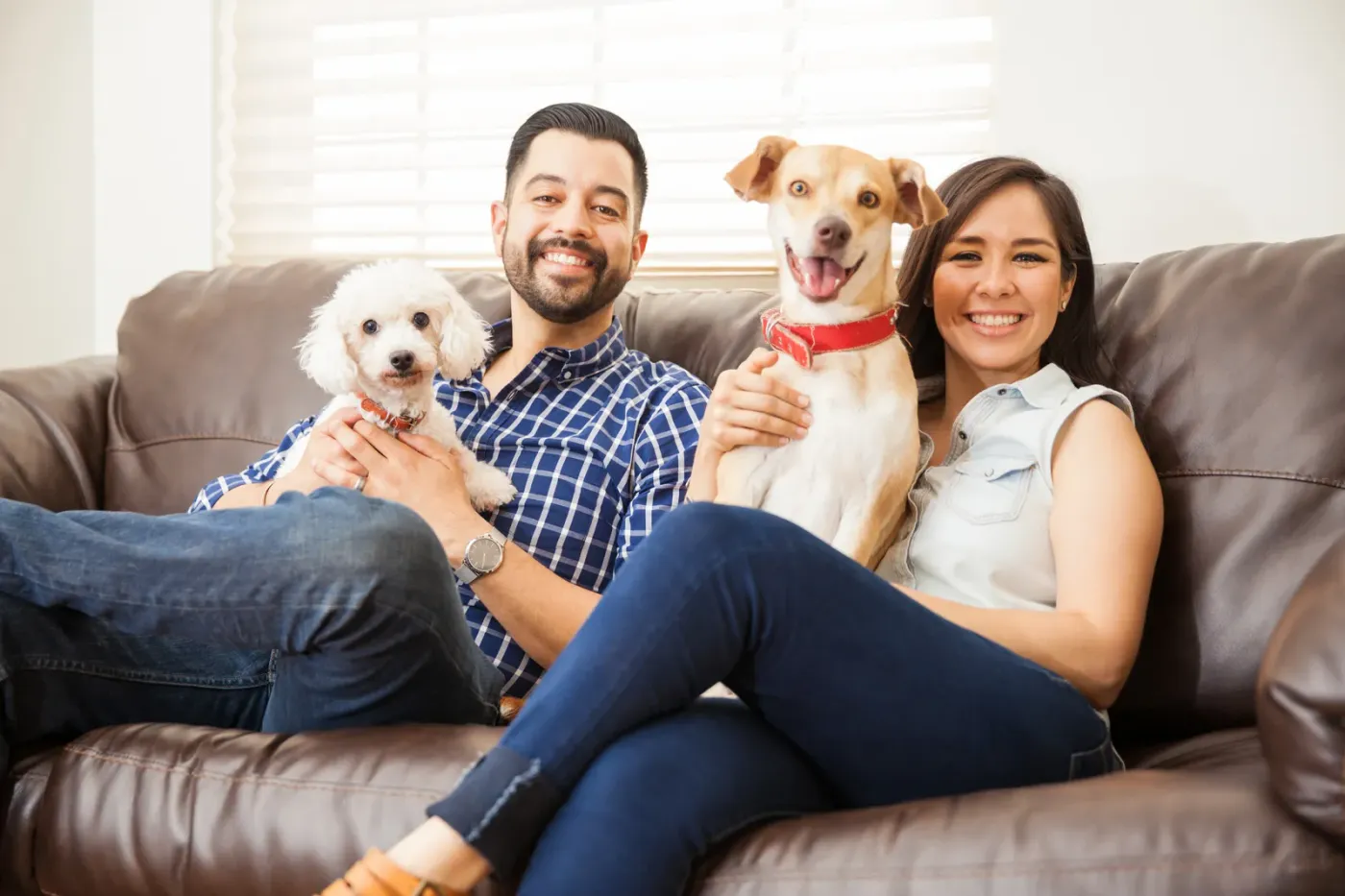
When three dogs rush the door together, it is tempting to train whichever one annoys you most. That is not always the right pick. Dogs in a shared home copy each other, set each other off and sometimes block each other's progress. The useful question is which dog, if they changed, would make the rest of the household easier. Here is how to reason through it.
Last reviewed October 4, 2026
Three candidates
The influencer, the problem dog and the newcomer.
The influencer is the dog who starts things: the first bark at the window, the first sprint to the door, the first to pull toward a squirrel. Others often follow because that excitement is contagious. Training this dog first can quiet a chain reaction, since the followers lose their cue. Watch a few ordinary moments and note who moves first before you decide.
The problem dog is the one whose behaviour carries the most risk or cost, such as lunging, guarding food, or growling at a housemate. Risk outranks annoyance. The newcomer, often a puppy or a recent rescue, is a candidate because habits are still forming, and early structure is easier than later repair. Sometimes one dog fits two labels, which settles the question quickly.
- Who reacts first in chains
- Which behaviour carries real risk
- Whose habits are still forming
- Which change helps everyone most
Reasoning it through
Safety first, then influence, then age.
If any dog is fighting with a housemate, guarding resources with stiff body language, or has bitten, manage first: separate the dogs with gates or crates during meals and high-arousal moments, and arrange a professional assessment. Never punish growling, since it is useful information. A vet check is sensible too, because pain can sit behind sudden irritability. Behaviour Rehab accepts dogs with bite histories after a full assessment.
With safety covered, choose the influencer over the newcomer unless the newcomer is a young puppy whose habits are forming fast. Then plan how the trained dog's new habits will meet the untrained ones at home. What is not published: whether two dogs can train at the same time, or any multi-dog pricing. Ask both at the consultation, along with which program fits, including whether a lighter one will do.
Asked and answered
The questions people ask us.
Should I train my older dog or the new puppy first?
Often the puppy, because habits are still forming and early structure is easier than later repair. If the older dog is the one setting off barking or rough play, though, training them first may give the puppy a calmer model.
Can I train two dogs at the same time?
You can practise with each dog separately, then combine them once each dog knows the skill alone. Whether two dogs can attend a Northline K9 program at once is not published, so ask at the consultation.
Will training one dog fix the other dog's behaviour?
Sometimes it helps, especially when the trained dog was the one starting chain reactions. It is not a substitute for the other dog's own training, and any change depends on how consistently the household follows through.
What if my dogs are fighting?
Separate them with gates, crates or closed rooms so they cannot reach each other, and do not reach between fighting dogs with your hands. Book a vet check and a professional assessment before trying any training. Fights between housemates are a safety issue first.
Keep reading
Pick the right dog first.
Book a consultation and we will look at your whole household before recommending which dog starts, and with which program.
From real owners
Rated 5.0 on Google.
Real Northline dogs