
Glossary
What is pressure and release in dog training?
Pressure and release is less about pulling and more about listening. You offer a small amount of steady leash pressure, wait, and the moment the dog softens toward it, the leash goes loose. That slack is the answer the dog was looking for. Done well, it looks like nothing much is happening. Done badly, it turns into a tug of war.
Last reviewed October 4, 2026
How it works
Steady pressure, then instant slack.
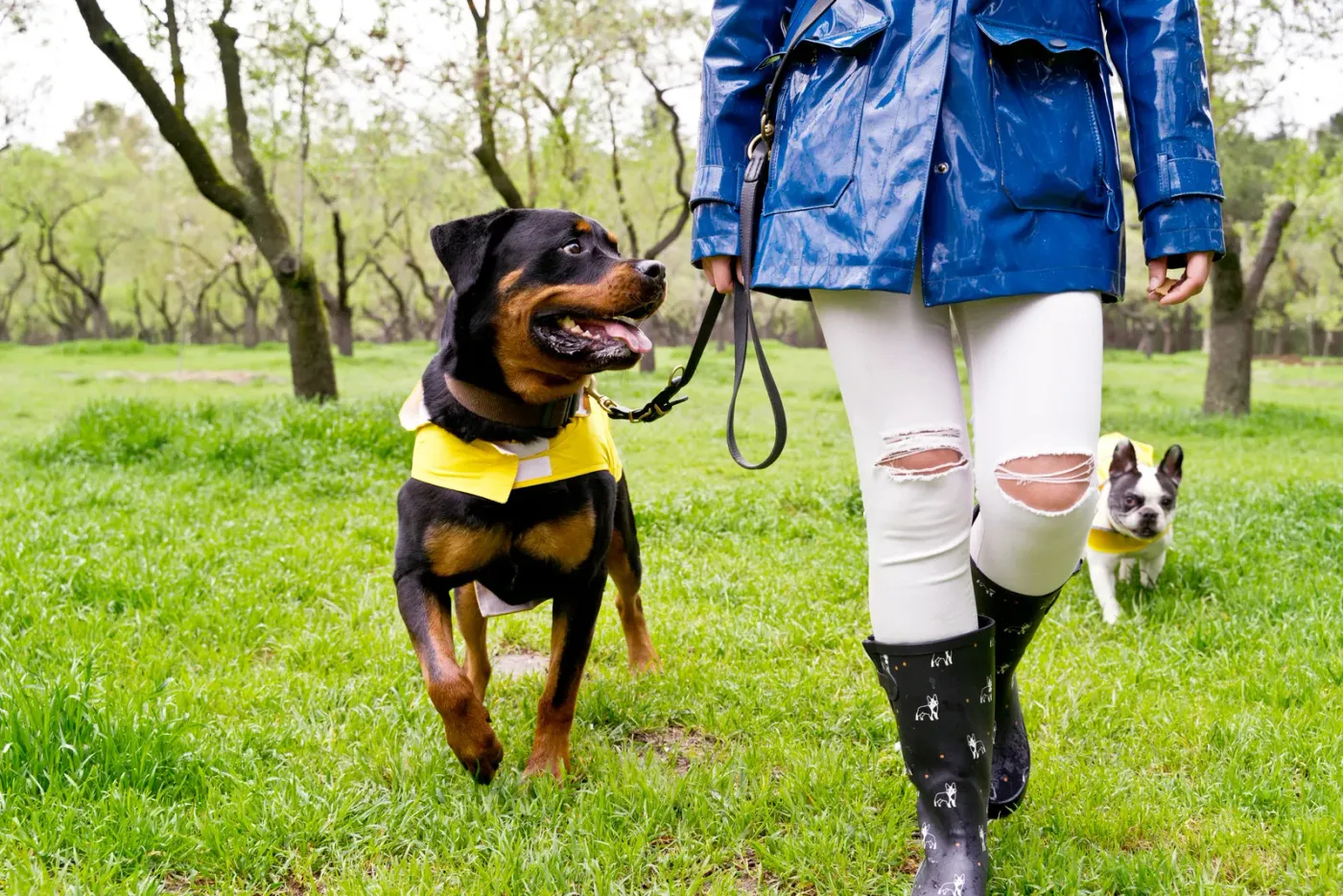
The pressure is never a yank. It is a steady, light hold on the leash, enough for the dog to notice and no more. You keep it constant rather than jerking or increasing it, and you wait. Many dogs try a few things. The one that earns relief is moving toward the direction of the pressure, and the slack arrives right then, with a marker word and praise.
A worked example on a slip lead: your dog plants its feet at the end of the driveway. Hold light, even tension toward you and stay quiet. The instant one paw shifts your way, let the leash go soft and say yes. Take a step, wait for the next yield, release again. With repetition, many dogs start meeting you halfway, because following feels better than bracing.
- Light, steady leash pressure
- Wait for the dog to yield
- Release the instant it softens
- Mark and praise the yield
In our method
Why the slip lead comes after the marker.
In our programs, skills are taught with markers and rewards first, so the dog already knows the word yes means good choice before pressure is ever asked of it. A slip lead, introduced properly and fitted high on the neck, then becomes a gentle line of communication. Leash manners in Puppy Fundamentals and loose-leash walking in On-Leash Foundations both start here, and the slip lead goes home with you.
The mistakes are predictable. Holding pressure and never releasing teaches the dog to lean into it. Releasing while the dog is still pulling rewards the pull. Popping the leash instead of holding it turns guidance into nagging. And a dog that panics or freezes under any pressure needs a different plan and a professional look first. If the leash keeps going tight, Book a consultation.
Asked and answered
The questions people ask us.
How does pressure and release work on a leash?
You apply light, steady leash pressure and wait. The moment the dog moves toward it, the leash goes slack, which tells the dog it chose correctly.
Is pressure and release training cruel?
Not when the pressure is gentle and the release is immediate, because the dog always has an easy way to make it stop. Yanking, constant tension or using it on a frightened dog is a different story.
Can you use pressure and release with a slip lead?
Yes, and the slip lead is our usual starting tool for it once a dog knows its marker word. It should be introduced properly and kept high on the neck.
Why do some dogs pull harder against leash pressure?
Often the release is coming too late, or the pressure never fully lets go, so the dog learns to brace against it. Lighter pressure and a faster release often change the conversation.
Keep reading
Learn the release, not the yank
We teach your dog the pressure, then teach your hands the timing. Book a consultation and bring your leash.
From real owners
Rated 5.0 on Google.
Real Northline dogs