Glossary
What is latency in dog training?
Your dog comes when called. Eventually. After one more sniff, a glance at the other dog, and a slow amble in your direction. The recall technically happened, but the pause before it is the part that should worry you. Trainers call that pause latency. It is measurable, it is trainable, and on a recall or an emergency stop it is often the deciding factor.
Last reviewed October 4, 2026
Cue to response
The pause between the word and the move.
Latency is measured from the end of the cue to the first sign of the right response, not to the finished behaviour. On a sit, that is the moment the rear starts to drop. On a recall, it is the head turn and the first step toward you. Speed of travel is a separate thing. A dog can have a quick start and a slow jog, or a lightning sprint after a long pause.
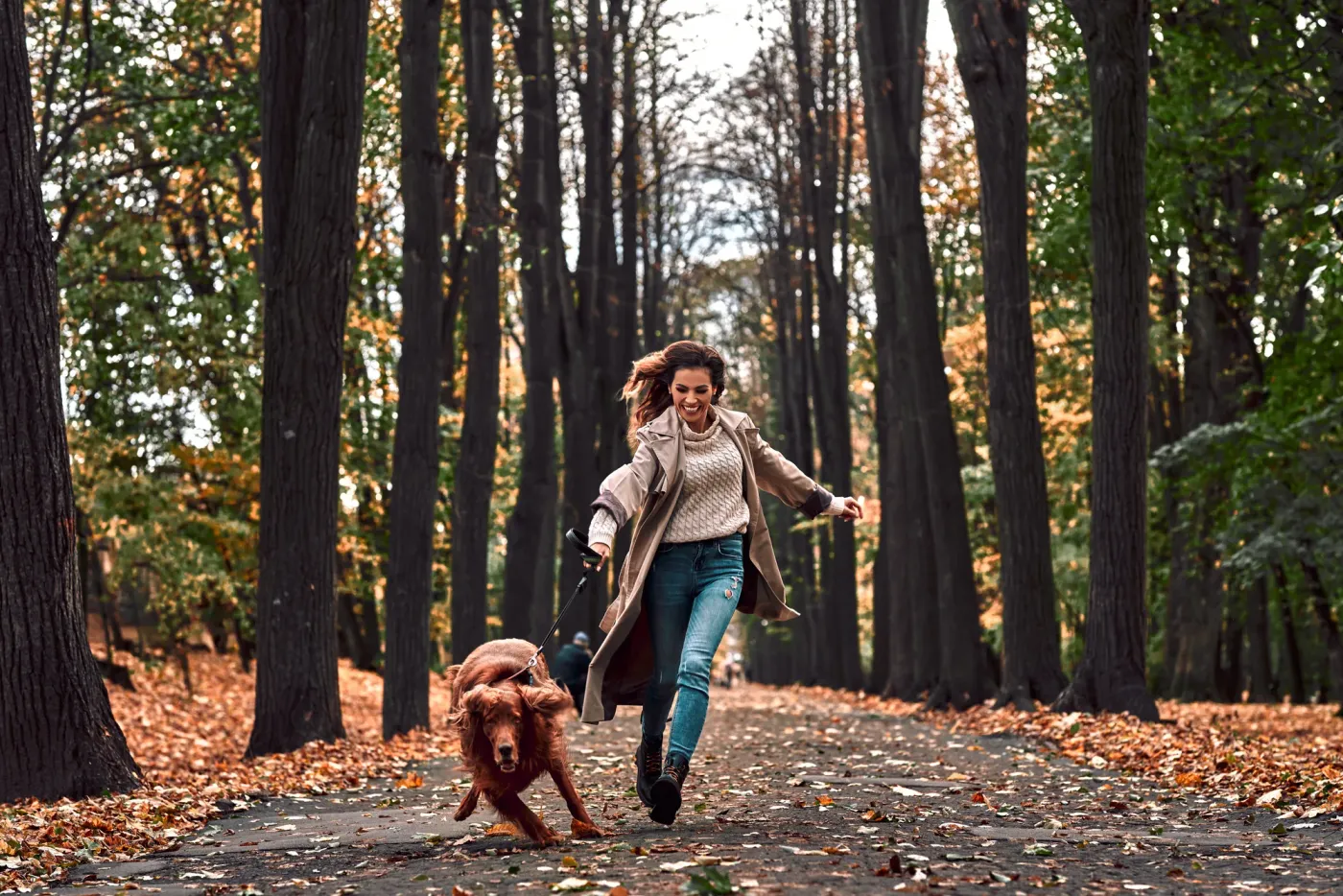
A worked example: an owner films a batch of backyard recalls on a long line and counts the beats between the recall cue and the head turn. Some calls get an instant turn; others get two or three seconds of sniffing first. From then on, only the instant turns earn the best reward, a tug game or a handful of chicken, while slower ones get calm praise. Fast starts tend to become more common when they pay best.
- Measure from cue to first move
- Film it, then count beats
- Pay the fastest starts best
- Say the cue once
Recall and stops
Why a slow start costs most when a dog is loose.
Off leash, latency is the gap in which a dog keeps travelling toward a road, a deer or another dog. That is why our Functional Off-Leash and Advanced Off-Leash programs put so much weight on recall around distractions and sit, stay and down at distance. Skills are built with markers and rewards first; where a remote collar is part of the plan, it is introduced properly and the owner is taught to use it.
The mistakes that stretch latency are mostly habits. Calling a dog several times teaches it that the first call is a suggestion. Calling only to end the fun, leash on, park over, teaches it to stall. Rewarding a slow arrival as warmly as a fast one tells the dog speed is optional. And testing an emergency stop for the first time near traffic is a gamble, not a plan. Practise it somewhere safe and enclosed, on a long line.
Asked and answered
The questions people ask us.
What does latency mean in dog training?
It is the delay between the end of a cue and the moment the dog starts to respond. Low latency means a near-instant start; high latency means a noticeable pause first.
How do I make my dog respond faster to commands?
Give the cue once, then reward the quickest starts with your best reinforcer and the slower ones more modestly. Keep sessions short and stop while the dog is eager. If responses slow down suddenly, check with a vet, since discomfort can look like reluctance.
Why does my dog take so long to come when called?
Often the recall has been paid poorly, used mainly to end fun, or repeated so often the first call lost its meaning. Distractions outdoors also compete hard. Rebuilding on a long line, with generous rewards for fast turns, is a safe place to start.
Is latency the same as speed?
No. Latency is how long the dog takes to start, while speed is how fast it moves once it has started. A recall needs both, but for safety the start usually matters more.
Keep reading
Close the gap on come.
Book a consultation to talk through your dog's recall and which program, large or small, fits the gap.
From real owners
Rated 5.0 on Google.
Real Northline dogs