
Glossary
Impulse control vs obedience: what is the difference?
Plenty of dogs know sit, down and stay perfectly, then launch at the dinner table the moment their owner turns away. That is not a contradiction. Obedience and impulse control are different skills, trained in different ways, and a dog can be strong in one and weak in the other. Knowing which one is missing tells you what to practise next.
Last reviewed October 4, 2026
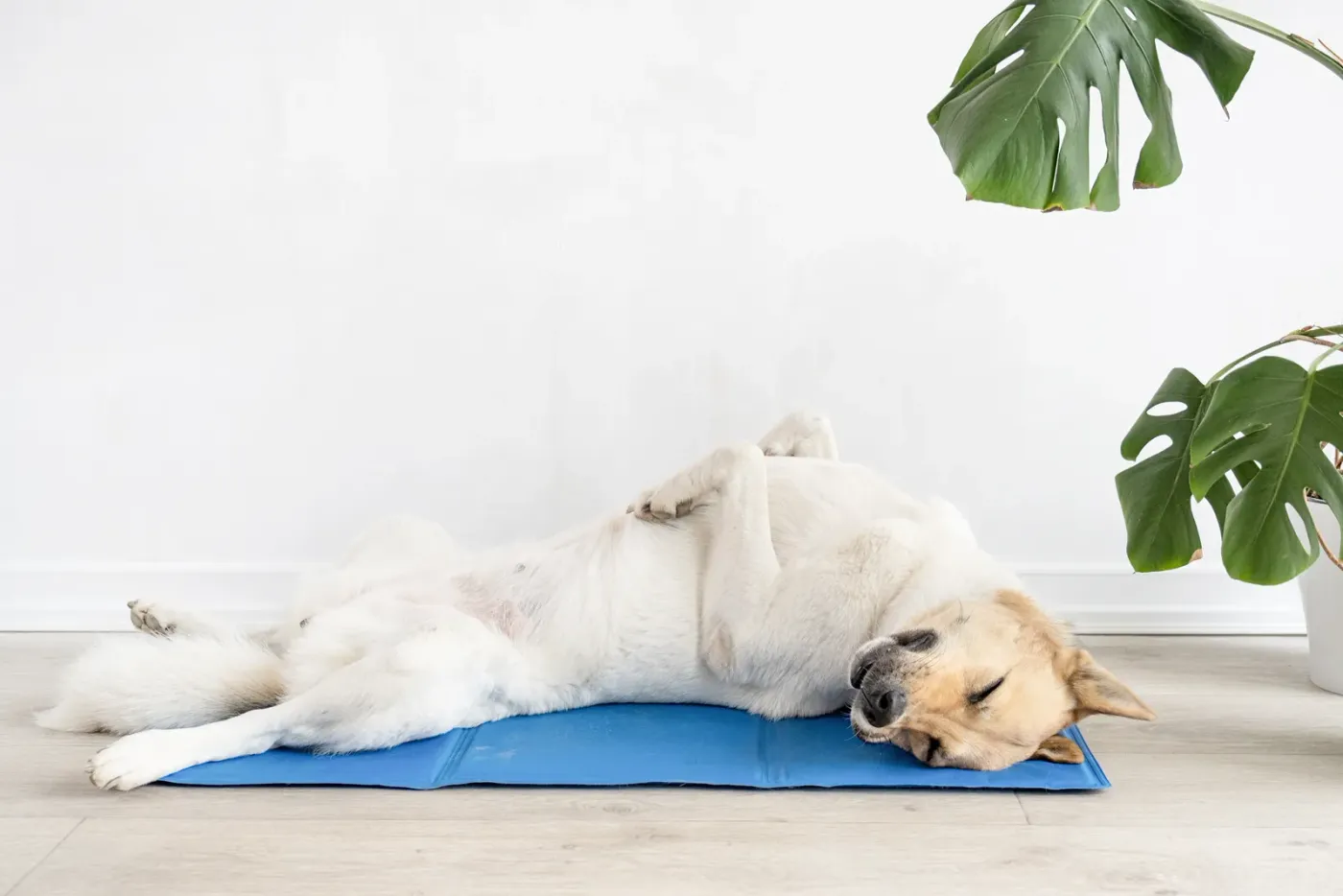
Two different skills
Responding to a cue versus waiting without one.
Obedience is a learned response to a cue: you say place, the dog goes to its bed. Impulse control is the dog's ability to pause before acting on a strong urge, with or without a cue. It shows up as default behaviour: sitting at a doorway, waiting for the food bowl to touch the floor, leaving a dropped sandwich alone. Obedience answers the question, what do you want? Impulse control answers a different one: what should the dog do when nobody says anything?
Consider a Labrador who will hold a down-stay in the living room for as long as asked. The doorbell rings and he is at the door before anyone moves. He knows the cue. What he has not learned is that a ringing bell is a reason to wait. With a leash or a gate in place first, the training rewards the moment he hesitates on his own, so pausing has a chance to become the habit.
- Obedience follows a given cue
- Impulse control needs no cue
- Defaults reveal real self-control
- Strong cues, weak waiting happens
Method and mistakes
Building self-control alongside the cues.
Our programs work on both, even though the published lists name the cues: sit, down, stay, place, heel. Place shows the overlap well. It starts as an obedience cue, and with practice around everyday distractions it can turn into a dog choosing to stay put while life carries on. Real-world proofing is where impulse control gets tested, because the urges at a busy park are bigger than the ones in a kitchen.
Owners often mistake one skill for the other. Repeating a cue louder at an overexcited dog asks obedience to do the job of impulse control. Releasing a dog the moment it explodes out of a wait rewards the explosion. Relying on cues for everything leaves the dog lost when you are not watching. Short, frequent practice of waiting for things the dog wants tends to build self-control more steadily than long drill sessions.
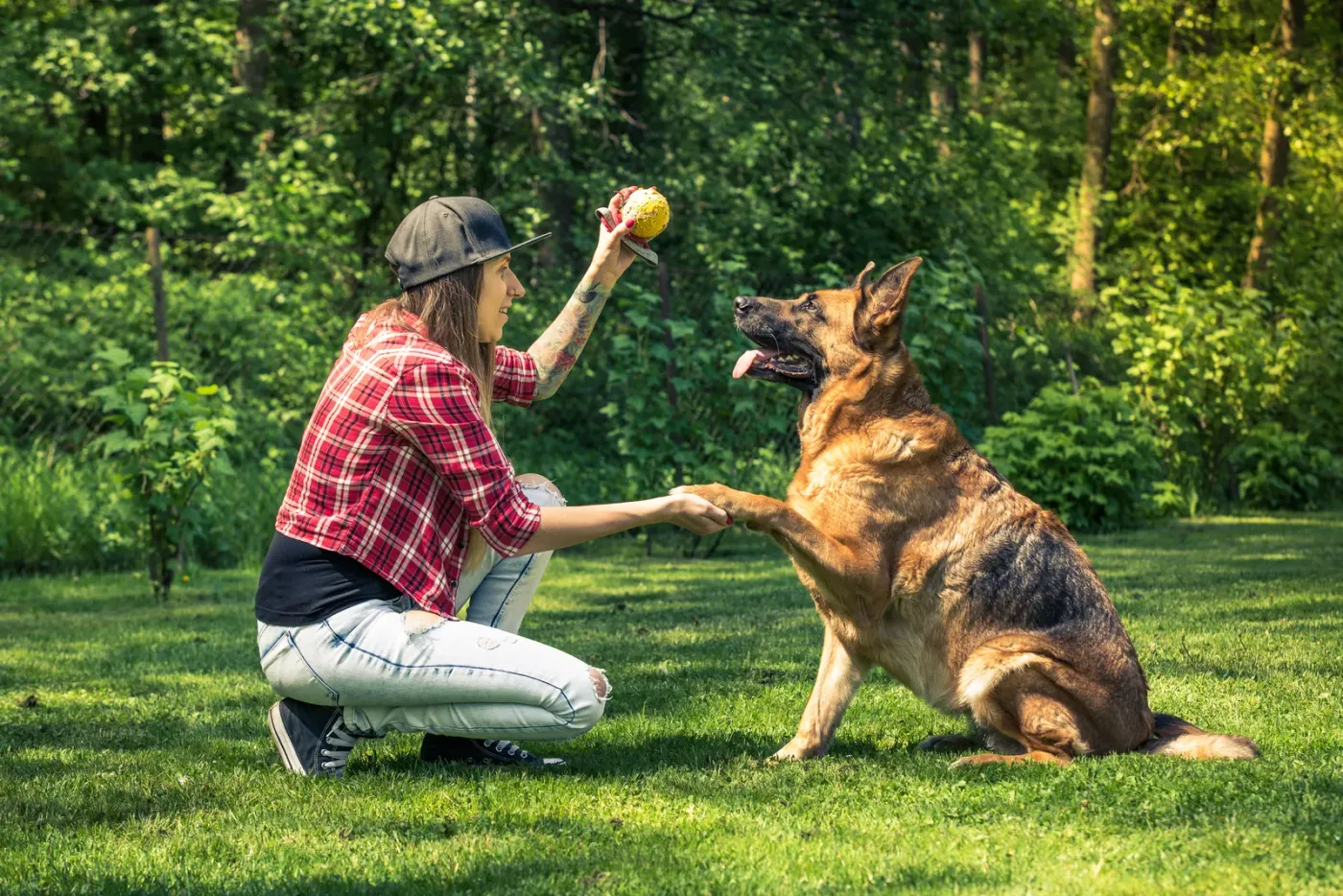
Asked and answered
The questions people ask us.
Is impulse control the same as obedience?
No. Obedience is responding to a cue you give, while impulse control is the dog holding back from an urge without needing one. Most everyday manners draw on both.
Can you teach impulse control to an adult dog?
Yes. Adult dogs can learn to wait for things they want, though dogs with a long history of rehearsing the rush may need more patient, gradual practice.
Why does my dog know sit but still jump on guests?
Knowing sit is obedience. Staying seated while an exciting guest walks in is impulse control, and a dog can be fluent in the cue yet still struggle to hold back when the urge is strong. The waiting itself needs practice, with a leash or gate in place first.
What are good impulse control exercises for dogs?
Waiting for the food bowl, waiting at a gate with the leash on, and leaving a toy on the floor until released are common starting points. Keep the temptation small at first and raise it gradually.
Keep reading
Train the wait too
Book a consultation and we will look at which skill your dog is missing, then recommend a program only as big as needed.
From real owners
Rated 5.0 on Google.
Real Northline dogs