Glossary
What is generalization in dog training?
Ask a dog to sit in your living room and you get a tidy sit. Ask the same dog to sit outside a busy coffee shop and you may get a blank look. That gap is not stubbornness. It is a skill that has not been generalized yet. Here is what the term means, why dogs need it taught, and how we carry cues from the kitchen to the sidewalk.
Last reviewed October 4, 2026
The definition
A cue that travels with the dog.
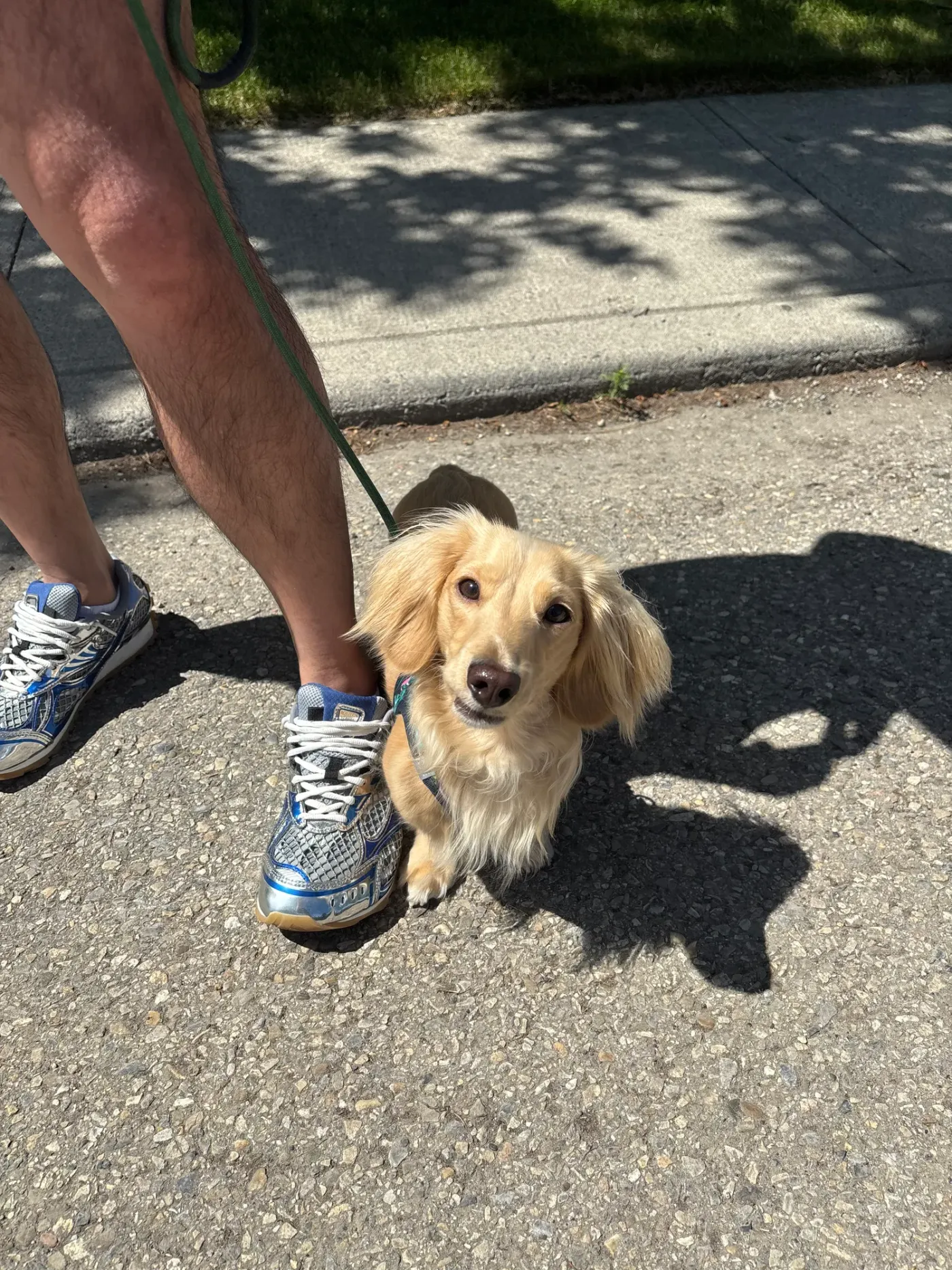
To a dog, a cue is often tied to everything around it when it was learned: the floor, the smell of the room, your posture, the treat pouch on your hip. People generalize easily, so we assume a dog who sits in the kitchen understands sit. Many dogs do not, yet. They have learned sit-in-the-kitchen-with-you-holding-a-cookie. Generalization is the process of stripping those extras away until the word alone carries the meaning.
A worked example: a puppy has a solid down on the living room rug. Over many short sessions, the owner changes one variable at a time. Down on the bathroom tile. Down in the backyard. Down with a partner giving the cue. Down while a family member walks past. Down on the front step as a neighbour wheels a bin to the curb. Each new setting starts with an easier version and a bigger reward, then builds back up.
- New floor, same cue
- New handler, same cue
- One change at a time
- Easier version in new places
In our method
Where real-world proofing comes in, and where owners slip.
Our method teaches a skill with markers and rewards first, in a quiet setting, then moves it into the real world on purpose. That second stage is generalization, and it is why every board and train includes a handover lesson: the dog has to learn that the cue still means the same thing with you holding the leash, in your driveway, on your street. Distraction training in our off-leash programs is generalization under pressure.
The common mistakes are predictable. Owners jump from the kitchen straight to the dog park and conclude the dog forgot. They change three things at once: a new place, a new person and a squirrel. Then they repeat the cue louder. Or they practise in one spot forever, which polishes the skill without spreading it. When a cue falls apart somewhere new, lower the difficulty, pay well, and rebuild there rather than blaming the dog.
Asked and answered
The questions people ask us.
Does my dog have to relearn every cue in each new place?
Often a cue needs a short refresher in each new kind of setting, starting with an easier version and a better reward. With practice across enough places, many dogs begin carrying a cue into new spots more readily, though that varies from dog to dog.
What is an example of generalization in dog training?
A dog who can sit on the living room rug, then on tile, in the yard, for a different family member and beside a passing jogger has generalized sit. Each of those settings was taught, not assumed.
How do you generalize a dog's training?
Change one variable at a time: place, person, distraction, distance or duration. Make the new version easier at first and reward generously. Raise the difficulty only when the dog succeeds there reliably.
Is generalization the same as proofing?
They overlap. Generalization is the dog understanding a cue across contexts, while proofing is the deliberate testing and strengthening of that understanding against harder distractions. In practice, proofing is the tool that builds generalization.
Keep reading
Take the sit on the road.
Book a consultation and we will look at where your dog's cues fall apart, and which program or private session fits.
From real owners
Rated 5.0 on Google.
Real Northline dogs