Glossary
What is frustration tolerance in dog training?
Every dog meets a closed door eventually. Some sit and wait for it to open. Others bark, spin, scratch and mouth the leash until somebody gives in. The difference is rarely about intelligence. In dog training, frustration tolerance comes down to how much practice a dog has had at wanting something, not getting it straight away, and finding that staying composed is the quickest route to the good stuff.
Last reviewed October 4, 2026
What it looks like
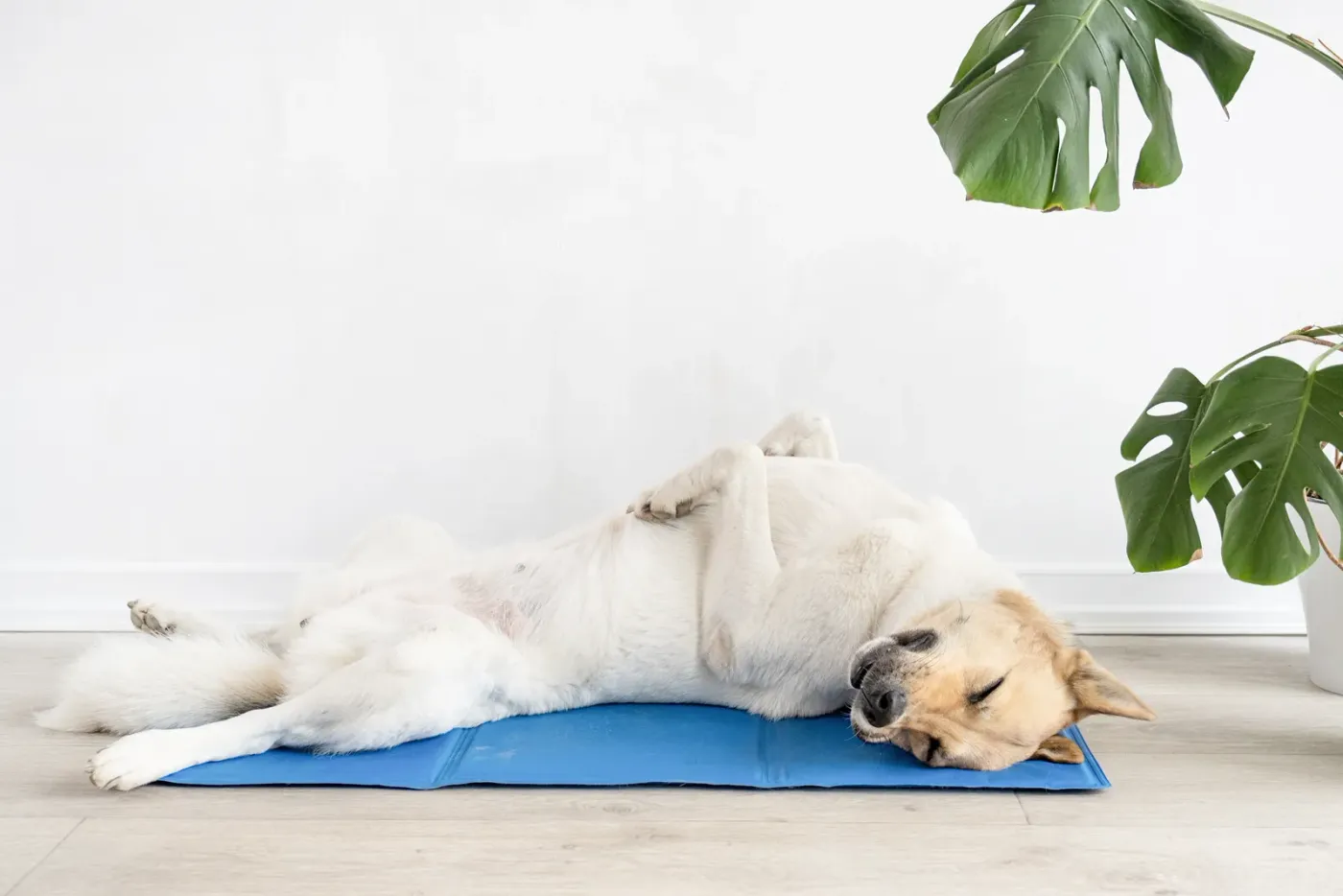
Waiting without boiling over is a skill dogs practise.
A dog with low frustration tolerance tends to escalate fast when a want is blocked. Think of barrier frustration at a fence line, leash pulling toward another dog, demand barking at the dinner table, or grabbing the leash when a walk stalls. Many of these behaviours look like defiance or excitement. Often they are a dog that never learned what to do with the feeling of not yet.
A dog with good frustration tolerance still wants things, just as much. The difference is what happens next. It can pause, offer a sit or eye contact, and wait for a cue that releases it. That pause is where training lives, because a dog that can think while it wants something can actually hear you. A dog in full boil usually cannot.
- Barking or spinning at closed doors
- Grabbing the leash when stopped
- Demand barking for food or attention
- Fence-line frustration at passing dogs
How it is built
Small waits that pay off, stretched one step at a time.
Safety comes first: if a dog stiffens, growls or guards its food, skip bowl exercises and get a professional assessment instead. For other dogs, a worked example is the food bowl. The bowl lowers, and if the dog lunges, it rises again. The moment the dog holds still, the bowl keeps descending. A release word, then dinner. Calm becomes the thing that opens doors.
From there difficulty rises slowly so the dog keeps winning: a doorway with the dog on a leash held by an adult, a ball held in a hand, a pause before the car door. In our programs this sits inside the markers and rewards first approach and the structured routine every board and train follows, and the handover lesson shows owners how to keep it going at home.
Asked and answered
The questions people ask us.
What is frustration tolerance in dogs?
It is a dog's capacity to cope when something it wants is delayed or blocked, without tipping into barking, lunging or grabbing. It can be taught, and it grows with practice.
How do I teach my dog impulse control and patience?
Start with tiny waits your dog can succeed at, like a pause before a bowl or a toy, and let calm be what releases the reward. Lengthen the wait gradually, and keep the dog secured on a leash held by an adult during any doorway practice.
Is barrier frustration the same as reactivity?
They can look alike at a fence or on a leash, and one can feed the other. If your dog's barking or lunging is intense, comes with growling, or is getting worse, a professional assessment is the right next step.
Why does my dog bark when he can't get what he wants?
Often because barking has worked before, or because the dog has never practised waiting. Teaching a calm alternative, and making sure barking no longer opens the door, tends to help. Behaviour may temporarily increase when it stops working, and if it persists or escalates, reassess with a professional.
Keep reading
Want a calmer waiter?
Book a consultation and we will look at where your dog's patience runs out, and recommend the smallest program that fits.
From real owners
Rated 5.0 on Google.
Real Northline dogs