
Dog body language
What a stiff body means in a dog
Loose dogs wiggle. Tense dogs set like concrete. A stiff body is one of the clearer signals a dog gives, but it is rarely the whole sentence. Here is what tension looks like from nose to tail, what it tends to mean in common situations, what to do while it is happening, and which patterns deserve a professional assessment.
Last reviewed October 4, 2026
Spotting the tension
How tension shows up from head to tail.
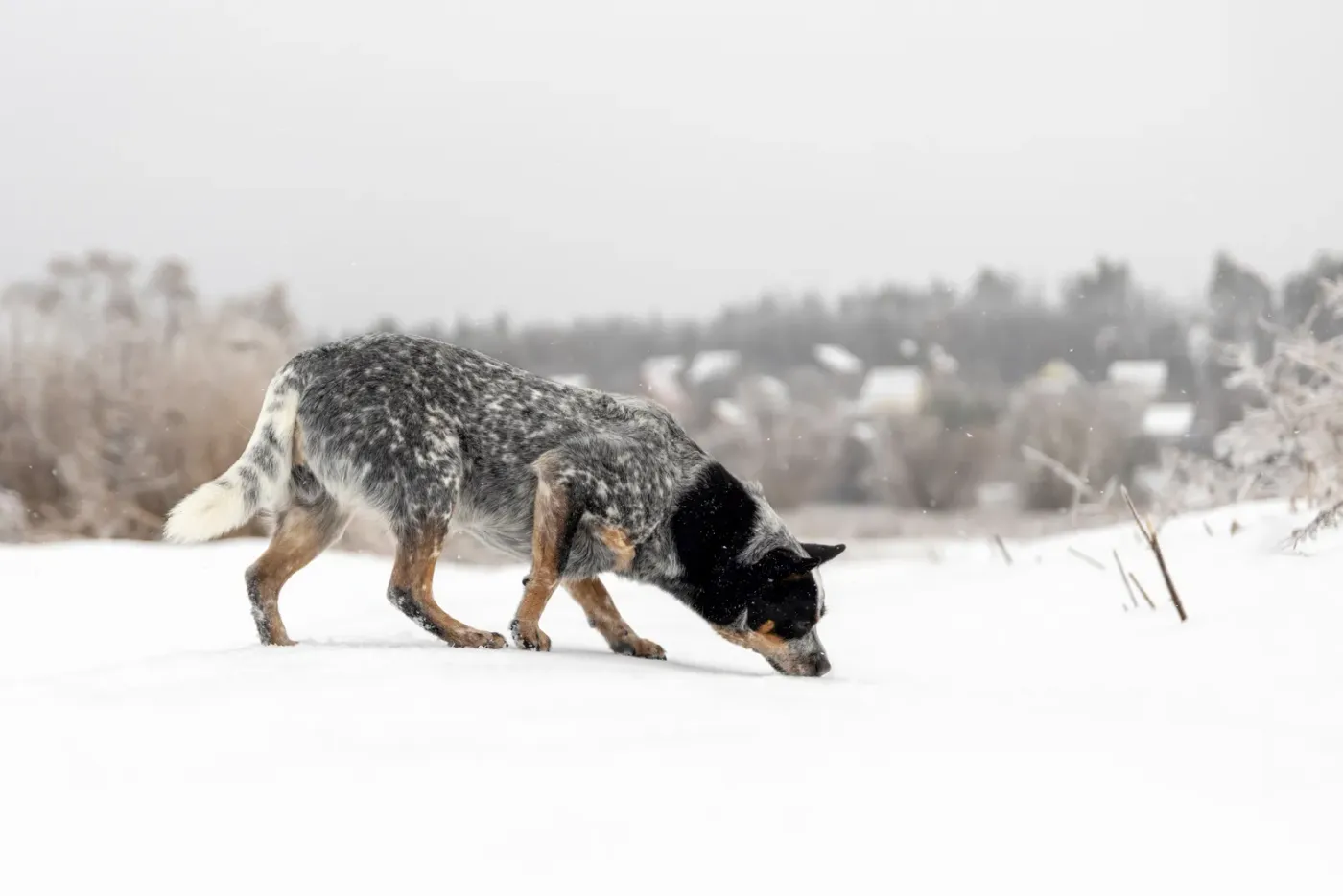
Tension is easiest to see as a change. A dog who was moving fluidly suddenly holds still, legs braced, back level and hard. The tail may rise and stop wagging, or wag in a short, rigid sweep. The mouth often closes, the brow tightens, and the ears pin back or point hard forward. Weight shifting onto the front legs reads very differently from weight rocking back toward the hips.
Context does the rest of the work. The same rigid stance can appear over a bone on the couch, at the window as a delivery arrives, or when a stranger leans over a dog on leash. A dog holding a toy still while a hand approaches is telling you something different from a dog locked onto a squirrel. Read the whole picture before deciding what the stiffness means.
- Weight braced forward or back
- Closed mouth, tight brow
- Tail high and barely moving
- Movement slows or stops suddenly
In the moment
What to do while your dog is rigid, and when to get help.
Safety comes first. Do not reach for the collar, lean over, or stare back, since added pressure can tip a tense dog into a snap. Calmly create distance: step away from a guarded object, lead the dog off a fence line on a relaxed leash, or ask visitors to stop approaching. Never punish a growl that comes with the stiffness. It is useful information, and removing it hides the warning.
Book a vet check if stiffness is new, appears when your dog is touched or lies down, or comes with limping or reluctance to move, because pain can look a lot like tension. If rigid stances lead to lunging, snapping or guarding, a professional assessment is the right next step. Our Behaviour Rehab program starts with a full assessment, and the consultation will steer you to a smaller option when that covers it.

Asked and answered
The questions people ask us.
Why does my dog go stiff when I touch him?
Stiffening under a hand can mean discomfort, worry about being handled, or pain in that spot. Stop touching, note where it happened, and ask your vet to check for a physical cause.
Is a stiff tail wag a happy sign?
Not necessarily. A high, tight tail moving in short, quick sweeps often goes with arousal or tension rather than friendliness. Read it alongside the mouth, ears and weight.
What does it mean when two dogs stiffen while sniffing each other?
Mutual stiffness often means one or both dogs are unsure or the moment is escalating. Calmly call or walk your dog away before the tension builds further.
Should I correct my dog for going stiff?
No. Stiffness is a feeling showing on the outside, and correcting it can hide the warning without changing the worry underneath. Add space now and get help working on the cause.
Keep reading
Read your dog with us
If tension keeps showing up, book a consultation and we will help you sort out what it means and what to do next.
From real owners
Rated 5.0 on Google.
Real Northline dogs