Adventure dogs
Is my dog ready to be off leash on a trail?
Owners tend to ask this after the dog has been loose a few times and nothing went wrong. Nothing going wrong is not the same as ready. Our guide to training a dog to be off leash covers a week-long recall audit for everyday walks. This page is narrower: a trail exam of five tests, each run on a long line against what will actually tempt the dog, and scored without generosity.
Last reviewed October 4, 2026
The five tests
Five tests, three tries each, no partial credit.
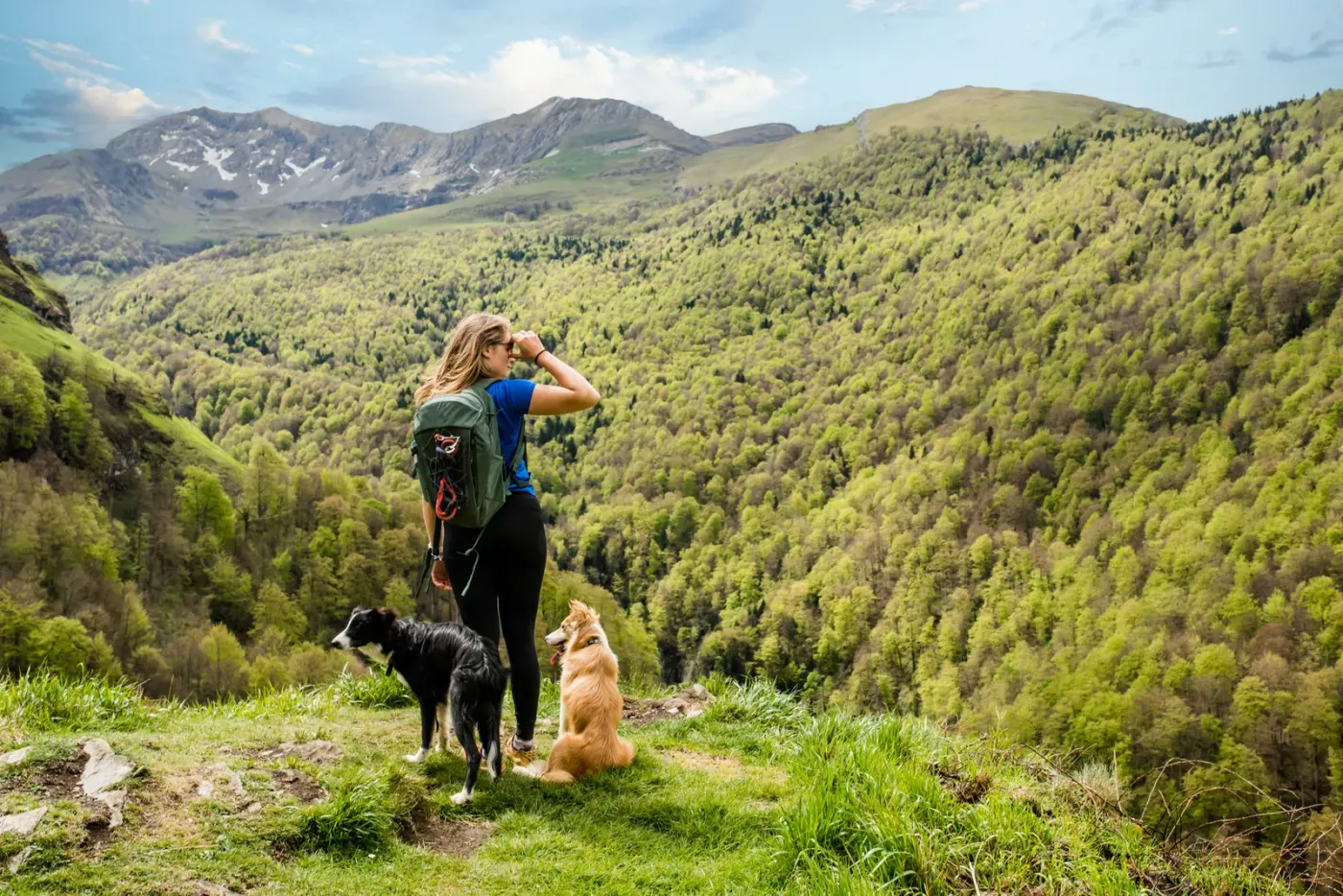
Test one is recall off a deer-shaped distraction: have a helper drag a toy or run a flirt pole across the dog's path at distance, then call. Pass means the dog turns on the first cue, mid-chase. Test two is a stop or down while the dog is moving away from you, held until released. Test three is the check-in: walk a quiet trail with the line dragging and count. A ready dog looks back every minute or two without a word from you.
Test four is passing: a leashed dog and a stranger come toward you on a narrow path, and your dog moves to your side and stays until they are gone, no greeting. Test five is leave it on scat and, when the trail offers one at a distance, a carcass; never walk toward one to set up the test. Run each test three times on separate days. Three for three is a pass. Two for three is a fail, and the line stays on.
- Turns off a moving lure
- Stops while moving away
- Checks in without a cue
- Ignores scat and carcasses
After the test
A fail is information, not a verdict.
When the dog fails one item, work only that item, and lower the difficulty until it passes, then climb back. A dog who blows the recall off a lure but aces everything else needs the lure slower and closer, paid heavily, not more trail time. A dog who cannot pass a leashed stranger needs distance and repetition, and a professional assessment if it is lunging or growling rather than just excited. Keep the other four in practice meanwhile.
Ready also means permitted. In Alberta's provincial parks, wildland parks and recreation areas, Alberta Parks' rule is a lead no longer than 2 metres, or a cage, at all times, and its reasoning includes that an unleashed dog can chase an agitated bear toward other people or lead it back to you. The checklist earns freedom only where off leash is permitted. A recall is never truly finished: it can fade without pay, so rerun the lure test at the start of every season.
Asked and answered
The questions people ask us.
Is my dog ready to be off leash if it comes when called at the park?
Not on that evidence alone. A park recall is usually tested against familiar dogs and no fresh scent, while on a trail the dog must turn off a moving animal at distance. Run the lure test on a long line before deciding.
How is this different from the recall audit in your off-leash training guide?
That audit tracks your dog's everyday recall over a week of ordinary walks. These five tests are a trail exam: each one targets a specific trail temptation, from a moving lure to a carcass, and runs three times on separate days. Use the audit to build the habit, and these tests before the line comes off on a trail.
When can a dog go off leash on trails?
When it passes all five tests three times each on a long line, and only on land where off leash is permitted; Alberta provincial parks, wildland parks and recreation areas require a leash at all times. Age and months of training are not the measure. The scored tests are.
What does an off leash readiness test look like?
Five items: recall off a deer-shaped lure, a stop while moving away, an unprompted check-in every minute or two, calm passing of a leashed dog and hiker, and leave it on scat and carcasses. Each runs three times on separate days. One miss on any item fails the whole test.
What if the dog fails one of the five tests?
Work that item at an easier level while keeping the other four in practice, and get a professional assessment if the passing test fails with lunging or growling. Functional Off-Leash works on recall around distractions. The consultation recommends the program, and points to the smaller option when that is all the dog needs.
Sources
Keep reading
Not sure how to score?
Bring the checklist and your honest results. Book a consultation; we will tell you which item to work on first.
From real owners
Rated 5.0 on Google.
Real Northline dogs