
Dog body language
How to tell if dogs are playing or fighting
Dog play is loud, toothy and full of fake drama, which is exactly why it can look like trouble. The useful question is not how rough it sounds but whether both dogs keep choosing to be there. A few patterns answer that well, and a handful of others tell you to step in before a game turns into a scuffle.
Last reviewed October 4, 2026
Signs of real play
Role reversal, pauses and the big dog lying down.
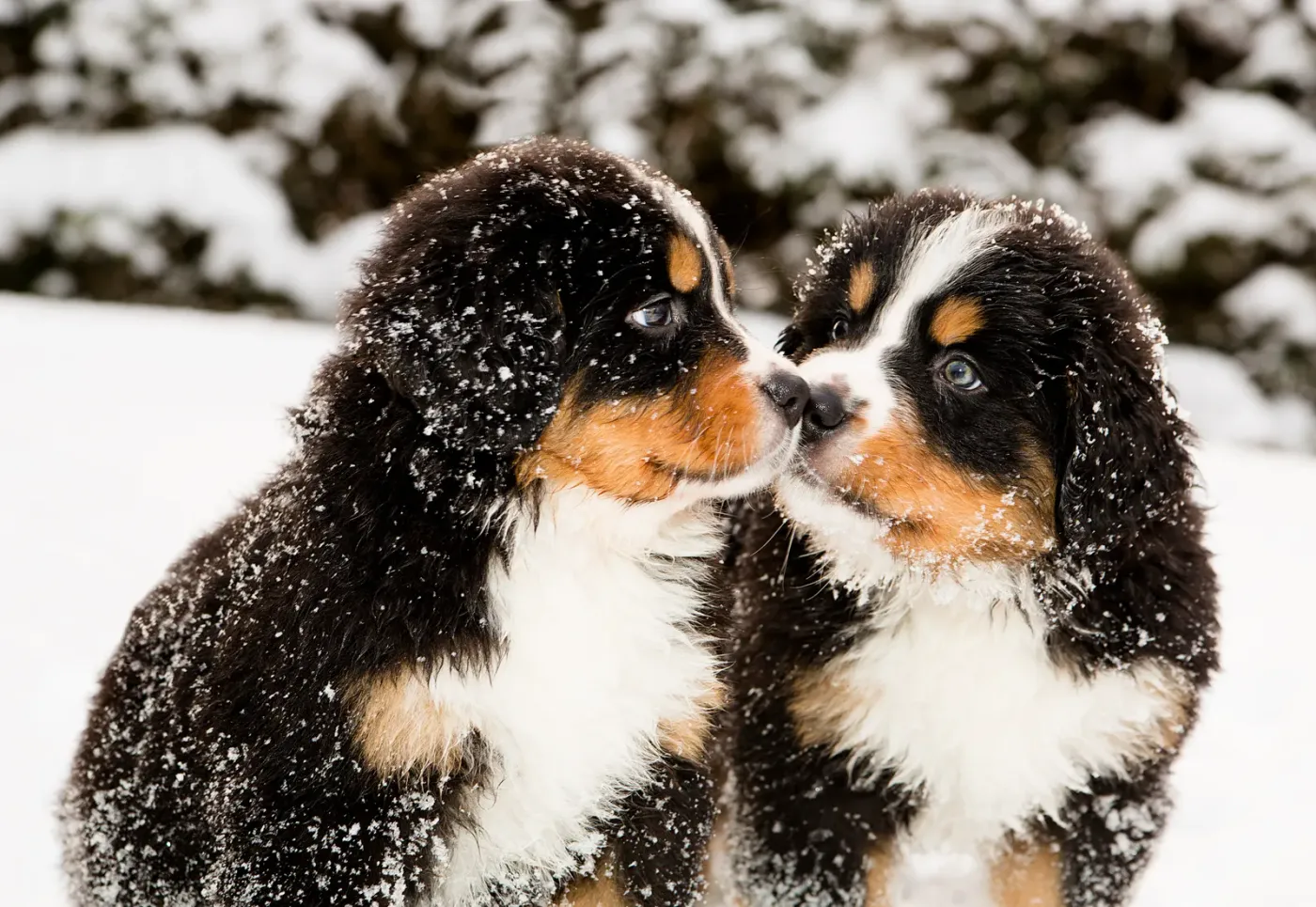
Healthy play tends to trade places. One dog chases, then gets chased. One pins, then rolls belly up. Watch for self-handicapping too: a large dog lying down to wrestle a small one, or softening its mouth so the bites are all show. Movement is often bouncy and exaggerated, almost clumsy, with play bows, open relaxed mouths and loose, curvy bodies. Real fighting is efficient; play is deliberately inefficient.
Pauses matter as much as action. Many dogs playing well stop every so often to shake off, sniff the ground or wander away for a moment before rejoining. Those breaks keep arousal from climbing. Read the whole sequence rather than one frame, because a growl, a snarl-shaped face or a brief pin can all appear inside friendly play. What counts is whether the overall pattern stays mutual and loose.
- Roles swap back and forth
- Short breaks between bouts
- Bigger dog holds back
- Bouncy, exaggerated, loose movement
When to step in
Interrupting before the game tips over.
Step in when the turn-taking disappears. Signs worth acting on: one dog is always on the bottom or always chased, a dog tries to hide under a bench or behind your legs, bodies go stiff, play gets faster with no breaks, the noise turns higher and sharper, or several dogs pile onto one. Interrupt early with a cheerful recall or by calmly leading one dog away on leash. Never put your hands near the dogs' heads.
To check consent, hold the more boisterous dog back for a few seconds. If the other dog bounces back in, the game was likely mutual; if it leaves, give it a real break. If a real fight starts, use a barrier such as a board or chair, not your body. Any punctures need a vet. Repeated fights between the same dogs call for a professional assessment before they meet again.
Asked and answered
The questions people ask us.
Is it normal for dogs to growl while playing?
Often, yes. Many dogs growl, mouth and bare teeth during play while staying loose and taking turns. The body and the back-and-forth tell you more than the sound.
How do I know if my dog is too rough with other dogs?
Watch the other dog. If it keeps trying to leave, hides, or never gets a turn on top, the play is not working for it. Interrupt and give both dogs a calm break.
Should I let dogs work it out themselves?
Not when play has turned one-sided or stiff. Letting dogs work it out can teach a worried dog that it has to defend itself. Step in early and calmly instead.
How do I safely break up a dog fight?
Keep your hands away from heads and collars and put a barrier, like a board or chair, between the dogs. Once they are apart, keep them separated and check both for injuries with a vet. Ongoing fights deserve a professional assessment.
Keep reading
Unsure what you are watching?
If play with other dogs keeps ending in scuffles, Book a consultation and we will help you read it and plan next steps.
From real owners
Rated 5.0 on Google.
Real Northline dogs