
Behaviour
Frustrated greeter vs fearful reactive dog
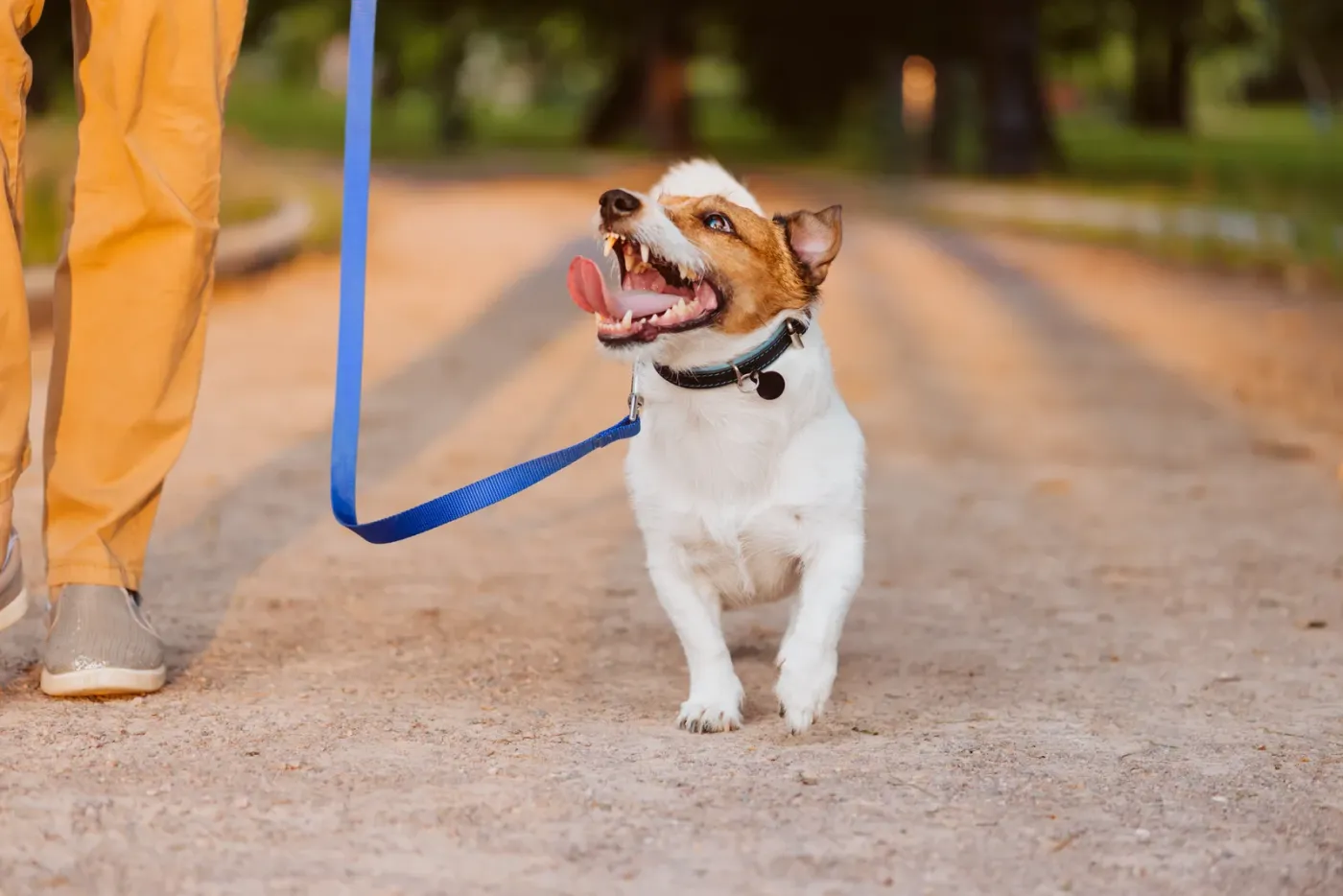
From across the street the two can look the same: a dog up on its hind legs at the end of the leash, barking at another dog. One may want to reach it; the other may want it gone; some want both at once. Reading the motive wrong sends the plan the wrong way, so here is what the clues can and cannot tell us, and what we recommend in the meantime.
Last reviewed September 25, 2026
Reading the dog
Clues that point one way, and why none of them settles it.
What a dog does after the other dog passes is one clue, not a verdict. A frustrated greeter often stays oriented toward where the dog went, whining or straining for another look, while a fearful dog often loosens once space returns. Often is the honest word. Excitement, the other dog's behaviour and the dog's own history all shape the aftermath, and a single walk cannot separate the two. We read recovery alongside posture and history, and treat the result as a working guess.
Posture and history add clues, same caveat. A greeter often drives forward, loose and high-tailed, and often has a history of play that went well. A fearful dog often sits back over its hips with a tight mouth, and may have a thin or rough history with other dogs. Many dogs carry both: a greeter that gets overwhelmed at close range, or a nervous dog that also wants contact. Letting them meet off leash to find out is not a test we recommend.
- Recovery is a clue, not proof
- Weight forward or weight back
- Motives often overlap
- History of greetings gone well
Safer first steps
Space first, whatever the motive turns out to be.
We recommend the same starting point for both: enough distance that the dog can still take food and glance back at the handler, disengagement rewarded the moment it happens, and neutral passing, where the other dog goes by and nothing else follows. None of that depends on getting the label right. A greeting needs a known and willing dog, loose leashes and an easy way to end it; it is an option for some greeters, not a reward the dog is owed.
For a dog that wants distance, management comes first: we recommend crossing early, walking at quiet hours and treating Calgary's river pathways as advanced ground. Growling is information, not something to punish. Sudden change in an adult dog, or any hint of pain, goes to a veterinarian first; the Merck Veterinary Manual lists pain and medical causes among the reasons for aggression. Behaviour Rehab is a five to six week board and train, $4,850 to $5,760 plus GST, customized after a full assessment.
| Frustrated greeter | Fearful reactive dog | |
|---|---|---|
| When the trigger leaves | Whines, keeps looking | Relaxes, moves away |
| Off leash | Usually plays fine | Avoids or reacts |
| Body | Forward, bouncy, high tail | Stiff or low, weight back |
| Plan | Impulse control, calm greetings | Distance, counter-conditioning, confidence |
| Program | On-Leash Foundations or day training | Behaviour Rehab after assessment |
Asked and answered
The questions people ask us.
What is a frustrated greeter dog?
A frustrated greeter is the label for a social dog that barks and lunges on leash because it wants to reach another dog and cannot. The behaviour can look identical to fear-based reactivity, and many dogs carry a mix of the two. We recommend treating the label as a working guess until an assessment.
Frustration reactivity vs fear reactivity: what is the difference?
Both look like barking and lunging at the end of a leash. Frustration is usually described as wanting to get closer and being stopped; fear as wanting more distance and not getting it. Recovery, posture and history are clues to which is in play, and they often point both ways at once.
Is my dog reactive or just excited?
Excitement and reactivity are not opposites; an excited dog that lunges is still reacting, and the useful question is what it is trying to get. Clues include whether it stays oriented toward the other dog afterward and how loose or stiff its body is, but none of them settles it alone. A consultation, with a full assessment where reactivity is in play, is how we recommend answering it.
My dog barks at other dogs because he wants to play. Is that a problem?
It is worth addressing, because a dog that rehearses hauling toward other dogs gets better at hauling, and the walk is harder on everyone. We recommend starting with distance, rewarding the moment the dog disengages, and letting other dogs pass without a greeting. If a program would help, the consultation says which, and it may well be a smaller one than expected.
Should I let my frustrated greeter say hi to other dogs?
Not as a routine reward, and not with a strange dog on a tight leash. A greeting is an option only with a known, willing dog, slack leashes and an easy way to end it. Neutral passing, where the other dog goes by and nothing follows, is the skill we recommend building first.
Keep reading
Which dog is yours?
Book a consultation. We will look at the dog, not the label, and recommend the program that fits, or a smaller one.
From real owners
Rated 5.0 on Google.
Real Northline dogs