
E-collar education
E-collars and fearful dogs
Fear is the one thing that should change a trainer's plan before anything else does. A dog who is worried is not being stubborn, and a worried dog pushed by any tool, including a leash, can get worse rather than better. This page explains why tools are decided after assessment and not before, what a fearful dog's program is built on, and the questions worth bringing to the consultation.
Last reviewed October 4, 2026
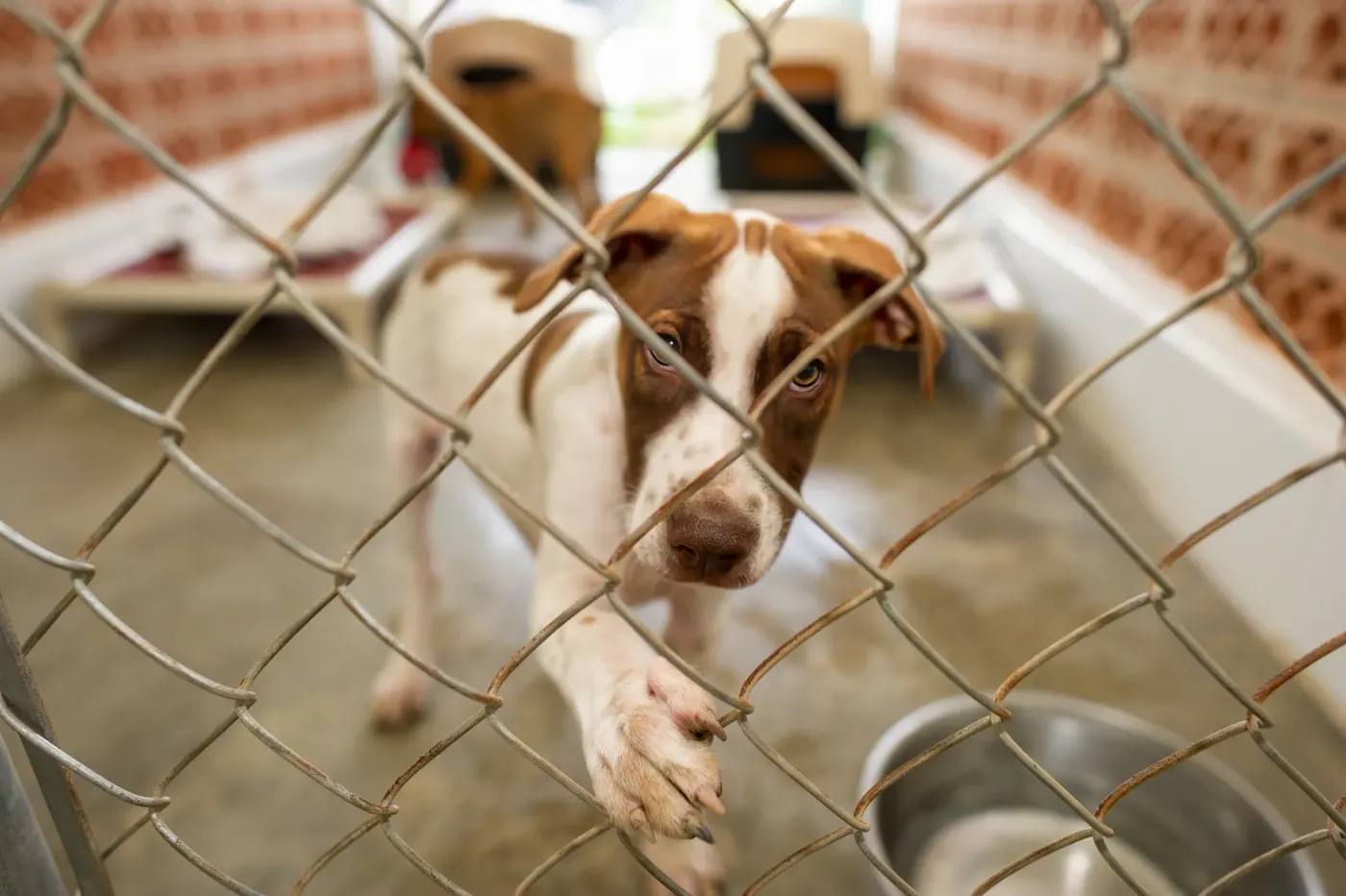
Fear changes the plan
A worried dog needs predictability before it needs any tool.
Our method is the same for every dog: skills taught with markers and rewards first, tools matched to the individual afterward and introduced properly. With a fearful dog the order matters even more, because a dog that is scared is not in a state to learn anything, and the first job is to make the world predictable. That means management first: distance from triggers, a routine the dog can count on, and no luring a worried dog toward the thing it fears.
Behaviour Rehab is built for fear, anxiety and reactivity: a full behaviour assessment, fear-based behaviour work, confidence building, structured socialization and reactivity work at your dog's pace, over five to six weeks at $4,850 to $5,760 + GST, customized after that assessment. No collar is listed, because nothing about tools is decided until the dog has been met. If the fear is new or sudden, a vet visit comes before any of this, because a vet can rule out what a trainer cannot.
- Management and distance before exercises
- A vet check for sudden fear
- Any bite history, stated plainly
- Tools decided after assessment, not before
At the consultation
Bring the whole history and ask how the plan would be built.
Come with a plain account of what your dog does when afraid, which triggers set it off and from how close, when it started, and whether there has been a bite. Dogs with bite histories are accepted into Behaviour Rehab after a full assessment, so saying it plainly helps rather than hurts. Then ask the questions: how the assessment works, how your dog's fear will be read, what tools might be considered and why, and what you will be taught to do at home.
Ask what in-depth owner education covers, because with a fearful dog you are the one who will manage the world after graduation, and the two free follow-up sessions in Behaviour Rehab are where setbacks get worked through. Expect a program recommendation at the end of the consultation, and expect it to be the smaller one if the smaller one covers your dog. Any trainer who names a tool before meeting a frightened dog is answering a different question than the one you asked.
Asked and answered
The questions people ask us.
Can an e-collar make a fearful dog worse?
Any tool used on a frightened dog without understanding the fear can make things worse, and that includes a leash yanked at the wrong moment. That is exactly why we match tools to the individual dog after an assessment rather than from a description. We will not say on a page what we would or would not use on a dog we have not met.
Do you use e-collars in Behaviour Rehab?
Behaviour Rehab's published inclusions list no collar, and the program is customized after a full behaviour assessment. Whether any tool is part of your dog's plan is decided after the dog has been met, not before. The consultation is where that conversation starts.
Should I try an e-collar myself for my dog's fear?
Not on your own, and not as a first step. Management and safety come first: distance from triggers, a predictable routine, and a vet visit if the fear is new or sudden. If the fear persists or escalates, a professional assessment is the right next move.
My fearful dog growls. Will training punish that?
No. Growling is information, and punishing it teaches a dog to skip the warning, which is the opposite of safer. A fearful dog's program is built on confidence and predictability, and the owner education covers how to read what your dog is telling you.
Keep reading
Start with the assessment
Bring the history, ask your questions, and we will build the plan around the dog, not the tool. Book a consultation.
From real owners
Rated 5.0 on Google.
Real Northline dogs