
Adventure dogs
Can a small dog be an adventure dog?
Small dogs get told no a lot. No to the big hike, no to the campsite, no to the trail where the big dogs run. We think a lot of that is habit rather than physics. A ten-kilogram dog with a solid recall and good manners can go nearly everywhere a forty-kilogram dog can. The difference is what can go wrong out there, and how closely you have to manage it.
Last reviewed October 4, 2026
Different risks
The training is the same, the hazards are not.
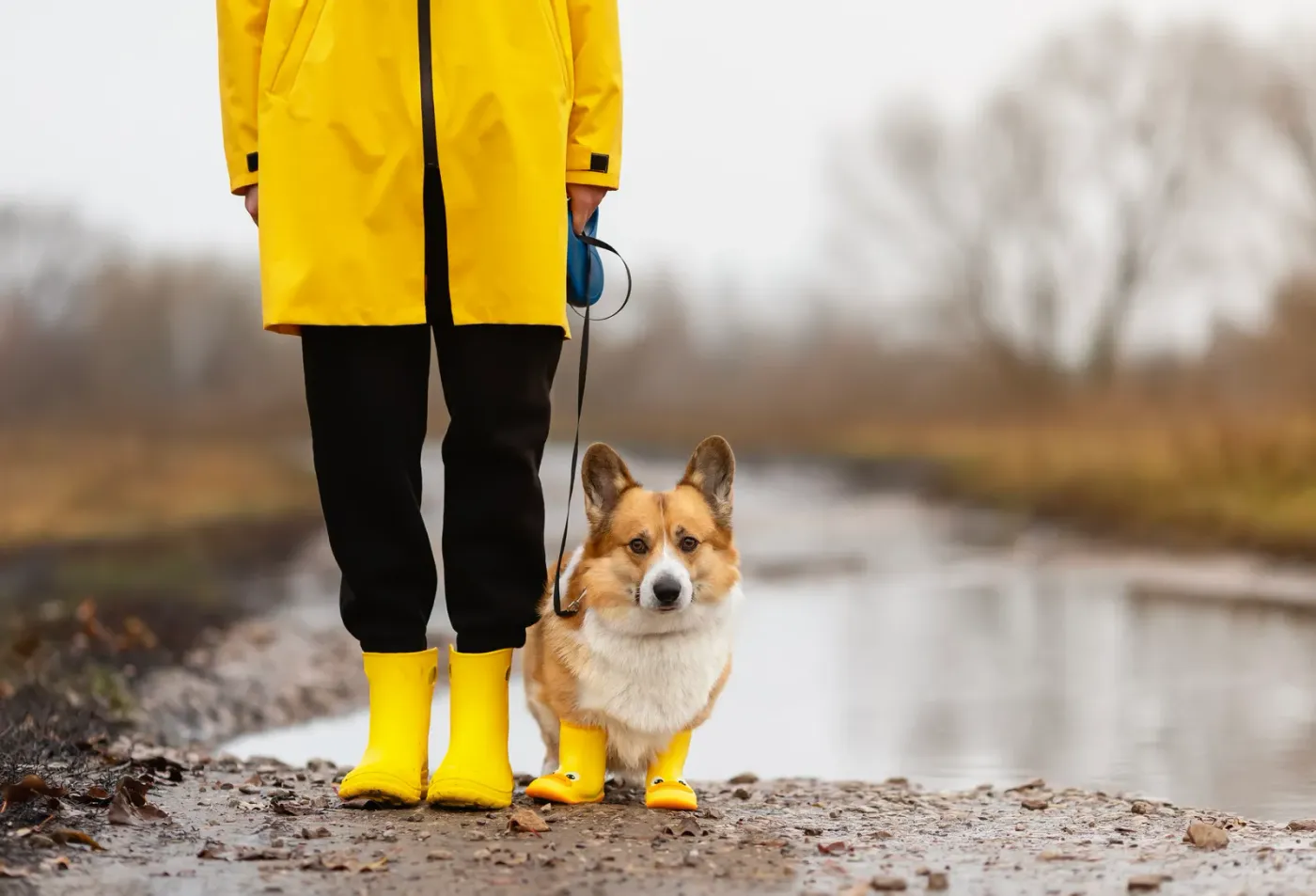
Start with predators, because that is the part people underestimate. A coyote or a large raptor can read a small dog as a meal, and neither announces itself. On open ground, near treeline, or at dusk, a small dog stays within arm's reach rather than at the end of a recall. Cold is next: a short-legged dog's belly sits in the snow a large dog walks over, and a wet small frame tends to lose heat fast. Lifted paws and shivering mean turn back.
Then there is the trailhead itself. Boots, bike tires, tailgates and excited large dogs all arrive at knee height or higher, and a small dog underfoot can get stepped on or bowled over. Teach a sit at your side before the car door opens, and hold it until the chaos passes. Distance matters too. Every kilometre costs a small dog more strides, so build up gradually and plan turnaround points instead of summits. Carry their water even when the trail has a creek.
- Leash up near open ground
- Sit before the tailgate drops
- Turn back at first shivering
- Plan turnarounds, not summits
Carry, leash, train
When to carry, when to leash, and what to train for.
Carrying is not cheating. A chest sling or a backpack carrier lets you move fast through a crowded trailhead, cross a scree field, or get a tired dog back to the car with dignity intact. Teach a lift cue at home first so being scooped is routine, not a surprise. The dog should settle in the carrier on the couch before it ever sees a trail. Pack a towel and a fleece for the ride down; a damp dog sitting still cools fast.
A small dog stays leashed wherever a predator could close the gap faster than you could: open meadows, treeline edges, river flats, dusk. For the training itself, Functional Off-Leash works on reliable recall around distractions, with a Micro or Mini Educator remote collar included. On-Leash Foundations covers loose-leash walking and heel for the dog who will stay leashed anyway. The consultation recommends the program, and a smaller one if that is all your dog needs.
Asked and answered
The questions people ask us.
Can small dogs hike?
Yes, and many of them love it. The limits are predators, cold and distance rather than willingness, so pick trails with open views, build distance gradually, and carry a sling for the stretches that are not worth the risk.
How far can a small dog hike?
There is no honest number that fits every dog; it depends on age, build, conditioning and weather. Start short, watch for lagging, lifted paws or lying down in the shade, and plan a turnaround point rather than committing to a destination. Build from there.
What adventure training does a small dog actually need?
The same core skills as any trail dog: a recall that beats a squirrel, a heel through a crowded trailhead, and a sit that holds while you deal with gear. Add a lift cue so being carried is routine. Functional Off-Leash is built for the recall piece, and the consultation sorts out whether a smaller program is enough.
Should a small dog ever go off leash on a trail?
Only where you can see a long way and the dog's recall has been proofed around real distractions. Open trails with your dog close are the right place; meadows at dusk and treeline edges are not. When in doubt, the leash goes on.
Keep reading
Small dog, big trail plans
Tell us where you want to take your dog and we will recommend a program sized to the job. Book a consultation.
From real owners
Rated 5.0 on Google.
Real Northline dogs