
Breed trainability
Are Jack Russells easy to train?
Ask two Jack Russell owners whether the breed is easy to train and the answers may not match, and each can be right about their own dog. The terrier that learned sit, spin and fetch in a weekend can be the same one that stopped hearing cues at the sight of a gopher. Easy, then, in the learning and harder in the applying. Below, we explain the gap and how we work across it.
Last reviewed September 24, 2026
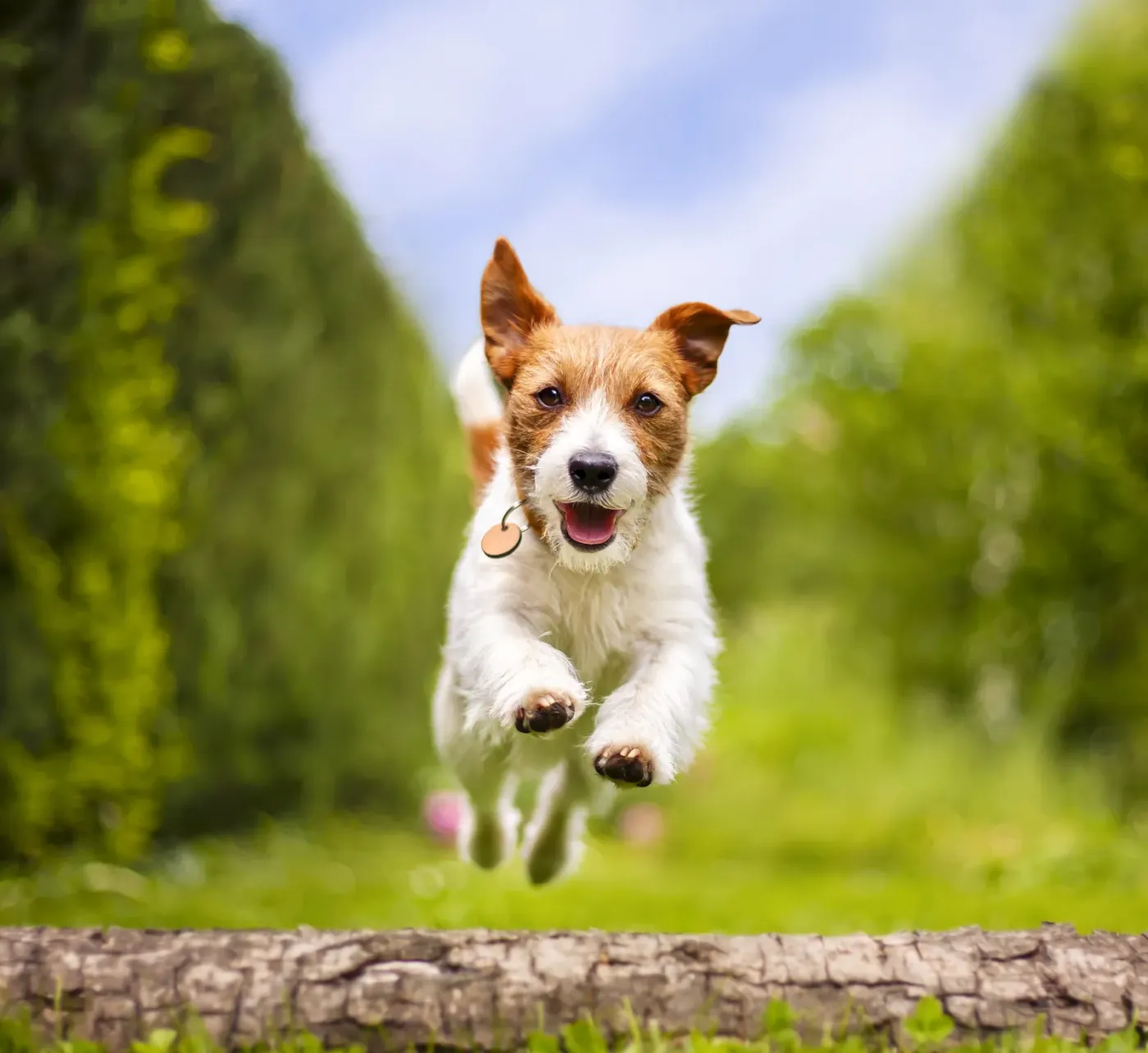
Working terrier
A cue learned indoors is only half a cue.
A Jack Russell often learns fast. Many notice everything, work keenly for food and toys, and can pick up a new behaviour in a short session, so sit, down, place and a heel tend to arrive quickly in a quiet room. That is the learning. Using the cue is a separate skill: responding when a squirrel is moving, when a scent trail leads under the fence. We build that second skill deliberately, adding distraction a step at a time and rewarding disengagement generously.
Jack Russells were developed as working terriers, bred to follow fox and rat underground and to keep working out of the handler's sight. In our experience that history often shows up three ways. Digging, in the yard and under the fence. Chasing, and not only wildlife: bikes, skateboards and the neighbour's cat all qualify for many terriers. And arousal that climbs fast and comes down slowly. We plan the training with three in view, and we do not file any of it under stubbornness.
- Cues learned quickly, applied slowly
- Chasing, digging and fast arousal
- Long line first, freedom in stages
- Disengagement rewarded, not assumed
Recall in practice
Building recall in stages, and where off leash is allowed.
Recall for a terrier is a skill we build in stages, and no stage is a verdict on the dog. It starts on a long line in a secure space, with rewards that beat the environment, and moves to busier ground only after the previous stage is solid. Where the dog can be off leash is a separate question: Calgary's bylaw requires a leash off the owner's property except in designated off-leash areas, and even there we judge each outing on its own conditions.
Puppy Fundamentals, a three-week board and train at $2,775 plus GST, works on socialization, crate comfort, leash manners, sit, down and place, with a handover lesson and one free follow-up within 60 days. Functional Off-Leash, a three-week board and train at $3,030 plus GST, is built for dogs with decent manners and works on recall around distractions; an Educator remote collar and owner education are included. Which one fits is settled at the consultation, and a smaller program gets recommended whenever it is enough.
Asked and answered
The questions people ask us.
Are Jack Russells hard to train?
Hard to train reliably around distractions, in our experience, rather than hard to teach. Many learn new cues quickly indoors, and the same cue can vanish when a gopher crosses the path. The work we do with this breed is largely about closing that gap, one distraction at a time.
Are Jack Russell terriers stubborn?
We would call it arousal more often than stubbornness. Many terriers go from calm to intense in seconds, and in our experience a dog at that pitch is not processing cues so much as missing them entirely. We teach a settle and a disengagement cue before the arousal, so there is something to ask for once it starts.
Are Jack Russells good off leash?
That depends on the recall the dog actually has and the conditions of the outing, not on the breed label. In Calgary a leash is required off the owner's property except in designated off-leash areas, and a fenced area limits a chase without making a failed recall safe; other dogs are inside the fence too. We practise recall on a long line in a secure space first and add freedom in stages.
Can Jack Russells be trained?
Yes. Many are sharp, food-motivated and keen to work, which is a good starting point for marker-and-reward training. What takes patience is carrying that indoor learning out to the pathway, and our step-by-step guide to training a Jack Russell Terrier covers the daily method.
Why does my Jack Russell dig?
Working terriers were bred to go to ground, and many dig for that reason alone, though boredom, buried scent or an escape route can each be the trigger for a particular dog. We would look at when and where the digging happens before deciding what it means. A secure fence line and a fuller day are where we would start.
Keep reading
Recall, one stage at a time.
What does the terrier chase, and does it come back? Book a consultation and we will map the program from there.
From real owners
Rated 5.0 on Google.
Real Northline dogs