Breed trainability
Are Great Pyrenees hard to train?
The Great Pyrenees was developed to stay with a flock on open ground, watch for threats and act without a shepherd giving directions. Move a dog with that background onto a Calgary lot and the same instincts can show up as night barking, fence patrolling and a slow response to cues. Hard to train, then, in the sense of demanding, not impossible. Here is how we separate the learning from the management.
Last reviewed September 25, 2026
Guardian heritage
What a livestock guardian brings to a city lot.
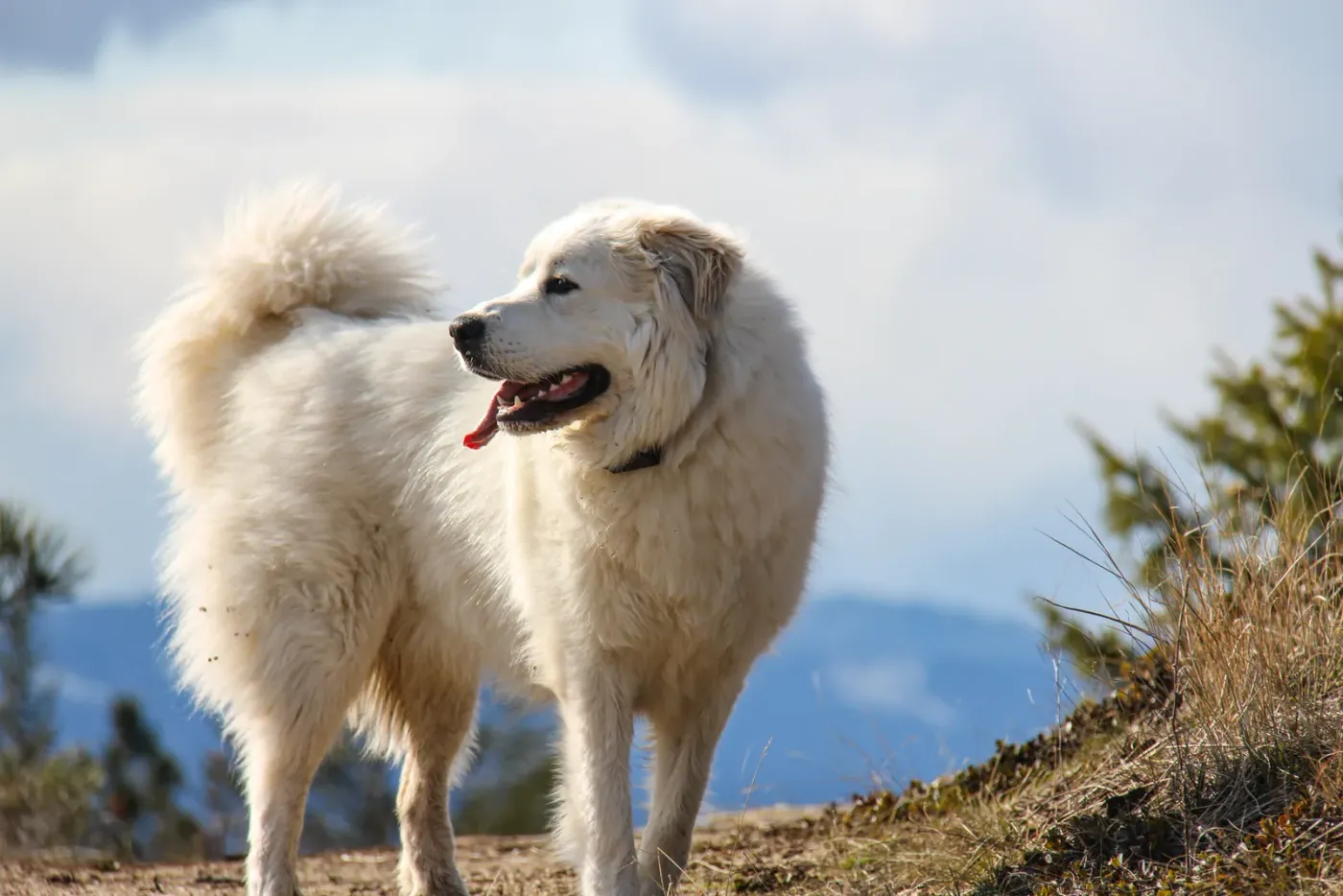
Livestock guardian breeds were developed to live with the animals they protected, often through the night, and to act on their own judgement. That heritage often follows a Pyrenees into a Calgary backyard: they notice what passes the fence, they are often more vocal after dark, and they tend to weigh a cue against whatever else is going on. None of that tells us what a particular dog will work for. Some are food-motivated, some prefer praise or space, and we test rather than assume.
We draw a line between teaching and managing. Sit, down, place and a loose leash are taught with markers and rewards first, and many Pyrenees learn them well. Night barking, fence-line patrolling and alerting at passers-by are managed: an indoor bedtime routine, a fence the dog cannot dig under or lean over, a settle spot away from the front window. A dog moved from an acreage to a city lot often has the biggest adjustment: the ground it watched has shrunk to a backyard.
- Guardian heritage, individual motivation
- Cues taught, barking managed
- Fence checked for digging and leaning
- Acreage dog, city lot
Practical management
Managing the night, the boundary and the walk.
At night, we recommend an indoor routine: a last trip outside, then a crate or settle spot in a room away from the street, so there is less to patrol and less to answer. The fence gets inspected before it is trusted, and a fenced yard is still not a substitute for supervision. On walks, we keep a Pyrenees on leash, and recall is practised on a long line inside a secure space, never tested on open ground first.
Program fit is decided at the consultation, not by the breed. On-Leash Foundations, a two-week board and train at $1,865 plus GST, works on loose-leash walking, heel, place and everyday distractions, with one free follow-up and lifetime phone and email support. Private Training runs $150 plus GST for a one-hour session and comes with a written weekly plan, built for hands-on owners who want to do the training themselves. When a smaller program is enough, that is the one we recommend.
Asked and answered
The questions people ask us.
Are Great Pyrenees easy to train?
We would not call them easy, and we would not call any individual hopeless either. Many learn sit, down, place and a loose leash well with markers and rewards. The demanding parts tend to be the guardian habits: night barking, fence patrolling and a recall that competes with an open field.
Are Great Pyrenees stubborn?
Independent is the word we would use, and even that describes the breed's history more than a specific dog. A Pyrenees that pauses before responding is giving us information about what the cue is worth to it right now. We change the reward, the distance or the distraction and see what shifts.
Can Great Pyrenees be off leash?
In Calgary, dogs need to be on leash off the owner's property unless they are in a designated off-leash area, so the question is really about those areas and enclosed spaces. We would practise recall on a long line inside a secure space long before an open park, and we would not treat a fence as removing the need to watch the dog. Functional Off-Leash is built for dogs with decent manners who are ready for more freedom; whether that describes a particular Pyrenees is a consultation question.
Are Great Pyrenees good first dogs?
They can be a lot for a first owner on a city lot with close neighbours, mostly because of night barking and boundary patrolling rather than anything about learning cues. Someone with a secure yard, patience for management and a plan for the nights is better placed. We talk that through honestly at a consultation.
Why does my Great Pyrenees bark at night?
Livestock guardians were bred to watch through the night, and many Pyrenees are more vocal after dark, though a particular dog may be answering a specific trigger: traffic, wildlife, a neighbour's dog. We would look for the trigger first and manage it with an indoor routine and a room away from the street. Sudden new barking is worth a vet check as well.
Keep reading
A plan for a Pyrenees.
Describe the fence, the nights and the neighbours. Book a consultation and we will sort the teaching from the managing.
From real owners
Rated 5.0 on Google.
Real Northline dogs