
Breed trainability
Are Cocker Spaniels easy to train?
Cocker Spaniels were developed to push through cover and flush birds, and a Calgary river pathway in October is one long hedgerow of smells. That is why a cocker that is bright and biddable at home can seem to lose its hearing outdoors. We think the fair answer covers three things: how the breed tends to learn, what its nose does to recall, and the grooming and guarding work that can come with it.
Last reviewed September 25, 2026
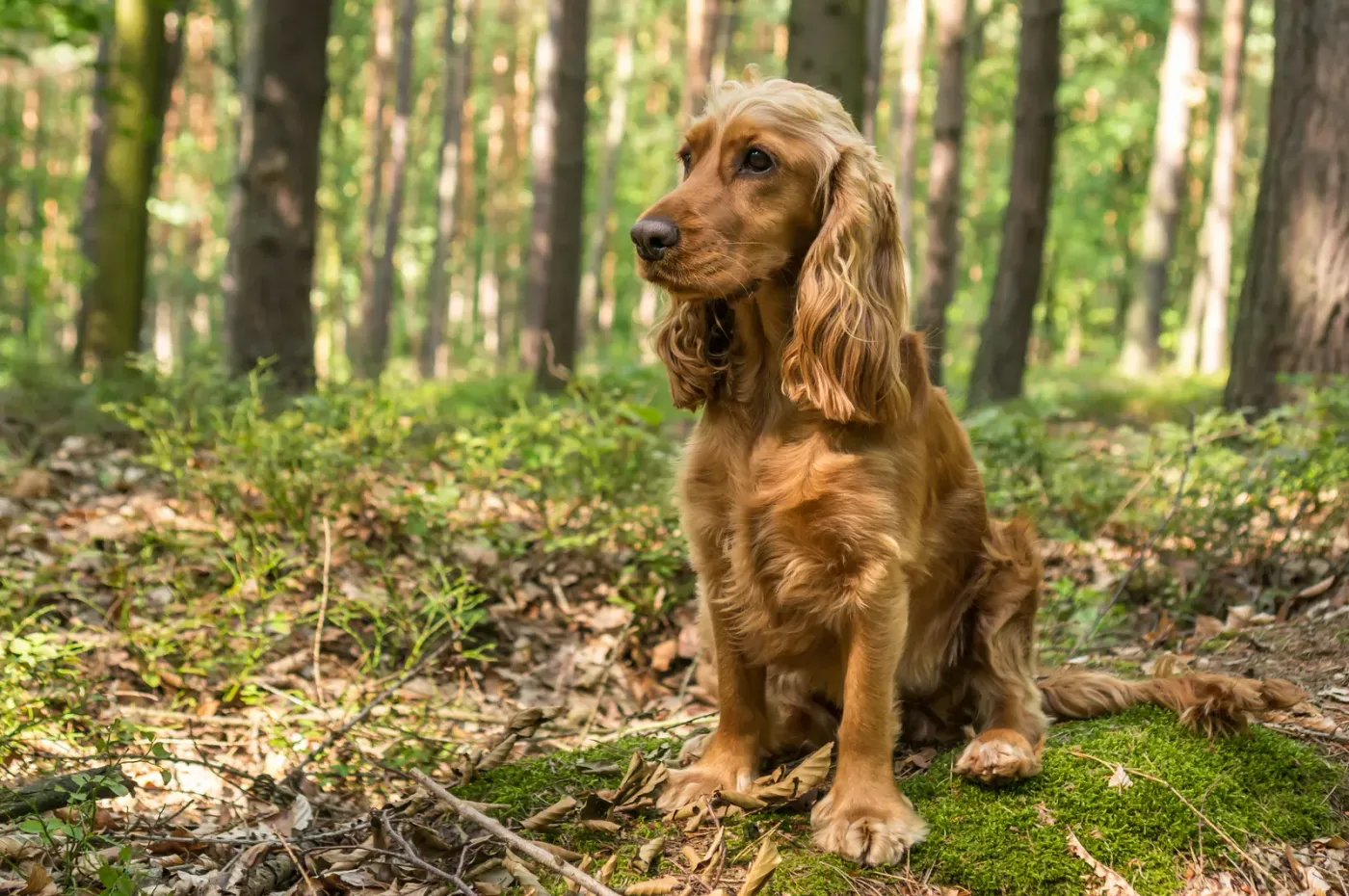
Nose first
Willing in the kitchen, absent on the pathway.
Many cockers are keen to be part of whatever is happening, take food eagerly and offer a behaviour again once it has been marked and paid, which is the engine of their reputation. Individuals vary. Some are steadier, some are softer, and in our experience a fair number are sensitive to a sharp tone and go quiet under pressure rather than pushing back. We read that as a dog telling us to adjust, rather than mistaking a quiet dog for a stubborn one.
The nose is the bigger complication. A flushing spaniel's job was to work cover, and on a pathway every shrub and goose is cover. Recall and loose-leash walking tend to come apart not out of defiance but because the dog is somewhere else. So we start those skills where the air is boring and build toward the river path, and while recall is unproven the dog stays on leash, which on Calgary pathways is the rule outside designated off-leash areas.
- Often keen and food-motivated
- Many go quiet under pressure
- Scent beats recall on pathways
- Some individuals guard food or toys
Ears, bowls, programs
Grooming cooperation and guarding are training, not chores.
A cocker in Calgary comes home with snowballs packed into its leg feathering and ears that have dragged through slush, then mud, then the water bowl. We would teach grooming cooperation as a cue like any other: standing for a towel, a paw held for a check, an ear lifted and looked at, each marked and paid. It tends to be easier taught young, and it makes the ear checks a vet may recommend for a long-eared breed less of a wrestle.
Guarding gets its own plan. Some cockers get tense over a bowl, a chew or a sock, and we would rather hear the growl than have it silenced. Puppy Fundamentals, three weeks at $2,775 plus GST, includes structured socialization. On-Leash Foundations, two weeks at $1,865 plus GST, works on loose-leash walking, heel and everyday distractions. A bite history points to Behaviour Rehab after a full assessment. The consultation decides which fits, and the smaller option when it is enough.
Asked and answered
The questions people ask us.
Are Cocker Spaniels hard to train?
Some are harder than their reputation suggests, and the reasons vary: a sensitive dog handled too sharply, a young dog asked to recall past a fresh scent before it has the skill, or a habit that has been paying off. In our experience the learning pace differs from one cocker to the next. We would rather see the dog than guess from the breed.
Are Cocker Spaniels stubborn?
Stubborn is rarely the right word in our experience. A cocker that has gone quiet after too much pressure, or whose nose has taken over, looks stubborn from the outside while feeling something quite different. Lowering the pressure and raising the pay is where we would start, at that dog's pace.
Are Cocker Spaniels good first dogs?
Many first-time owners do well with a cocker, which tends to be affectionate, a manageable size and keen to learn. We would ask the breeder or rescue about any guarding in the dog's history and start trading games early. Grooming cooperation is worth teaching from the first week, since those ears and feathers are a long-term project.
Are Cocker Spaniels easy to potty train?
Often yes, with a tight routine: a crate, a timer and a reward for every outdoor success. Some young cockers leak a little when greeted with excitement, and calm, low-key hellos often help that fade; a vet can rule out anything physical if it persists. Small accidents are easy to miss with a dog this size, so we would keep the schedule tighter than feels necessary at first.
Is an American Cocker Spaniel different from an English Cocker Spaniel?
They are recognized as two separate breeds, with the American Cocker generally smaller and heavier-coated and the English Cocker closer to its working roots. Many of the training themes overlap: scent, sensitivity, ears and, in some individuals, guarding. The dog in front of us matters more than which side of the Atlantic its type was standardized on.
Do Cocker Spaniels have a lot of energy?
Many do, more than their size suggests, and a walk on a leash does not always use the part of the dog that wants to hunt. Scent games at home, a long line in a quiet field and short training sessions tend to satisfy that side better. How much any one cocker needs is individual.
Keep reading
Soft dog, steady plan.
Bring the pulling, the guarding or the puppy mayhem. Book a consultation and get a straight answer on what your cocker needs.
From real owners
Rated 5.0 on Google.
Real Northline dogs