
Households
Training a dog in a multi-generational home
Three generations under one roof means several sets of hands on one dog, with different levels of strength, balance and patience. The dog wants to know which rules are real. We build the rules around the person who is least steady on their feet, keep the cue list short enough that every handler uses the same words, and assign jobs by what each person can actually do rather than by their age.
Last reviewed September 25, 2026
Least steady first
Build the rules around the least steady person in the house.
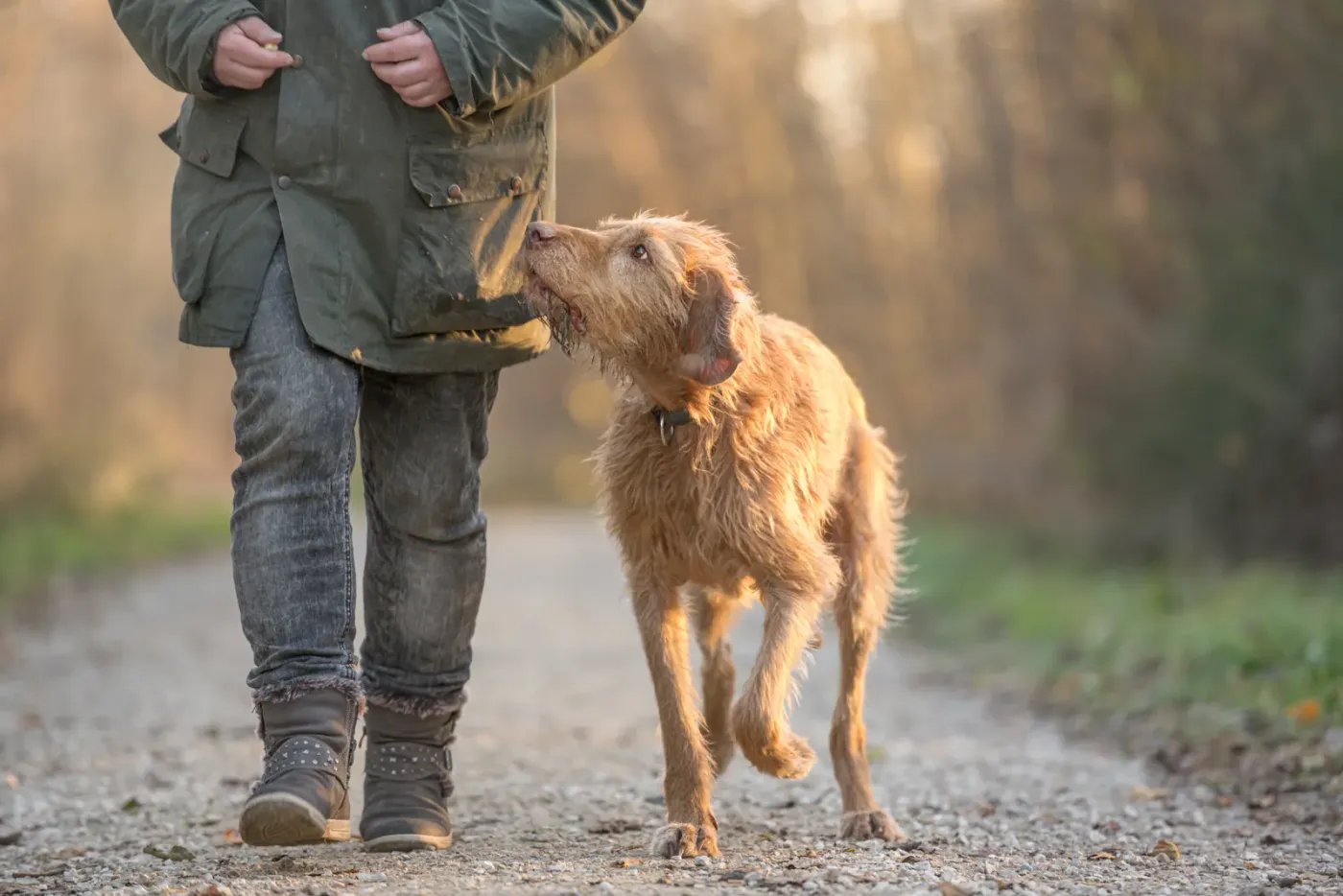
We start with the person who would come off worst in a collision, often the one using a cane or walker. A jumping, bolting or pulling dog carries the same momentum whoever is in the way, so those become the first three training goals: four paws on the floor, a wait at every door, and a loose leash for every walker. Until those are solid, we recommend a gate, a leash in a capable adult's hand, or the dog on place around anyone unsteady.
Then we write the shared cue list, five words at most: sit, down, place, a release word and leave it, the same words from every mouth. Someone with a cane needs the dog to respond to the first word, not the third variation. We assign jobs by ability, not age: the steadiest hands feed, the strongest walker takes the leash, whoever is calm and patient runs place practice, and anyone who cannot handle the dog physically rewards calm settles from a chair.
- No jumping on anyone
- Wait at every door
- Loose leash for every walker
- Five cues, same words
Many hands
A dog can learn six handlers if the six agree.
In our experience dogs read people individually: a young dog soon notices which handler follows through and which one repeats the cue and gives up. Rather than making the softer handler stricter, we give them cues the dog already knows and a pocket of treats to pay for them. We suggest every handler runs the same two-minute routine daily: sit, down, place, release. The aim is a dog that responds to the quietest voice in the house as readily as the firmest one.
Protecting anyone unsteady from a young dog means managing before training. A baby gate keeps a bouncing adolescent away from the person with the walker while the no-jump rule is being taught. We use place while that person gets in and out of chairs. If teaching all this yourself feels like a fourth job, Day Training at $650 plus GST per week works on the basics Monday to Friday, and the weekly one-hour go-home lesson passes the same cues to the people at home.
Asked and answered
The questions people ask us.
How do I stop my dog jumping on my elderly parents?
We manage first: leash, gate or place whenever they enter the room, so the dog cannot rehearse it. Then we teach a sit for every greeting and have your parents pay it with a treat, so four paws on the floor is what earns their attention. We would not let the dog greet them on its own terms until that sit is reliable.
Can a dog live safely with elderly parents in the house?
In our experience it can, with rules built around the least mobile person and barriers in place while the dog is still learning them. No jumping, no door bolting and a loose leash are the training goals; a gate and a capable adult on the leash cover the gap in the meantime. A place cue gives the dog somewhere to be while an elder moves around the house.
How do you train a dog with many people in the house?
We use one cue list, five words, the same from everyone. Each person runs a short daily routine with the dog so it practises responding to every voice, not just the firmest one. Jobs go by what each person can physically do, not by who wants the dog most.
What are good family dog training rules for a multigenerational home?
We keep them few and physical: no jumping, wait at doors, walk on a loose leash, and go to place when asked. A Private Training session at $150 plus GST includes a written weekly plan, one document for the whole household to follow, and a week of Day Training at $650 plus GST includes a one-hour go-home lesson. Either way, the aim is everyone handling the dog the same way.
Keep reading
One dog, one rulebook
Book a consultation and tell us who lives with the dog. We will suggest rules and roles that fit each person's ability.
From real owners
Rated 5.0 on Google.
Real Northline dogs