
Life stages
Senior dog losing hearing: training adjustments
The older dog who used to come at a whisper now sleeps through the doorbell and ignores a shout across the yard. That is rarely stubbornness. Hearing loss changes how a dog takes in the world, and training simply has to change channels. This page covers safety at home and outside, the swap from voice to sight and touch, and when to bring in a vet.
Last reviewed October 4, 2026
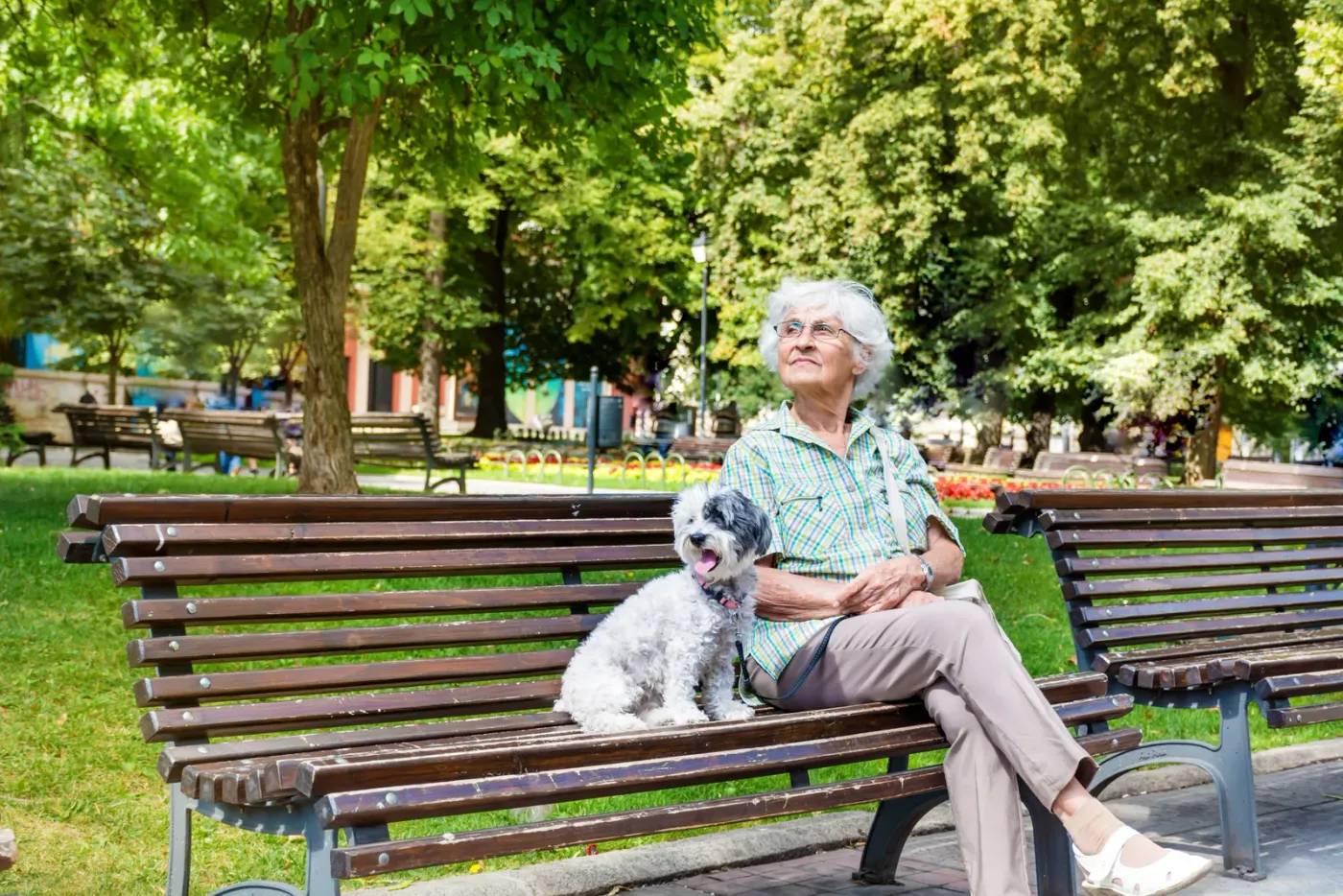
Safety first
Protect a dog who can no longer hear you coming.
A dog who cannot hear is easier to startle and harder to call back. Approach where the dog can see you, or tap the floor so the vibration arrives before your hand does. Ask visitors to do the same, and never let anyone wake the dog with a sudden touch. A startled senior may snap without meaning to, and that is not something to punish.
Outside, the safety net changes too. A verbal recall no longer reaches the dog, so off-leash time happens in fully fenced areas only, and walks near traffic stay on leash. Keep a bright porch light or flashlight handy for evening yard trips. Before any retraining, see the vet; ear infections, wax build-up and pain can all mimic or worsen hearing loss.
- Approach within the dog's view
- Tap the floor before touching
- Leash near traffic, always
- Vet check before retraining
New cues
Swap the voice channel for sight and touch.
Start with a visual marker to replace the word or clicker: a thumbs-up or a quick open-hand flash, followed by a treat every time. Once the dog brightens at the signal, attach hand signals to known behaviours. A flat palm lowering can mean down, a raised finger sit, and a sweep toward your chest come. Keep signals big and consistent, since ageing eyes may also blur.
Next, condition a look-at-me cue the dog can feel. A light touch on the shoulder, paired with a treat, soon tends to earn a head turn. Some owners use the vibration setting on a remote collar as a check-in cue; it must be introduced properly and paired with rewards, ideally with professional help. At night, flicking the porch light can call the dog in from a fenced yard.
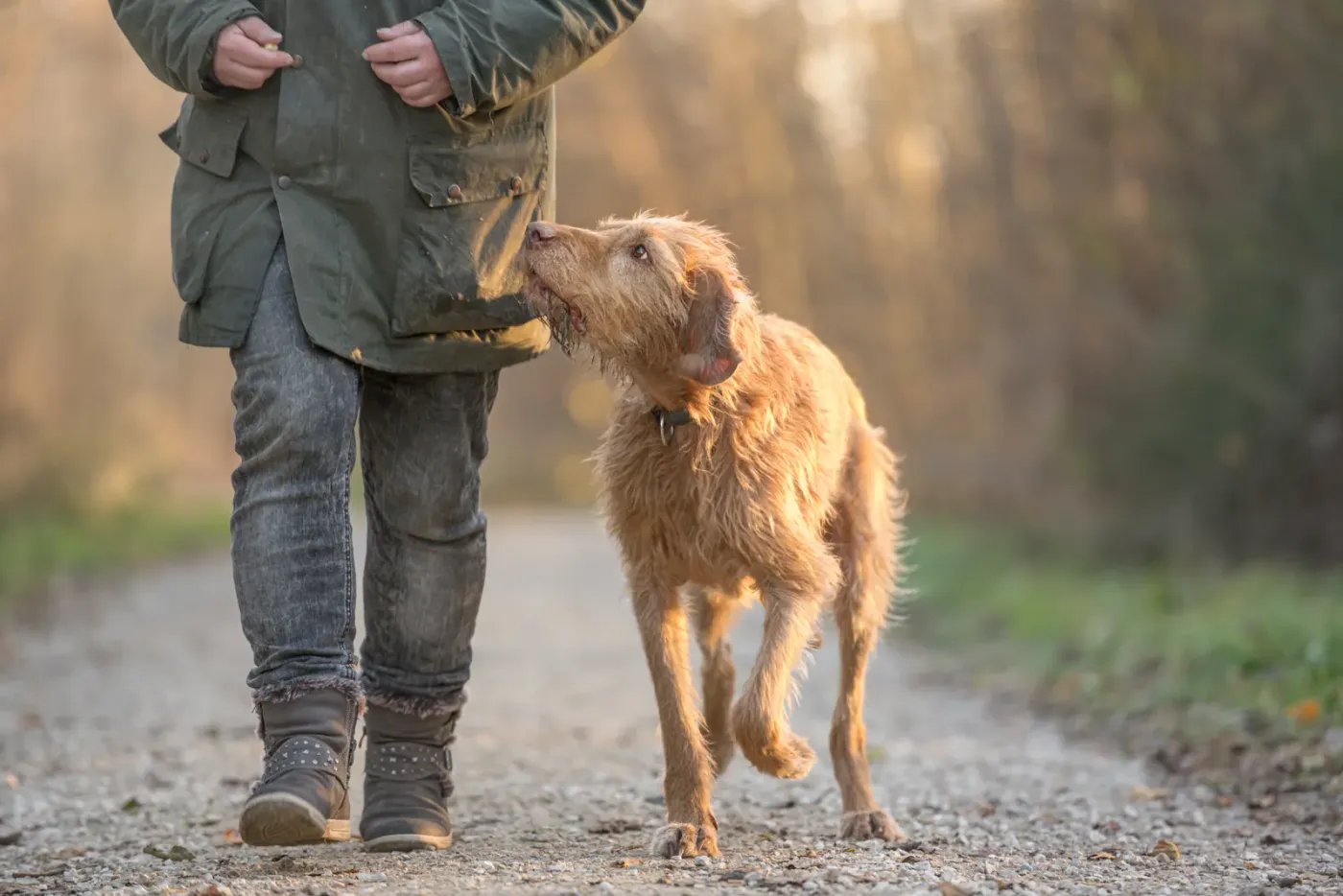
Asked and answered
The questions people ask us.
How do you train a dog that is going deaf?
Switch from voice cues to signals the dog can see or feel, starting with a visual marker like a thumbs-up paired with a treat. Then attach hand signals to behaviours the dog already knows.
Can a deaf dog learn hand signals at an older age?
Yes, many senior dogs pick up hand signals readily, especially when they replace cues the dog already understands. Keep sessions short and gentle on stiff joints.
How do I wake my deaf senior dog without scaring him?
Tap the floor near the bed or let the dog smell your hand before touching. Avoid sudden touches from behind, which can startle a sleeping dog into snapping.
When should I see a vet about my dog's hearing?
As soon as you notice the change, and again if it is sudden or comes with head shaking, scratching, odour or balance trouble. A vet can look for treatable causes before you rebuild your cue system.
Keep reading
New cues for old friends
Book a consultation and we will help you build a hand-signal and touch cue system that suits your senior dog.
From real owners
Rated 5.0 on Google.
Real Northline dogs