
Life stages
Senior dog leash manners on ice
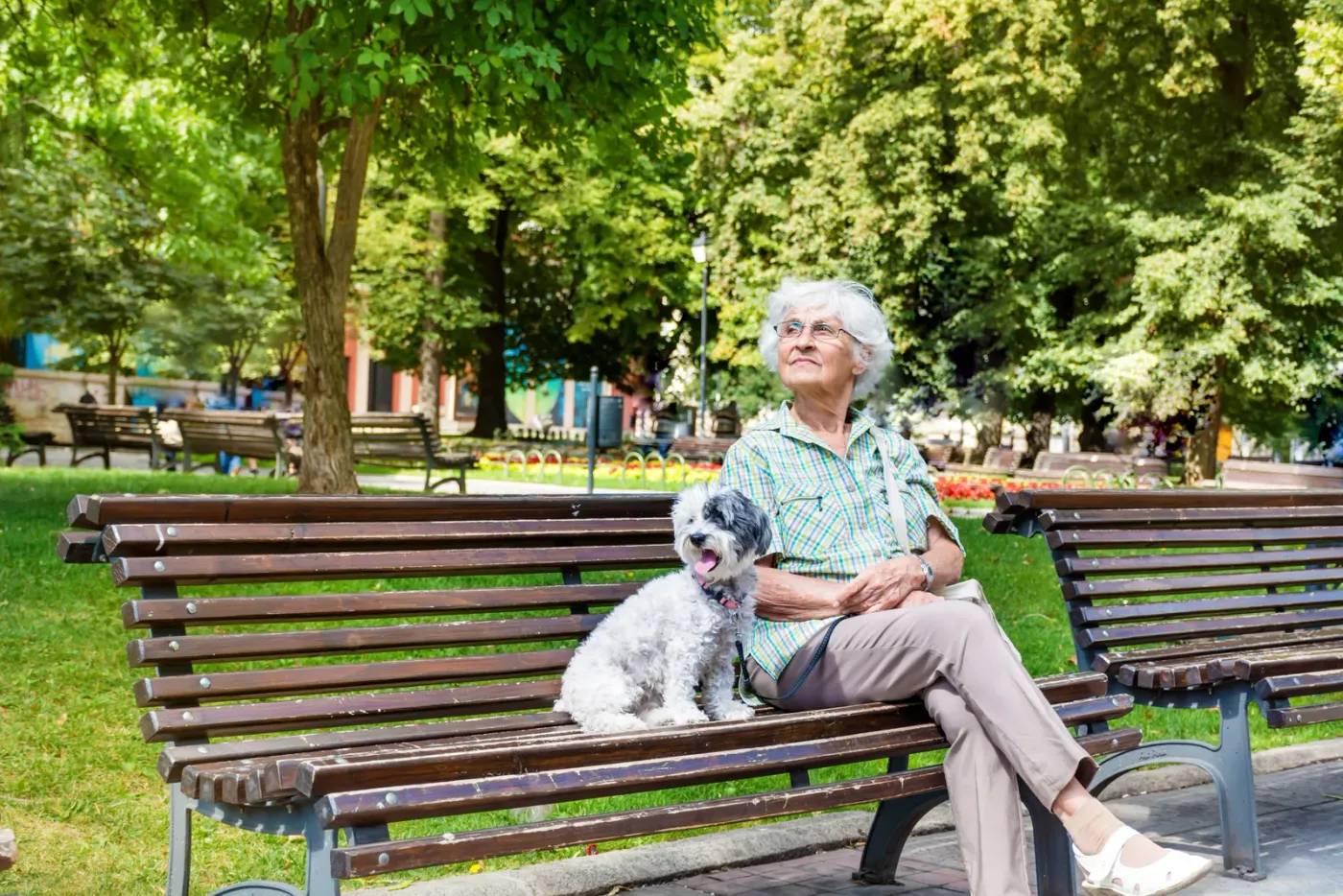
A slip on ice costs more at both ends of the leash when the dog is grey in the muzzle. One lunge at a squirrel on a glazed sidewalk can mean a twisted wrist for you and a hard landing on stiff hips for your dog. What you want is a slow, steady heel that holds even when the footing does not, built in a safe order.
Last reviewed October 4, 2026
Footing before skills
Set up the walk so a slip stays small.
Gear and route come first. Wear boots with good grip or strap-on traction cleats, and use a fixed-length leash instead of a retractable one, which can snap tight at the worst moment. Avoid wrapping the leash around your wrist, where a sudden pull can twist it. Pick short routes you know are cleared or sanded, and walk during the warmest, brightest part of the day.
Then think about your dog's feet. Ice, packed snow and de-icing salt can be hard on older paws, so wipe them after every walk and consider booties if your dog will accept them with gradual, rewarded practice. Keep walks shorter and more frequent in deep cold. If your dog starts slipping more than usual, hesitates on steps or seems stiff afterward, book a vet visit before adding any training.
- Traction on your own boots
- Fixed-length leash, no retractables
- Short, cleared, daylight routes
- Paws wiped after every walk
Building the heel
A slow heel taught indoors, then carried onto the ice.
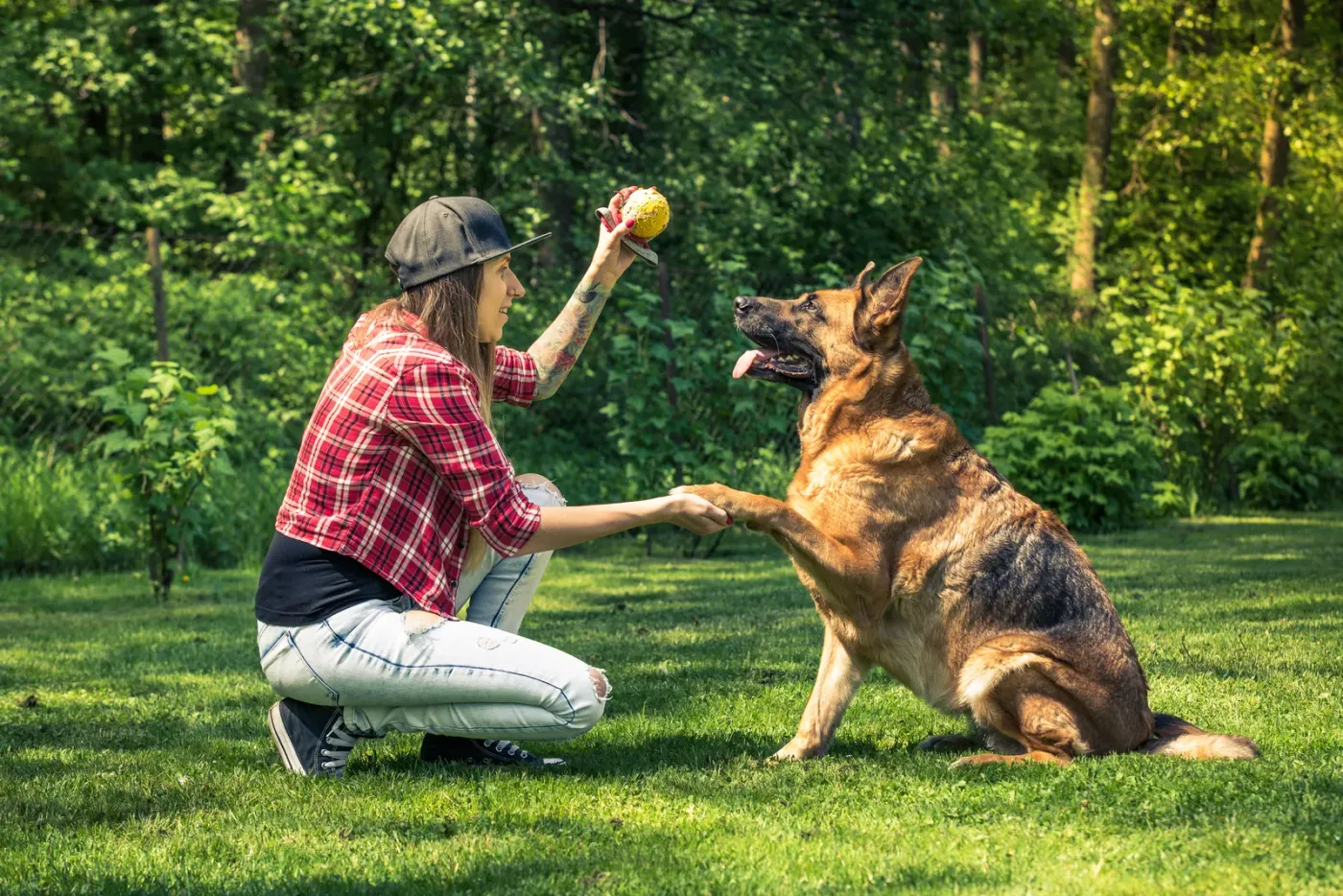
Teach the position where nothing slides. In a carpeted hallway, reward your dog for walking at your side on a loose leash, pausing often. Add a stop cue: when you stop, they stop. That matters on ice, because you will want to pause before every slick patch and curb. Keep sessions short and easy on older joints, and use soft rewards your dog can take without lunging.
Next, practise on a dry sidewalk, then on a short icy stretch. Walk slower than feels natural, take small steps, and reward your dog for matching your pace. If they surge toward a dog or a squirrel, stop, plant your feet and wait for them to come back to your side. A dog who pulls hard or reacts on leash may need more than a slow walk, and that is a good time for a professional assessment.
Asked and answered
The questions people ask us.
How do I stop my old dog pulling on icy sidewalks?
Slow down, shorten the route and teach a close heel with a stop cue on dry ground first. On ice, stop the moment the leash tightens and reward your dog for returning to your side.
Should my senior dog wear boots in winter?
Booties can protect older paws from ice, packed snow and salt, but many dogs need gradual practice before they walk normally in them. Introduce them indoors in short, rewarded steps before relying on them outside.
Is a retractable leash safe on ice?
We do not recommend one for an older dog on slippery ground. A fixed-length leash keeps your dog close and avoids the sudden jolt when a retractable runs out of line.
When should I get help with my senior dog's winter walks?
See your vet if your dog is slipping more, struggling on steps or stiff after walks. If pulling is the problem, Private Training and On-Leash Foundations both work on loose-leash walking, and a consultation will point you to whichever fits, the lighter option included.
Keep reading
Steadier winter walks together
If pulling makes icy walks risky for you both, we can help you pick the right level of support. Book a consultation.
From real owners
Rated 5.0 on Google.
Real Northline dogs