
Problem behaviours
How to walk a rescue dog that is scared of everything
Some rescue dogs freeze at the end of the driveway, flatten at a passing bus and try to back out of their collar at the sight of a garbage bin. Walking that dog is less about distance and more about keeping it safe while it finds out, slowly, that the outdoors is survivable. Here is how to set up the gear, the route and the pace.
Last reviewed October 4, 2026
Escape-proof first
Gear and checks before you open the front door.
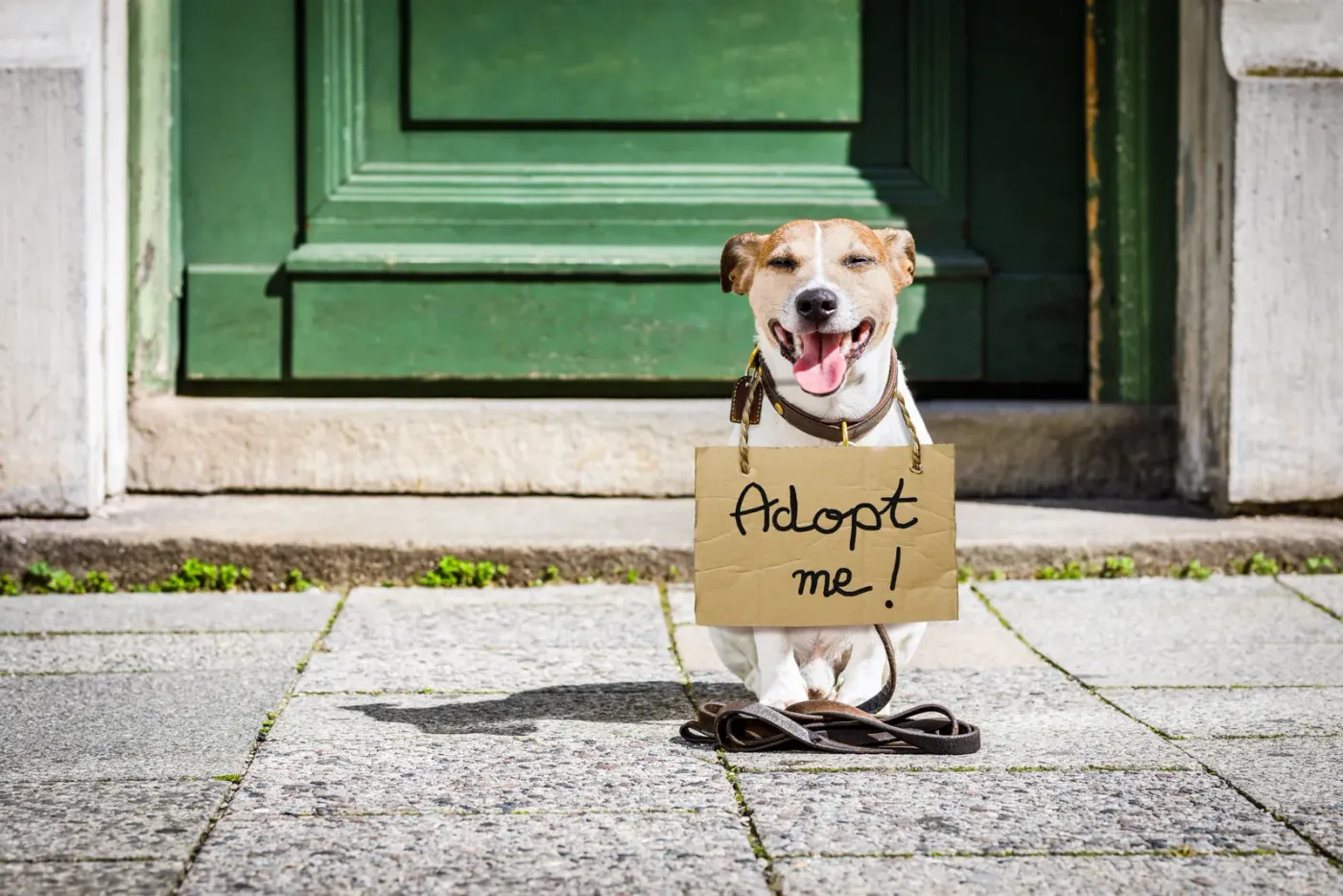
A frightened dog that slips its collar can be gone in seconds, so use two points of contact: a snug harness designed to resist backing out, plus a flat collar with current ID, with the leash on the harness and a short backup clipped to the collar. Check the fit before every walk. An adult holds the leash with a firm grip, and children sit these walks out.
Threshold moments are where fearful dogs often bolt. Clip on the leash inside, with the dog secured and the door still shut, and only then open it; never close a door on a dog that panics in the gap. If the dog will not step outside, do not drag it. Stay in the doorway, let it look, and count that as today's walk. Use a side gate or back door as a quieter exit if the front is busy.
- Harness plus collar with ID
- Leash on before door opens
- Adult on the leash always
- Never drag a frozen dog
Route and pace
Quiet routes, a long line and no flooding.
Pick the emptiest route and the emptiest hour you can find: a dead-end street, an empty sports field early in the day, a cul-de-sac after the morning rush. Walk the same loop repeatedly so it can become familiar. On open ground away from roads, swap to a long line clipped to the harness so the dog can drift, sniff and retreat on its own terms while you still have hold of it.
Flooding means pushing a dog into the thing it fears until it stops reacting, and it often shuts a dog down rather than calming it. Do the opposite. When a truck, jogger or dog appears, add distance first, then mark and reward any glance at it that stays loose. Let the dog sniff, because sniffing often helps a worried dog decompress. Turn home while it is still coping, not after it breaks.
Pain and professionals
Rule out pain, then get a fear assessment.
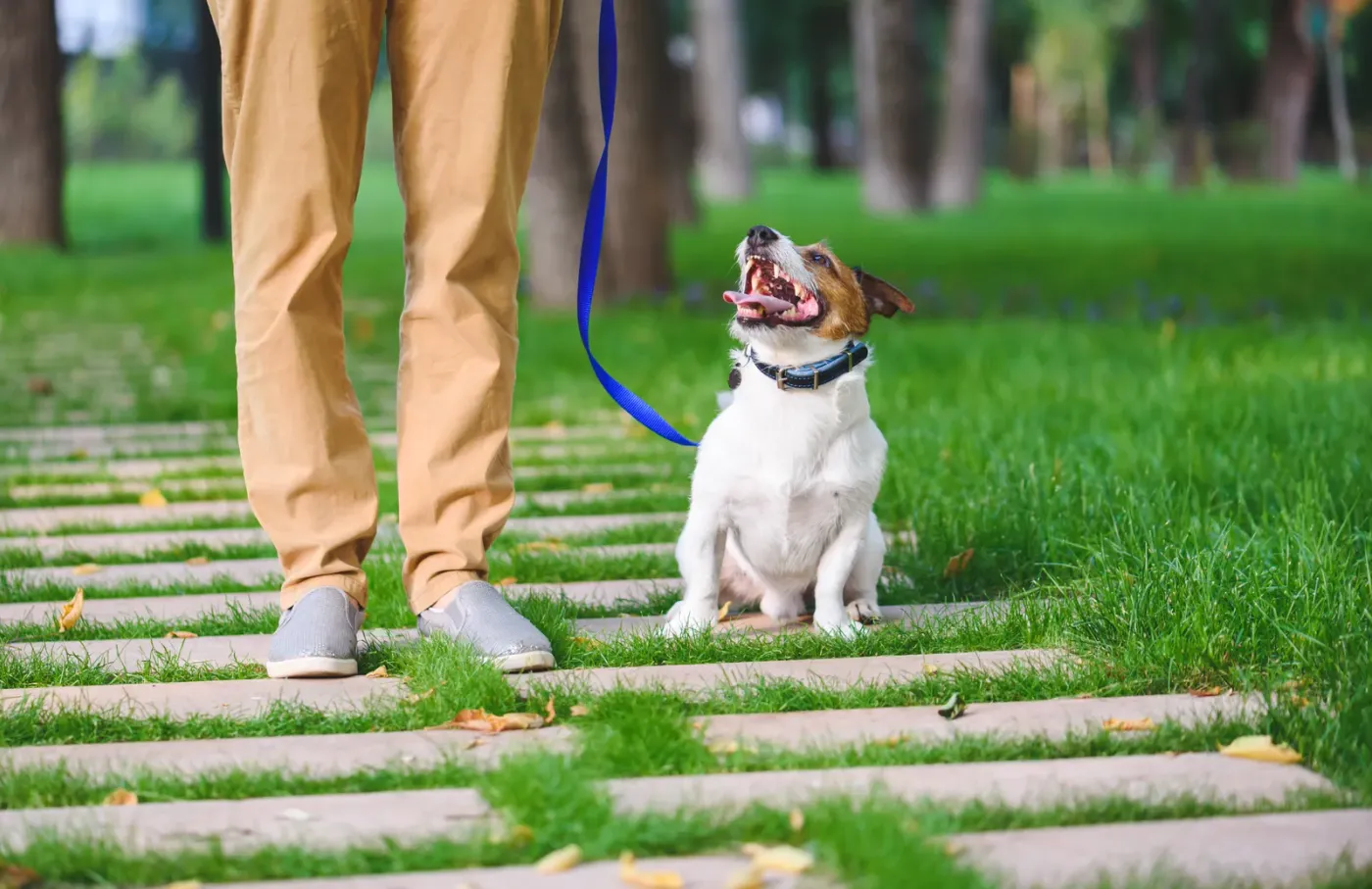
A dog that is scared of everything outside may also be hurting. Sore joints, a sore back, ear trouble or poor eyesight can make the world feel more threatening, and none of that can be judged from a training plan. If the dog limps, refuses stairs, sits down mid-walk, startles at sounds from one side or is newly fearful, see the vet before adding more walking.
When the vet is satisfied and walks still end in panic, lunging, attempts to bolt or snapping at the leash, book a professional assessment. Behaviour Rehab is built for fearful dogs and works at the dog's pace with structured socialization. Private Training suits owners who want to handle the walks themselves with a written plan. The consultation is where we recommend one, and we will say so if the lighter option is enough.
Asked and answered
The questions people ask us.
Should I force my scared rescue dog to walk?
No. Dragging a frightened dog forward is a form of flooding and often makes the next walk harder. Stop, let it look, add distance, and let a short, calm outing count as a success.
What is the best leash setup for a fearful rescue dog?
A well-fitted escape-resistant harness plus a flat collar with ID, ideally with the leash on the harness and a backup on the collar. On open ground away from traffic, a long line gives the dog room to retreat while you keep hold.
Why is my rescue dog scared of everything on walks?
Often it is limited early exposure, a frightening past, or simply a new environment, and pain can add to it. A vet check covers the physical side before you plan training.
When should I get help for a fearful dog on walks?
Get help if walks bring panic, bolting attempts, snapping or a dog that shuts down completely. Start with the vet, then book a consultation for a professional assessment.
Keep reading
Get help with fearful walks
Book a consultation and we will look at your dog's fear on walks and recommend the program built for it.
From real owners
Rated 5.0 on Google.
Real Northline dogs