
The method
How to train recall with a whistle or e-collar
A whistle is not magic and an e-collar is not a shortcut. Both are just clearer ways to say a word your dog already understands. The tool carries the message farther; it does not write the message. Here is how to condition each one properly, in what order, and the mistakes that turn good tools into expensive noise.
Last reviewed August 26, 2026
Pick your signal
Why a whistle beats your voice at distance.
Your voice is a mood ring. It carries frustration, worry and wind poorly, and your dog reads all of it. A whistle is the same crisp sound every time, whoever blows it, however the day is going, and it cuts through river noise and playground shrieks that swallow a shouted name. Pick one pattern, three short pips works well, and guard it: that sound must never mean anything except the best snack you carry.
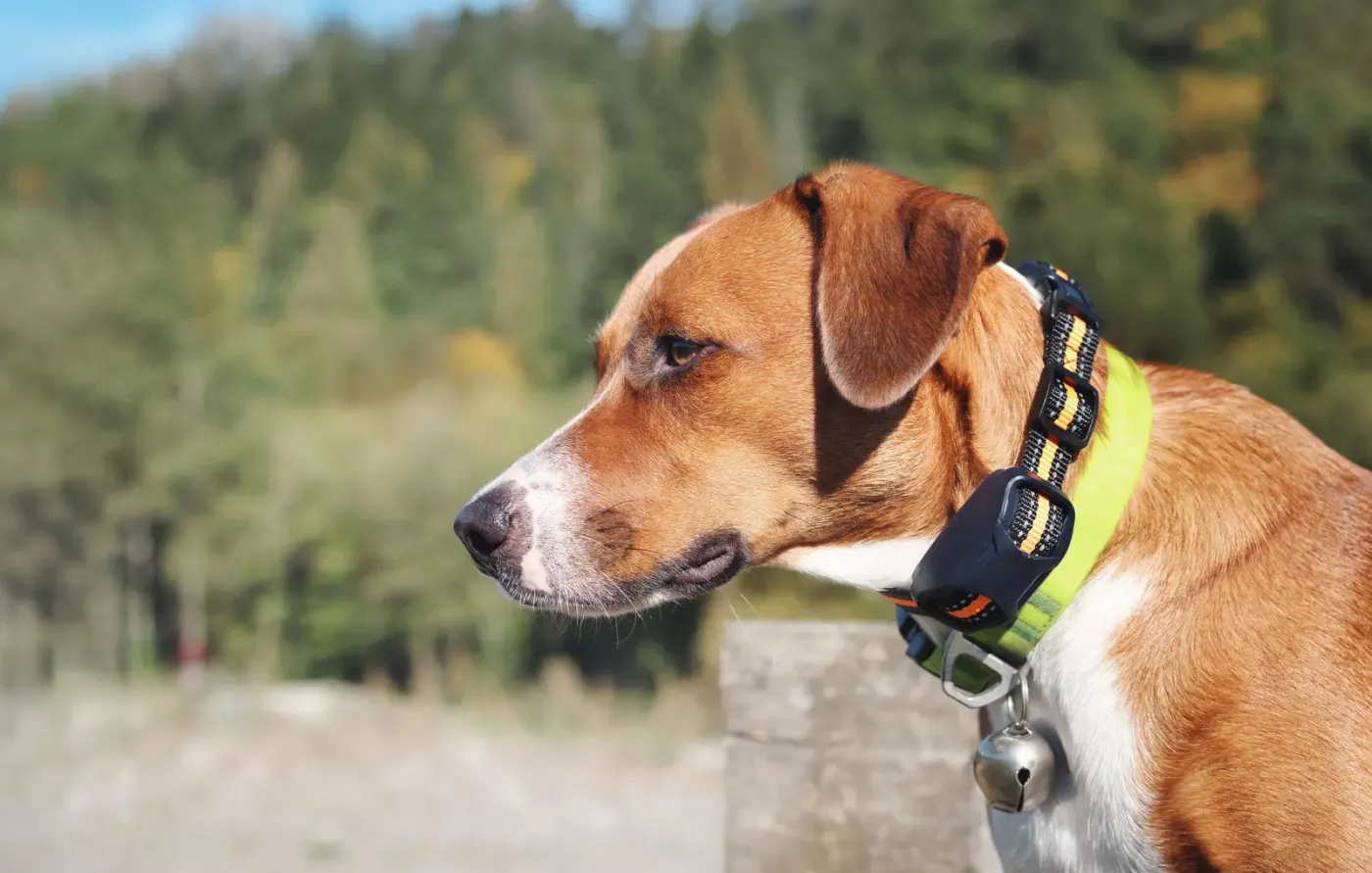
The e-collar earns its place only after a recall exists. It is a pager, not a cattle prod: a low tap that reaches your dog at distance the way a hand on the shoulder reaches a friend in a loud room. We use modern Educator collars, matched to the individual dog and always taught to the owner. If the dog does not already understand the recall word, the collar has nothing to remind it of.
- Teach recall before any tool
- Charge the whistle with food
- One pattern, never wasted
- Find the lowest working level
Conditioning steps
The order of operations, and where it goes wrong.
Whistle first: pip, feed, repeat, indoors, until the dog startles happily at the sound. Then pip while the dog is already running to you, then before, then around mild distractions on a long line. E-collar second: let the dog wear it switched off for several days, find the lowest level it barely notices, then tap, cue, reward, so the sensation predicts the recall it already knows. Each stage takes days, not minutes.
The classic mistakes are all impatience. Blowing the whistle to stop bad behaviour, so it becomes a warning siren. Cranking the level when the dog is mid-chase, which teaches panic, not recall. Skipping the conditioning and hoping the box explains itself. If you would rather hand this to professionals, our Functional Off-Leash and Advanced Off-Leash programs build the whole system, collar conditioning included, and every board and train ends with a handover lesson so you can run it.

The programs
The road to reliable freedom.
Recall is built in layers. These programs ladder from foundations to full off-leash.

E · 3-week board & train
Functional Off-Leash
Everything in the on-leash program, then the next level: reliable off-leash recall even around distractions.
Includes handover lesson, follow-ups, Educator remote collar

SE · 4-week board & train
Advanced Off-Leash
The full four-week build: from functional foundations to advanced reliability in public environments and around higher-level distractions.
Includes handover lesson, 2 follow-ups, Educator remote collar
Asked and answered
The questions people ask us.
How do I train recall with a dog whistle?
Pair the whistle with food indoors until the sound alone spins your dog around, then attach it to easy recalls on a long line. Add distance and distractions gradually. Guard the sound so it only ever predicts something wonderful.
How do I train recall with an e-collar?
Only after your dog reliably comes on a long line. Condition the collar at the lowest level the dog notices, pairing the tap with your existing recall cue and a reward. Used this way it becomes long-range communication rather than correction.
Can I train recall with a vibrating collar?
Yes, and the process is the same: the vibration must be conditioned to mean come before it is useful. Some dogs find vibration more startling than a low tap, so introduce it gently. It is also a common choice for deaf dogs, since it replaces a verbal cue entirely.
Will a shock collar ruin my dog?
A collar used as random punishment can absolutely damage trust and confidence. A modern Educator collar, conditioned at low levels onto a recall the dog already knows, reads very differently to the dog. The tool is neutral; the teaching around it is everything.
Keep reading
Recall, with real range
Book a consultation and we will match the tool to your dog, then teach you both to use it well.
From real owners
Rated 5.0 on Google.
Real Northline dogs