
The method
How to tire out a dog safely
Ask most owners how to tire out a dog and they reach for the ball launcher. Twenty throws later the dog is panting, and half an hour after that the dog is pacing again, fitter and more wound up than before. Endurance is not the goal. A dog that has used its nose and its brain sleeps hard. Here is how to get there, in January and in July.
Last reviewed August 26, 2026
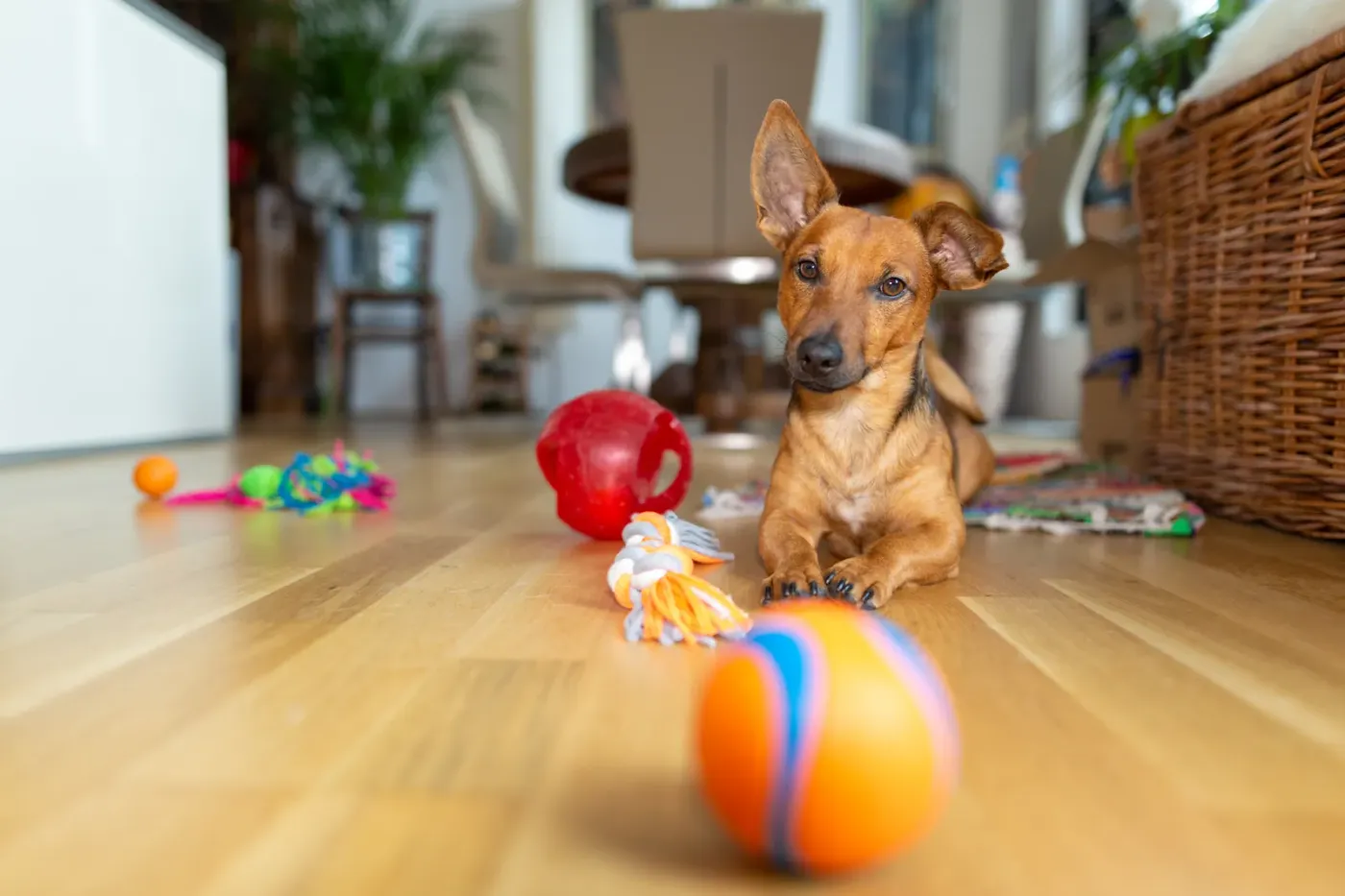
Brain before legs
Mental work tires a dog faster than miles do.
Scent work is the cheapest exhaustion available. Scatter a handful of kibble across the lawn or a snuffle mat and let the dog hunt for it. Hide three treats in a room, release the dog, and make the hides harder as they improve. Follow it with a five-minute training block: a new trick, a longer down-stay, or heel work around the dining table. Thinking burns energy in a way running laps does not, and it comes with a built-in calm-down at the end.
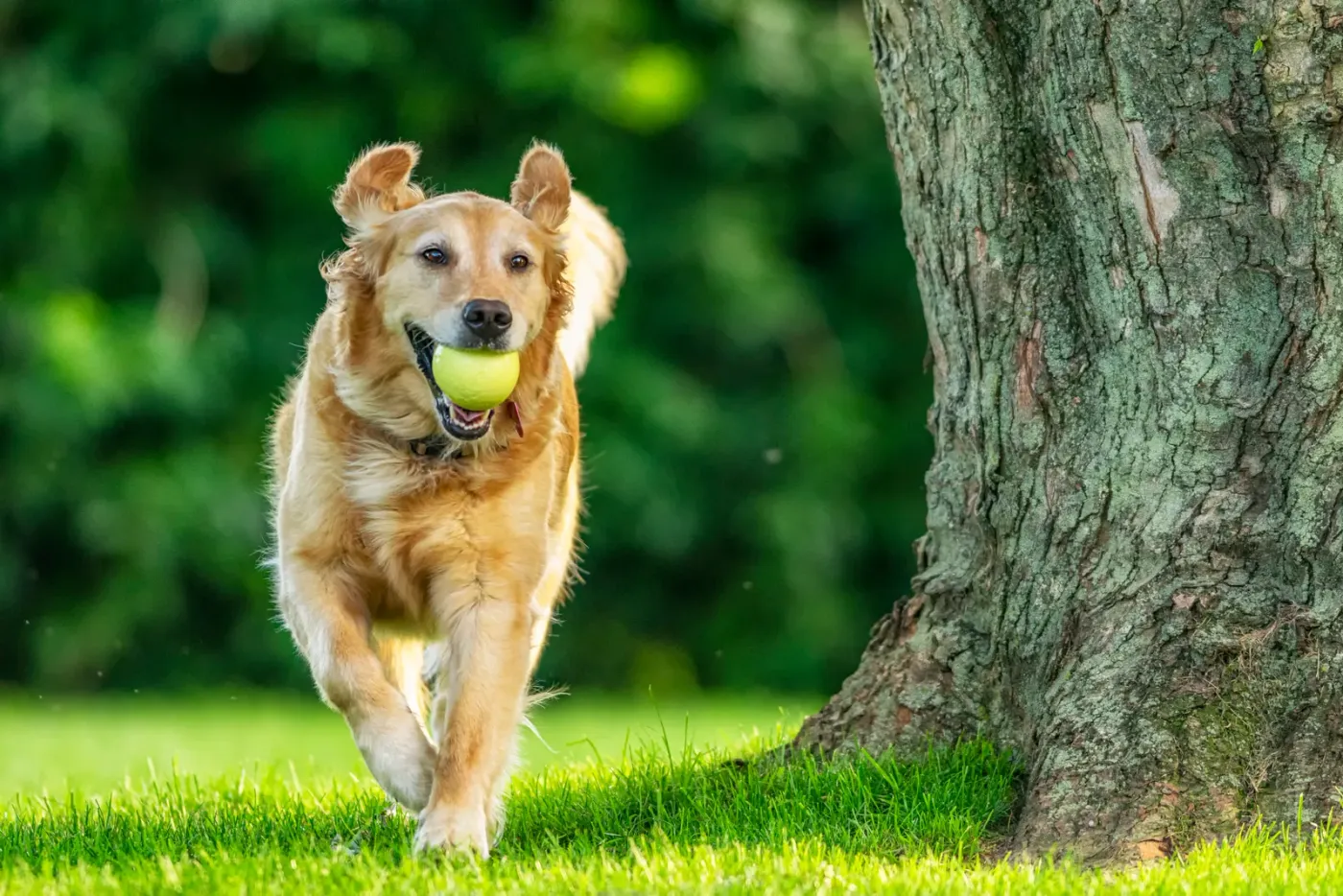
Now the arousal trap. Endless fetch builds a dog that is fitter every week and no calmer, because chasing winds the dog up and nothing in the game teaches them to come down. Keep fetch short, ask for a sit before each throw, and end while the dog still wants more. Walk with structure instead: heel for a block, then a release to sniff, then heel again. Finish the day with a long chew, a frozen food toy or a bully stick.
- Scatter kibble, let the dog hunt
- Five minutes of new skills
- Sit before every throw
- End the day on a chew
January and July
Deep winter and hot afternoons each need their own version.
Calgary winter makes the yard unappealing for long stretches. Indoors, run a hallway recall between two people, each calling the dog in turn and paying on arrival. Teach one small trick a day: paws on a step, a spin, a chin rest. Hide treats under cups and let the dog knock them over. A cold-weather walk still counts, but keep it to a purposeful heel on cleared sidewalks and skip the icy hill, because ice and speed are a bad mix.
Summer flips the problem. On a hot afternoon, pavement can burn pads and a heavy-coated dog can overheat long before it looks tired, so exercise moves to early morning and after sunset. Midday belongs to shade, water and brain work: a scent game in the basement, a chew in the coolest room, a stay session by an open door. If the dog is still restless in the evening, a slow walk on grass with time to sniff beats a jog around the block.
The programs
When teaching it yourself stalls.
The guide above is the real method. These are the faster routes.
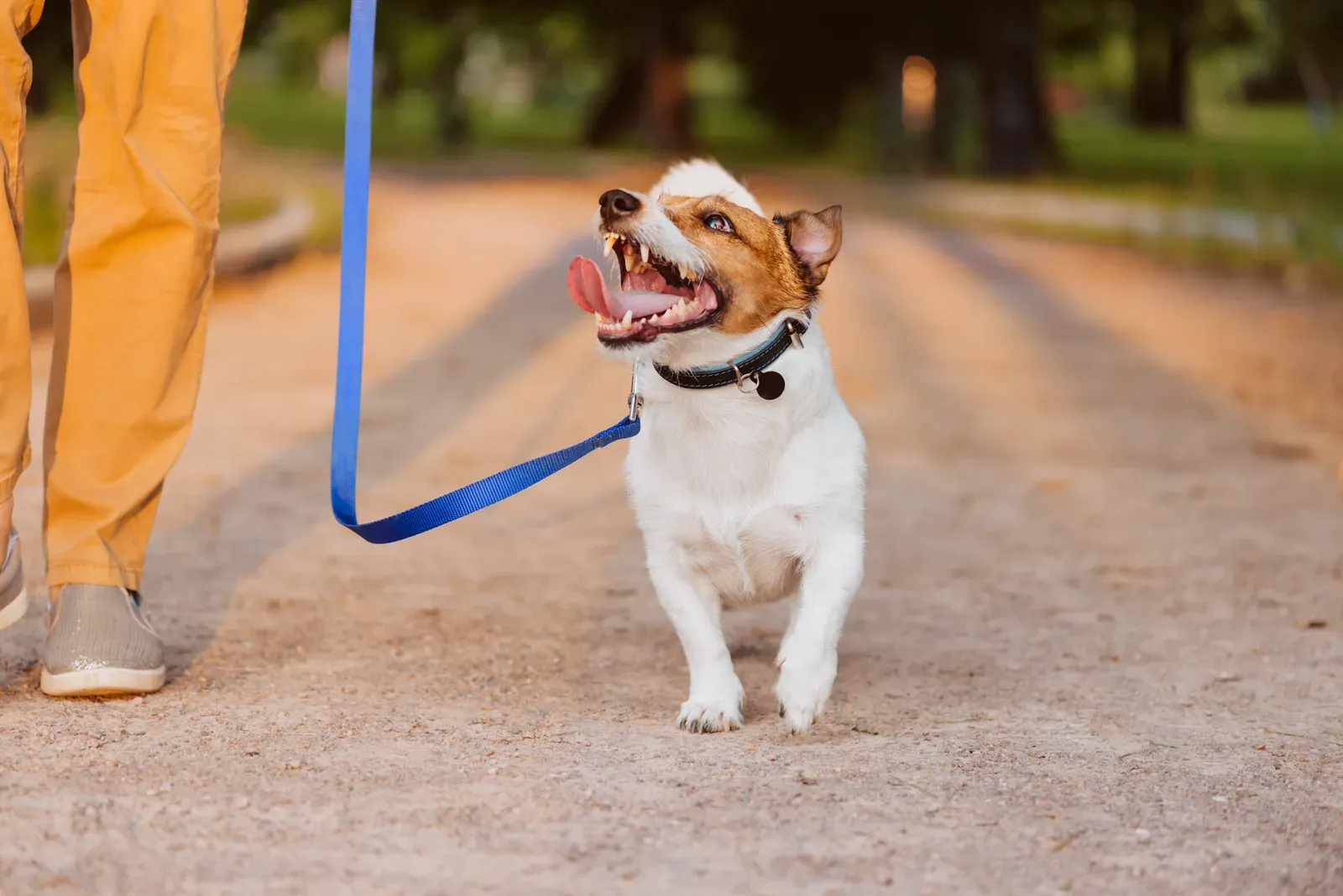
W · One-hour session
Private Training
One-on-one coaching with you on the other end of the leash.
Includes a written weekly plan to work from
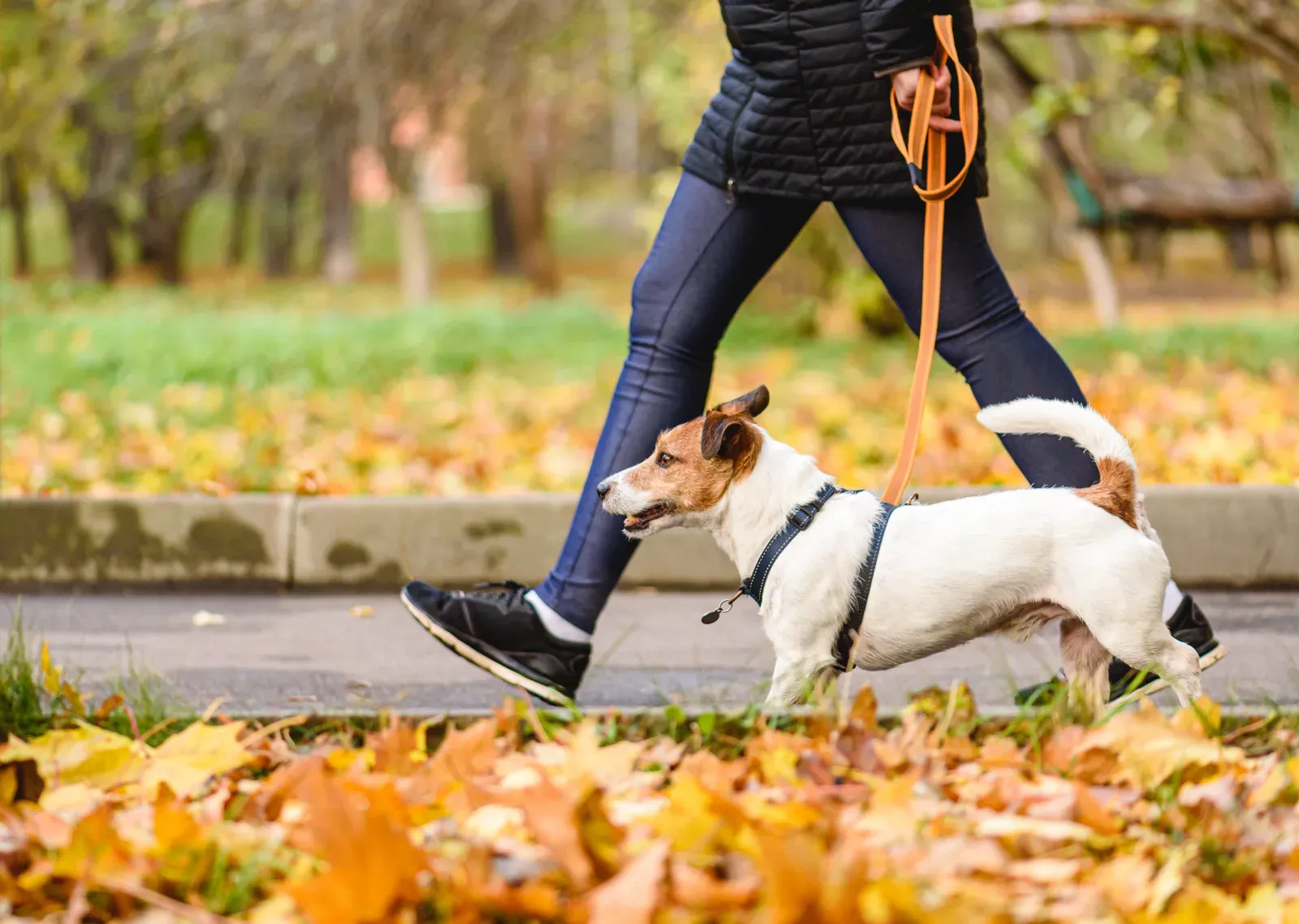
NE · 2-week board & train
On-Leash Foundations
If every walk is a wrestling match, pulling, barking, zig-zagging, this two-week program rebuilds the walk from the ground up with foundational on-leash obedience..
Includes handover lesson, follow-up session, lifetime support, slip lead + collar
Asked and answered
The questions people ask us.
How do I tire out a dog fast?
Skip the sprint and go for the nose. A scatter feed across the grass, three hidden treats around the house and a few minutes of a new trick will flatten a dog quicker than a long fetch session. Follow it with a chew and most dogs will sleep.
How do I tire out a dog in an apartment?
Hallways are your training ground: recall between two rooms, a down-stay while you cook, and puzzle toys for meals. Add a daily sniff walk with no agenda rather than a fast loop. Brain work suits apartment dogs because it makes no noise and needs no yard.
How do I tire out a dog without walking?
Hide-and-seek with a person, scent games with kibble, a short session on a new skill and a long-lasting chew. Rotate them through the day so the dog has something to think about every couple of hours. Walking is one tool, not the only one.
How do I tire out a dog on a rainy day?
Treat it as a training day. Run two or three five-minute sessions on sit, down, place and heel, hide treats under towels, and hand over a stuffed chew during your own downtime. A quick wet outing so the dog can relieve itself is enough; the rest can happen inside.
Keep reading
Work the brain first
Nothing seems to tire your dog? Book a consultation and we will look at what the day is actually made of.
From real owners
Rated 5.0 on Google.
Real Northline dogs