
Manners & obedience
How to teach a dog to wait at doors
A pause at the door keeps a dog from bolting into the street or a visitor's legs while the door stands open. We teach it as a short wait behind the threshold, released by one word before anyone crosses. The dog is secured first, the door moves a little at a time, and the release comes from us, not from the door opening. Here is the sequence, then where it tends to unravel.
Last reviewed September 29, 2026
The sequence
Secure the dog, then move the door a little at a time.
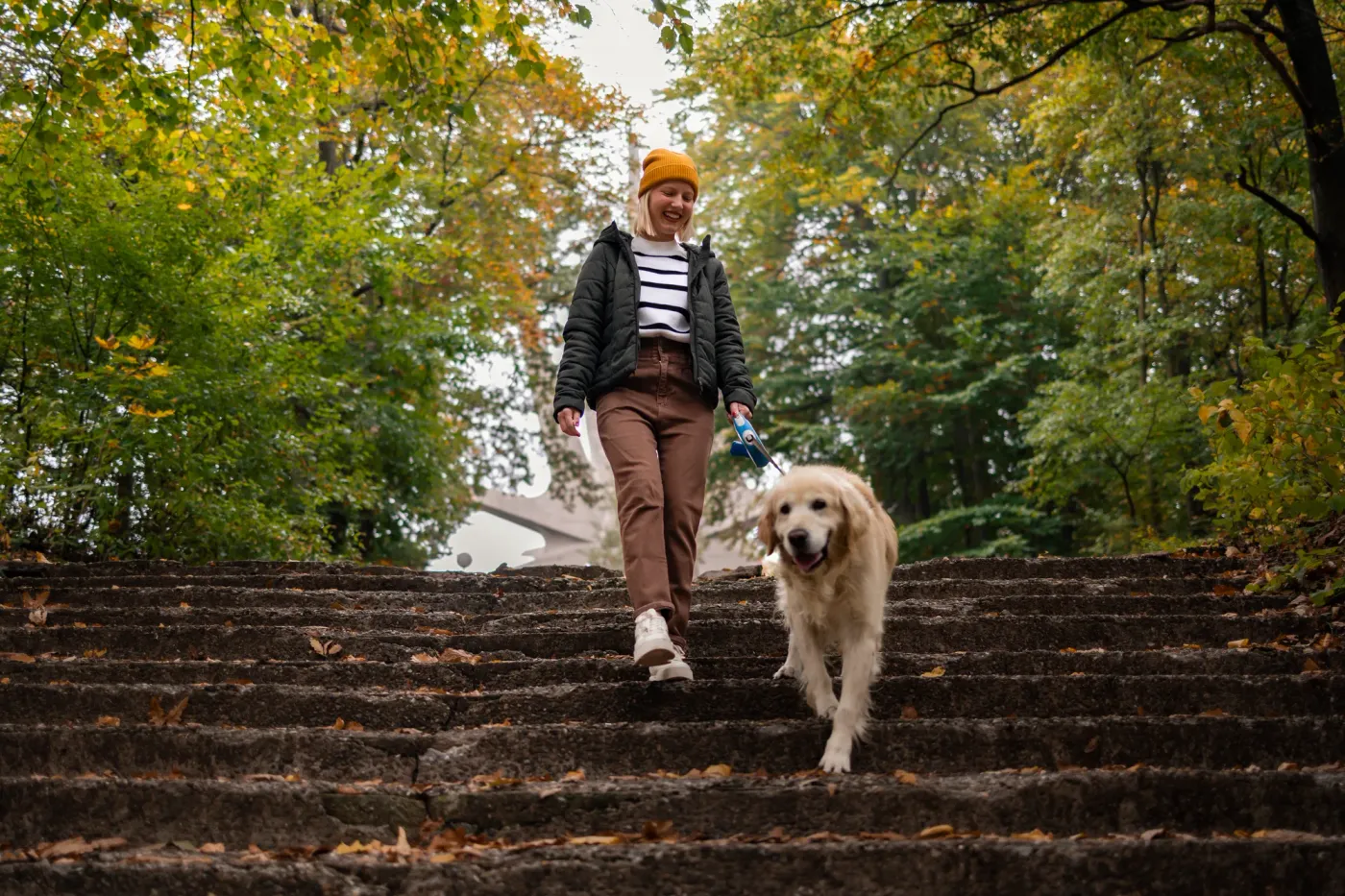
Before the first rep, we secure the dog: a leash held by an adult, or a baby gate across the doorway. We stand beside the dog, a step back from the frame, so paws and noses are clear of the door's path. We put a hand on the handle and turn it. If the dog holds, we mark and pay. If the dog steps forward, we calmly reset and begin again. The door is never closed on a moving dog.
Once the handle turn earns a steady dog, we open the door a few centimetres, mark and pay, then close it while the dog is still and clear of the frame. We widen the gap gradually until the door swings open and the dog stays put, and only then say the release word and walk through together. Duration and distance come next, one at a time. At exits, the front door, the back gate and the car, the leash stays on whatever the stage.
- Leash held or gate in place
- Paws and noses clear of frame
- We reset instead of closing the door
- Release word before anyone crosses
Wait versus stay
A pause is not a stay.
Stay means hold that position until told otherwise. Wait means do not cross this line, and it lives at thresholds: doors, gates, the car, the top of the stairs. A dog on a stay should not shift from a down. A dog on a wait can stand, sit or sniff, as long as the paws remain on the near side of the frame. We keep the two words separate so the dog is never guessing which rule is in play.
The release word is the part that blurs first. If one person says okay, another says break, and someone just walks out, the dog starts reading the door instead of the word, and the cue gets less clear each time. We pick one release word for the household and use it at every door. When there is no time to practise, such as a delivery with the dog underfoot, we manage instead: leash on, or dog behind a gate, before the door opens.
Asked and answered
The questions people ask us.
How do you teach a dog to wait at the door?
We secure the dog with a held leash or a gate, turn the handle, and mark and pay when the dog stays behind the threshold. If the dog steps forward, we reset rather than closing the door on them. The gap widens gradually, and a release word comes before anyone walks through.
How do you teach a dog the wait command?
We teach it at a threshold rather than in the middle of a room, because the line the dog is not crossing needs to be obvious. Early reps happen at a quiet interior door with the dog secured, and the release word is the only thing that ends the wait.
What is the difference between wait and stay?
Stay means hold that exact position until released. Wait means do not cross this line, and the dog can stand, sit or shuffle behind it. We keep the two words separate so both cues stay clear.
Why does the wait cue only work for one person?
Often because other people in the house open the door without the pause, so the dog has learned two sets of rules and the door opening has become the release. We settle on one release word for everyone and, when nobody has time to practise, manage the door with a leash or gate instead.
Keep reading
Front door still a launch pad?
Thresholds are where manners show. Book a consultation and we will work on door, gate and car waits the whole household can use.
From real owners
Rated 5.0 on Google.
Real Northline dogs