
Manners & obedience
How to teach a dog to take treats gently
Some dogs take a treat like a pickpocket. Others take it like a shark, and fingers come back wet, dented or both. Snatching is often arousal rather than bad manners, and a safer way to change it is to stop offering the fingers in the first place: calmer setups, food delivered low or on the floor, and a marker for the dog who approaches slowly. Nobody has to hold still and hope.
Last reviewed September 29, 2026
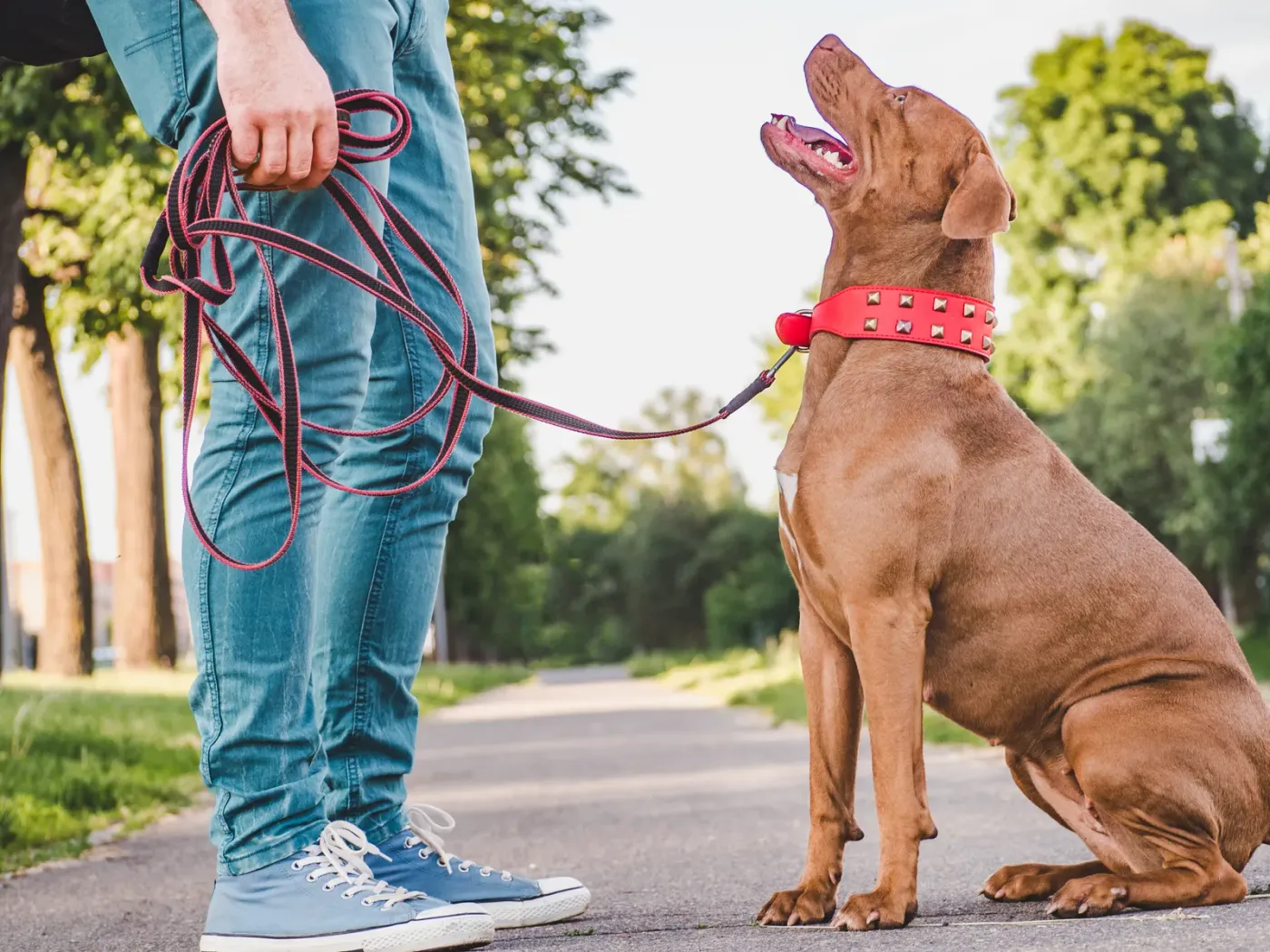
Fingers out of reach
Lower the excitement, then change where the food lands.
We start with arousal, not the mouth. A quiet room, plain treats, and no bouncing hand above the nose. Then we change the delivery so that a fast mouth has nothing to catch: treats dropped on the floor, placed in a bowl, or offered from a flat palm with the fingers together and pointed away from the dog. The moment the dog approaches slowly, we mark it and the food appears. Speed stops paying, and no finger is at stake while that lesson lands.
We never hold a hand still while a dog grabs at it; a chewed fist is a bite waiting for a reason. If teeth touch skin, we pause and the next treats go on the floor rather than from the hand. Hand delivery comes back only when the approach is already slow, low and calm. Only adults do this practice. Children are kept separated from a dog that snatches and do not hold food anywhere near it, however gentle the dog seems with grown-ups.
- Calm room, plain treats
- Floor, bowl or flat palm
- Mark the slow approach
- Adults only, children separated
When to stop
Signs this is more than a manners problem.
Teething puppies may mouth everything, including the hand holding kibble, so we keep sessions short, use softer treats delivered low or on the floor, and ask a vet about mouth pain and suitable chews if the puppy seems sore. With an over-aroused adult, the snatch is often the excitement talking, so we lower the setting before asking for anything. A cue such as gentle or easy is added only once slow taking is already happening, with no timeline attached.
Stiffening, freezing over the food, a hard stare or a growl may suggest guarding rather than snatching. If any of those show up, we stop hand-feeding, never punish the growl, and bring in qualified behaviour help. A dog that snaps at hands should be seen by a professional before anyone practises further. Gentle treat-taking is a manners skill and nothing more: it does not make a dog safe around a toddler with a cracker or a guest with a plate.
Asked and answered
The questions people ask us.
How do you teach a dog to take treats gently?
We lower the excitement first, then deliver treats on the floor, in a bowl or from a flat palm so a fast mouth has nothing to catch. We mark slow approaches and pay them. If teeth touch skin, we pause and go back to floor delivery rather than hold a hand still.
Why does a dog snatch treats?
Often the dog has learned that speed gets the food, and excitement or teething can sharpen it; those are common reasons, not the only ones. Stiffening, freezing or growling over food may suggest guarding instead. In that case we stop hand-feeding, never punish the growl, and seek qualified behaviour help.
How do you teach a puppy to be gentle with treats?
Short sessions, soft treats, and delivery low or on the floor while the puppy is teething. We mark any slow approach rather than waiting for perfect. If the puppy seems sore in the mouth, a vet can advise on pain and suitable chews.
Should the cue be 'gentle' or 'easy'?
Either, as long as it is one word used consistently. We add it only while the dog is already taking food slowly, so the word describes the behaviour before it asks for it. How quickly the word alone starts to work varies by dog, and we do not put a timeline on it.
My dog snaps at my hand when I give treats. What should I do?
We stop hand-feeding and put food on the floor or in a bowl, keep children well away from the dog whenever food is around, and have a qualified professional assess the dog before any more practice. Behaviour Rehab is the program built for anxiety, reactivity and aggression, planned and priced after a full assessment, and The program is recommended at the consultation, and a smaller one is recommended when it covers the goal.
Keep reading
Keep fingers out of it.
Book a consultation if treats have turned into grabs or snaps. We will start with the whole dog, not just the mouth.
From real owners
Rated 5.0 on Google.
Real Northline dogs