The method
How to teach a dog leave it
Calgary sidewalks serve a full menu: dropped fries, goose droppings, a chicken bone by the bus stop. A trained leave it means your dog turns away from all of it on one calm word, no lunging, no tug of war. Built properly, it stops being a command at all and becomes a reflex: see something tempting, check in with you instead.
The fist game
Build the reflex one game at a time.
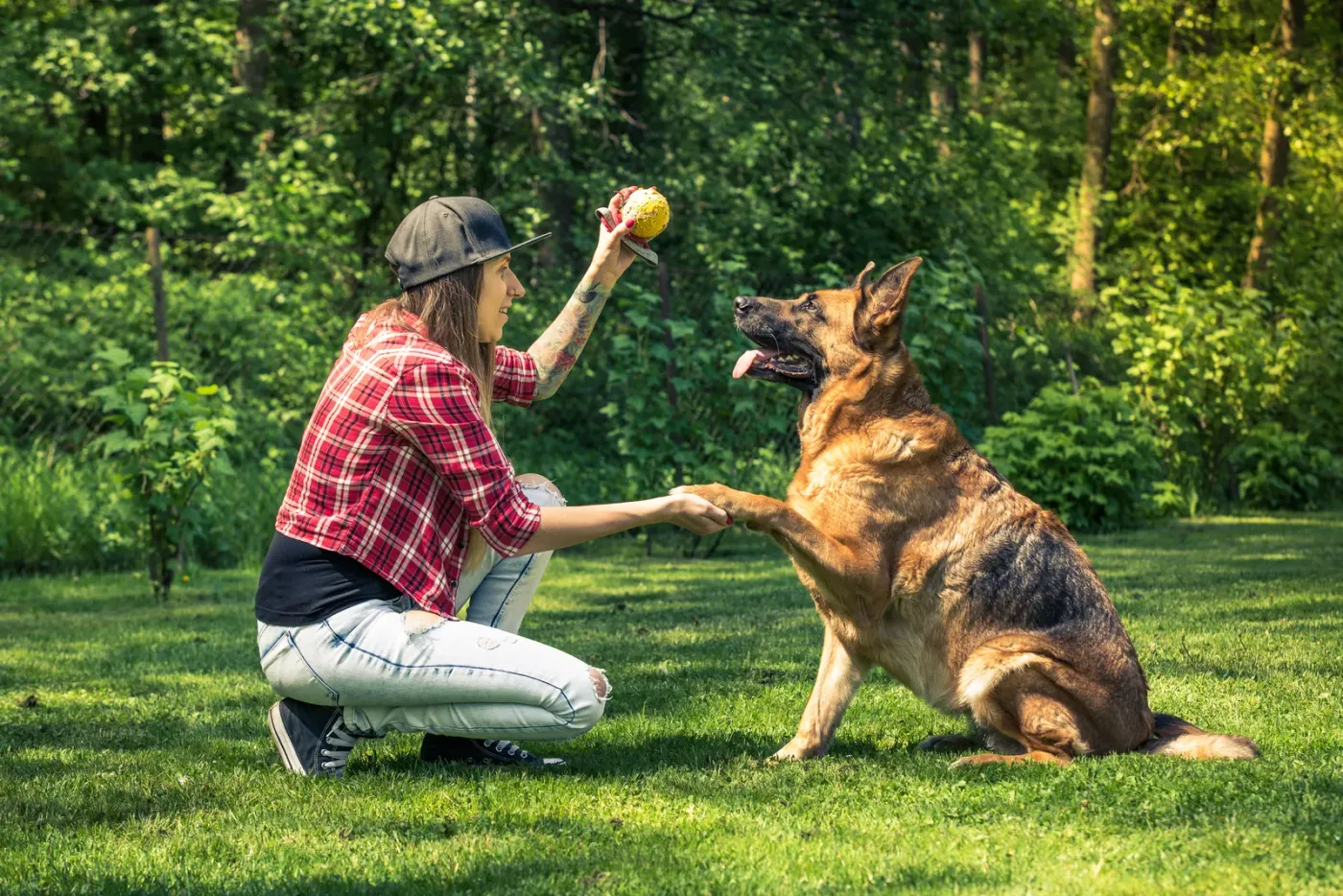
Close a treat inside your fist and let your dog investigate. Licking, nibbling, pawing: ignore all of it. The instant the nose backs away, mark it and pay from your other hand. That detail matters. The dog never gets the thing it left, so leave it never means wait and grab it later. A few short sessions in, most dogs back off the fist the moment it appears.
Now raise the stakes in steps. Open hand, then a treat dropped on the floor with your foot ready to cover it, then a treat you walk past on leash. Say the word once, and jackpot the hard leaves: a boring kibble left earns one treat, a dropped piece of cheese left earns five. Difficulty decides the paycheque, and your dog learns the tough calls are the profitable ones.
- Pay from the other hand
- Never surrender the left item
- One calm cue, no repeats
- Jackpot the hardest leaves
Timing and proofing
Two different commands for two different moments.
Leave it works before the mouth: the dog sees the temptation and never takes it. Drop it works after: the prize is already in the jaws and you need it out. Teach drop it separately by trading up, offering something better and taking the item calmly, never by chasing. Chase a dog holding contraband and you have started a game you cannot win, because swallowing is the fastest way to end a chase.
Then proof to street standard, because leave it is a safety command, not a party trick. Gutters hide cooked bones, cannabis remnants, and winter gravel soaked in de-icer, and a dog that eats everything on walks will eventually find the wrong snack. Set up sweeps: planted temptations along a leash route, paid generously for passing. When your dog spots roadside chicken and looks at you instead, the command is real.
The programs
When teaching it yourself stalls.
The guide above is the real method. These are the faster routes.
NE · 2-week board & train
On-Leash Foundations
If every walk is a wrestling match, pulling, barking, zig-zagging, this two-week program rebuilds the walk from the ground up with foundational on-leash obedience..
Includes handover lesson, follow-up session, lifetime support, slip lead + collar
E · 3-week board & train
Functional Off-Leash
Everything in the on-leash program, then the next level: reliable off-leash recall even around distractions.
Includes handover lesson, follow-ups, Educator remote collar
Asked and answered
The questions people ask us.
What is the difference between leave it and drop it?
Timing. Leave it happens before the mouth: your dog sees something and does not take it. Drop it happens after: the item is already in the mouth and needs to come out, which you teach separately by trading for something better.
How do I teach drop it?
Trade up, calmly. When your dog holds a toy, offer something clearly better, say drop it as the jaws open, then give the toy back when it is safe to. Returning the item often teaches your dog that drop it is not theft, so there is nothing to guard.
My dog eats everything on walks. What do I do?
Manage first: shorten the leash through litter-heavy stretches and scan ahead so you spot the chicken bone before your dog does. Then train sweeps, planting food along a route and paying heavily for passing it. Scavenging is self-rewarding, so every successful grab sets you back.
Can leave it work for squirrels and other dogs, not just food?
Yes, once it is solid around food. Leave it is really an attention switch, disengage and check back in, and dogs generalize it to squirrels, other dogs, and blowing leaves. Use the same progression: start far from the temptation and pay the turn-away.
Keep reading
Gutter chicken keeps winning?
Our board and train programs proof leave it against real streets and real distractions. Book a consultation.
From real owners
Rated 5.0 on Google.
Real Northline dogs