Problem behaviours
How to stop a dog scavenging on walks
Some dogs treat every walk as a buffet: chicken bones by the bus stop, a dropped sandwich crust, something unidentifiable under the snowbank. Scavenging is normal dog behaviour, but on a sidewalk it can be risky. Here is what to manage first, which Calgary seasons turn up the worst finds, when a muzzle earns its place, and the point where a trained eye is worth bringing in.
Last reviewed October 4, 2026
Manage the route
Safety comes before any leave-it cue.
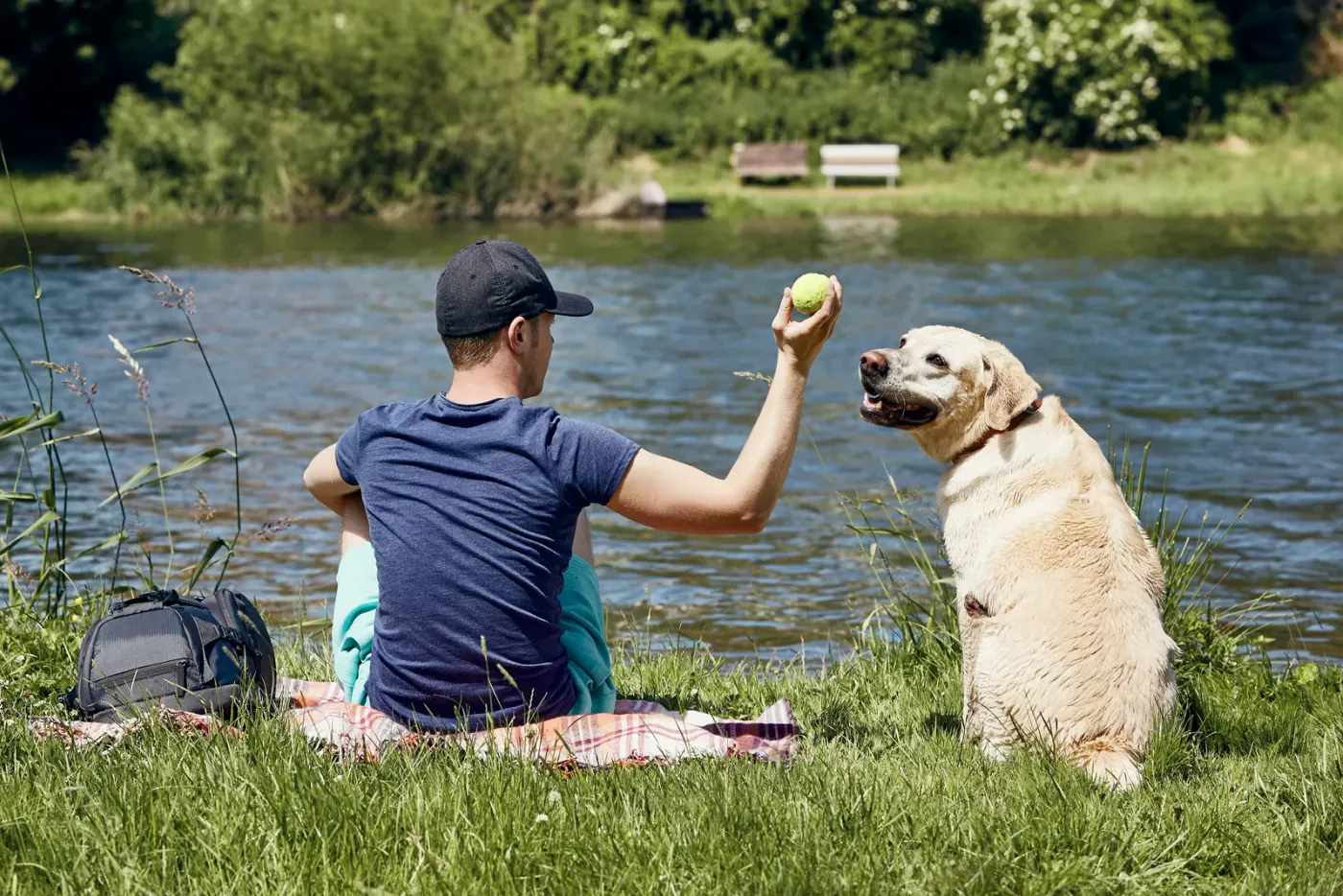
Until your dog has a reliable leave-it, every grabbed chicken bone is practice for the habit. Keep the leash shorter past bins, benches and bus stops, walk your dog on the side away from the verge, and scan a few metres ahead so you see the crust before the nose does. Carry better food than the street offers. If your dog swallows something sharp, toxic or large, call your vet right away rather than waiting to see.
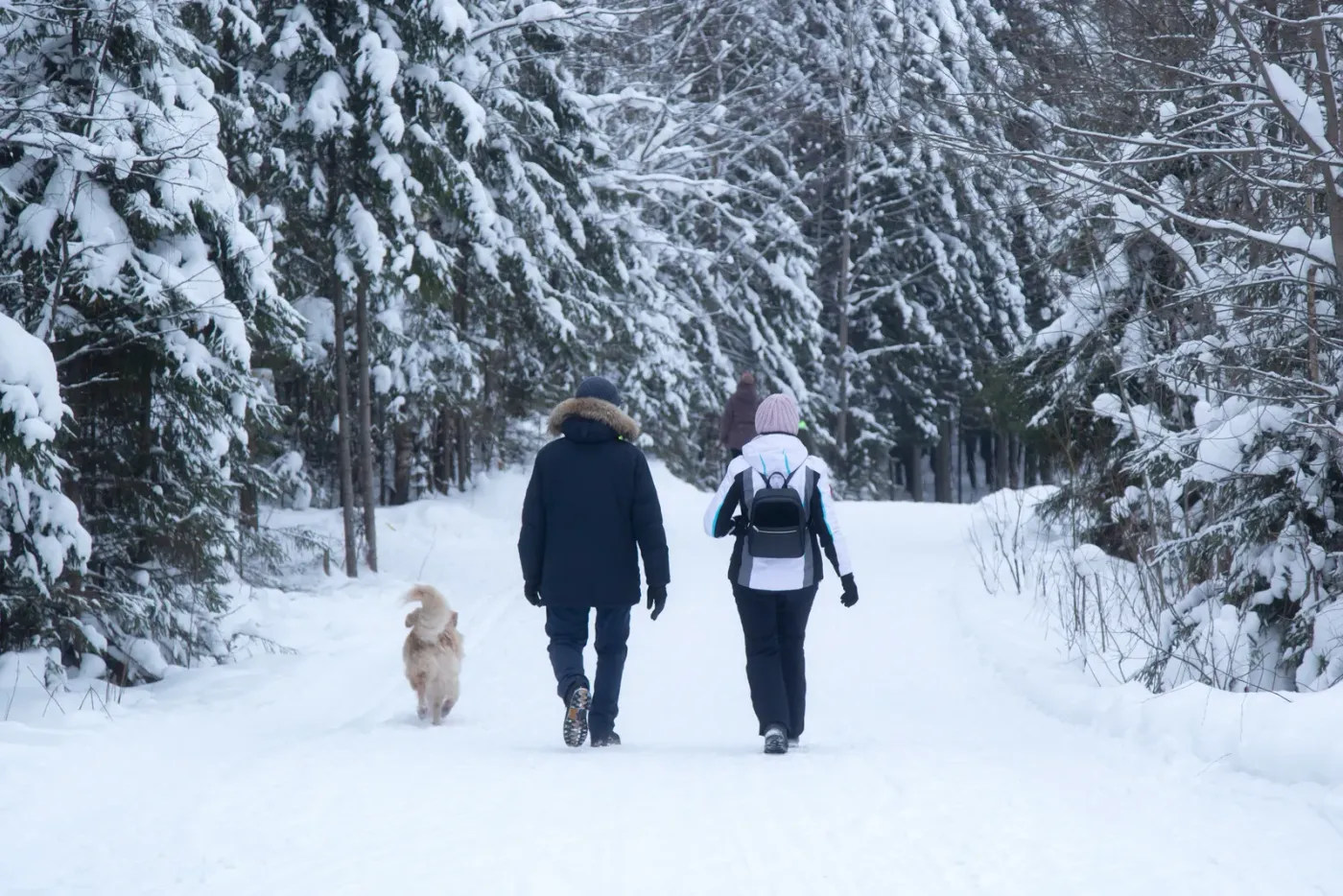
Calgary adds its own seasonal menu. Spring melt, and every mid-winter chinook, uncovers months of dropped food, wrappers and droppings that froze in place under the snowbanks. Summer brings picnic leftovers along park paths, and fall drops fruit under ornamental trees. Plan walks with that in mind: shorter leash in thaw weeks, wider berth around picnic tables, and a change of route when one stretch of sidewalk keeps producing finds.
- Shorter leash past bins and benches
- Scan the path ahead
- Extra caution during thaw weeks
- Call your vet after risky swallows
Teach the alternative
Leave it, look up, then get paid.
Start leave-it indoors with a treat in a closed hand. The moment your dog backs off, mark it and pay from your other hand, never with the item they left. Move to a treat on the floor under your shoe, then to items planted along a quiet route. Reward every spontaneous glance up at you on walks. If your dog does grab something, offer a trade rather than prying the jaws open, and dispose of the item out of reach.
For a dedicated scavenger, a basket muzzle lets the dog pant and drink while blocking the snack. It needs professional fitting and slow, rewarded conditioning before it goes on for a walk. Get help sooner if your dog stiffens, growls or snaps over found items; never punish the growl, it is a warning worth hearing. Repeated swallowing of non-food objects deserves a vet check first. Private Training or On-Leash Foundations can work on distractions, and the consultation names the smaller option when it suits.
Asked and answered
The questions people ask us.
Why does my dog eat everything on walks?
Scavenging is normal dog behaviour, and the sidewalk is full of smells and rewards. Many dogs also learn that grabbing fast beats being stopped. Management plus a taught leave-it changes the odds.
Should my dog wear a muzzle to stop scavenging?
A basket muzzle can be a sensible safety layer for a determined scavenger while you train. It must be professionally fitted and introduced gradually with rewards so the dog is comfortable wearing it.
What should I do if my dog swallowed something on a walk?
Call your vet right away, especially for bones, wrappers, cobs or anything possibly toxic. Do not try to make your dog vomit unless your vet tells you to.
How do I get my dog to drop something it picked up?
Offer a trade with something your dog values more, then calmly pick up and dispose of the item. Prying the mouth open tends to teach a dog to swallow faster next time.
Keep reading
Walks with the nose up
Tell us what your dog grabs and where. Book a consultation and we will recommend the right level of help.
From real owners
Rated 5.0 on Google.
Real Northline dogs