
Problem behaviours
How to stop a dog rushing the door when the bell rings
The doorbell is one of the most rehearsed cues in a dog's life, and many dogs have learned it means sprint, bark and greet. That habit can end with a dog loose on the street or a guest knocked off the step. The fix is to make the chime mean something else: walk to a bed, settle, and wait for permission.
Last reviewed October 4, 2026
Before the bell
Secure the entry before you teach anything.
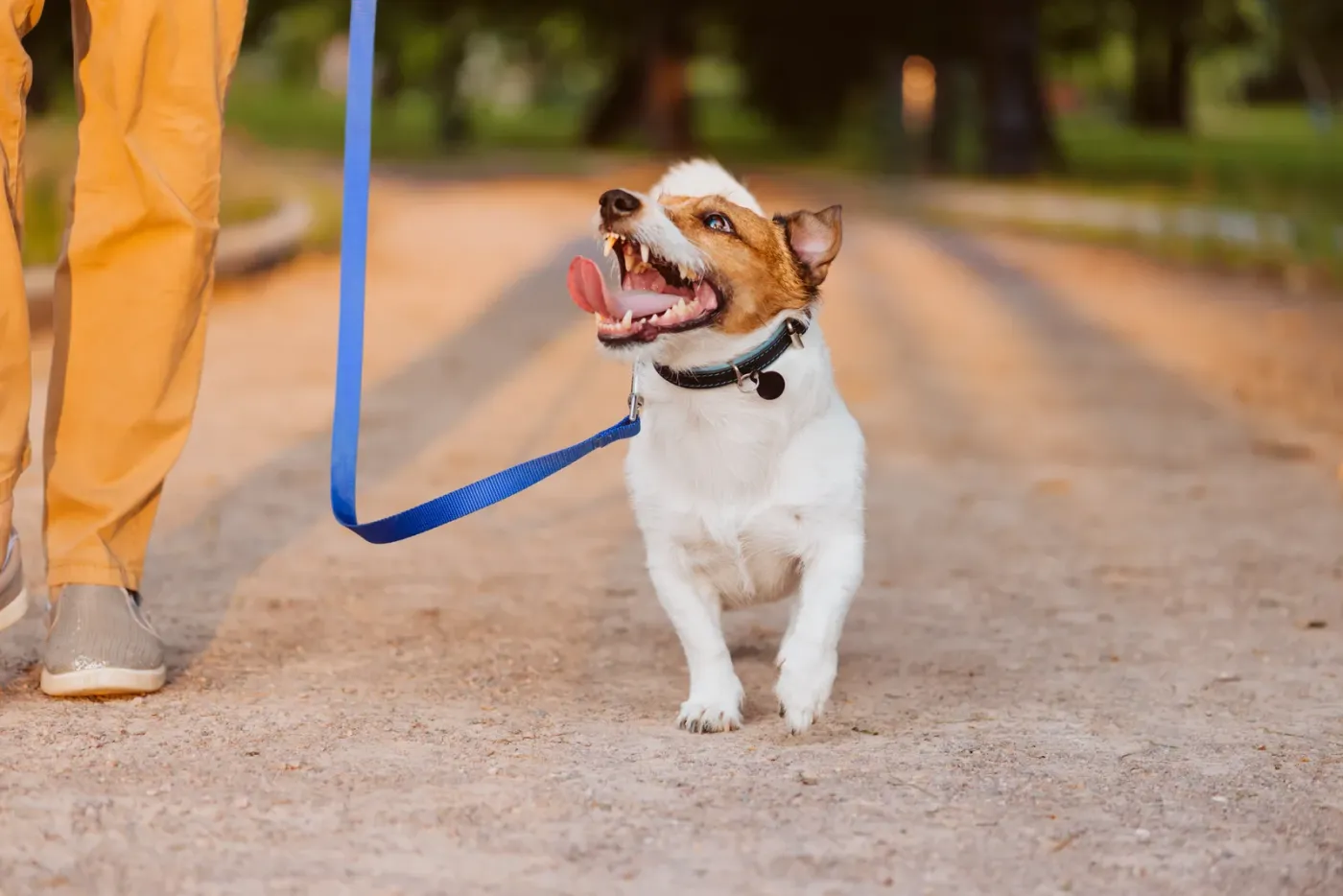
Every rush you allow is practice, so start by making the rush impossible. Put a baby gate across the front hallway, clip a leash on before you answer, or settle your dog in a closed room with a chew when you expect a delivery. An adult holds the leash, never a child. Never close the door on a dog to stop it slipping out; block the dog with the gate instead.
A note on the door asking couriers to leave parcels without ringing removes a lot of surprise rehearsals while you train. Many dogs are also wound up by the knock that follows the bell, so ask regular visitors to text instead. If your dog has ever bolted toward the road or jumped hard on a guest, keep this management in place even after training starts looking good.
- Gate across the front hallway
- Leash on before opening
- Ask couriers not to ring
- Children stay away from door
Bell means bed
Turn the chime into a cue for place.
Teach place away from the door first: a raised bed or mat a few steps back from the hallway, where your dog lies down and stays for a marker and reward. Next, play a recording of your own doorbell at low volume, cue place, and pay well. Raise the volume slowly. When your dog heads to the bed on the chime alone, have a helper ring the real bell while the dog is leashed.
The guest protocol comes last. Your dog stays on place, leashed or behind the gate, while the guest walks in, takes off their boots and sits down. Release only when your dog is calm, and ask the guest to ignore any jumping. If your dog growls, stiffens or snaps at visitors rather than simply celebrating, stop the exercises and get a professional assessment before practising with guests again.
Asked and answered
The questions people ask us.
Why does my dog go crazy when the doorbell rings?
Often the bell has been followed by exciting arrivals so many times that it predicts a party. Some dogs are alert or worried instead, which can look similar at first. Watching body language at the door helps tell the two apart.
Should I put my dog in another room when guests come over?
Yes, while you are training, a closed room with a chew or a gated area is good management. It stops rehearsal and protects guests. Bring the dog out on leash once everyone is seated and settled.
How do I teach my dog to go to his bed when the doorbell rings?
Build place first with no noise at all, then pair a recorded chime with the place cue at low volume. Raise the difficulty one step at a time, and add a live bell and real visitors last.
When should I get help for door rushing?
Get help if the rushing comes with growling, lunging at visitors or escapes toward the street, or if your plan is not making progress. Private Training is a one-hour session with a written plan customized to your home, and the consultation will tell you if that is all you need.
Keep reading
Make the doorbell boring again
Book a consultation and we will look at your entry, your dog and your visitors, then recommend the simplest plan that fits.
From real owners
Rated 5.0 on Google.
Real Northline dogs