Problem behaviours
How to stop a dog pulling toward other dogs
A dog straining toward every other dog on the path turns a walk into a tug of war. Sometimes it wants to say hello. Sometimes it wants the other dog gone. The pull looks the same at the end of the leash, but the fix is not. This page helps you read which one you have, set up management that keeps everyone safe, and teach a calm, polite pass.
Last reviewed October 4, 2026
Read the pull
Frustrated greeter or reactive dog.
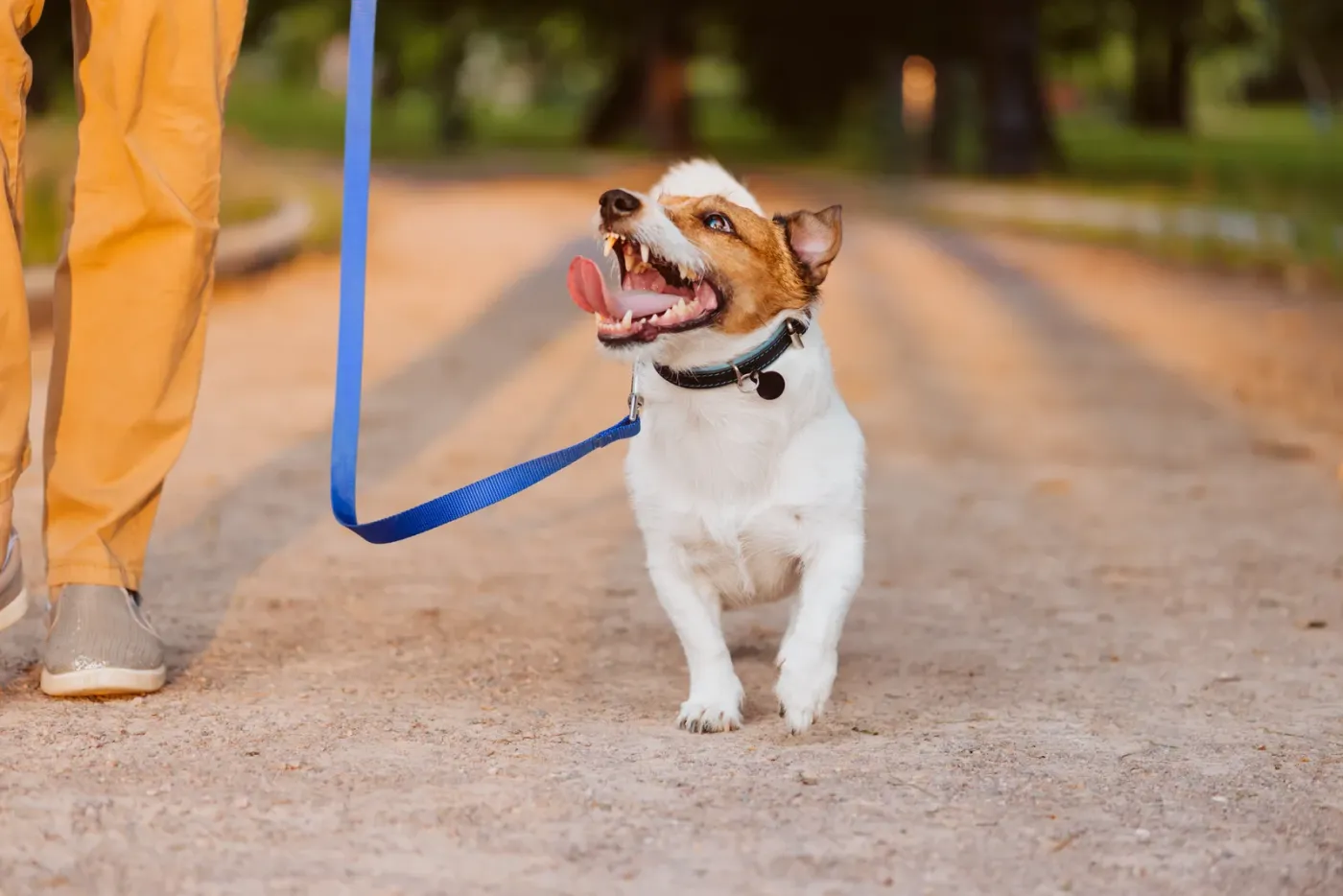
A frustrated greeter usually has a loose, wiggly body, a high wagging tail, and whines or yelps when held back. Once it reaches the other dog, it often plays happily. A reactive dog tends to stiffen, stare hard, raise its hackles, and may growl, bark or lunge, then fail to settle even after the other dog leaves. Some dogs start as frustrated greeters and drift toward reactivity when the frustration keeps repeating.
The difference matters because a frustrated dog often needs impulse control and a better way to earn greetings, while a reactive dog usually needs its underlying worry addressed. If you see stiffness, growling or snapping, treat it as reactivity. Never punish the growl: it is a warning, and suppressing it may leave a dog that bites with less notice. A professional assessment is the right step when you are unsure.
- Whining and wiggling suggests frustration
- Stiff body and stare suggests worry
- Growls are warnings, never punished
- Unsure? Get a professional assessment
Management first
Keep distance on your side before any training.
Every time your dog drags you to another dog, the pulling is rehearsed and often rewarded. Stop that first. Use a well-fitted harness or collar and a standard six-foot leash rather than a retractable one, and keep both hands on it. Walk at quieter times and on wider routes. When another dog appears, cross the street, step behind a parked car, or make a cheerful U-turn before your dog fixates.
Pause on-leash greetings for now. Tight leashes, face-to-face approaches and two excited dogs make a poor recipe, even with friendly dogs. If someone asks whether their dog can say hi, a polite "we're training, sorry" is enough. Management is not failure. It keeps your dog under the level of arousal where it can still learn, and it keeps other dogs and people safe while you train.
Training steps
Engagement at a distance your dog can handle.
Find the distance where your dog notices another dog but can still take food and respond to its name. That is your working zone. Each time your dog looks at the other dog, mark it calmly and reward when it turns back to you. Over repetitions, many dogs start offering the look-back on their own. If your dog will not eat or stops responding, you are too close, so add space.
Strengthen engagement away from dogs too. Practise name recognition, a quick hand touch and walking at your side in quiet places, so these skills are fluent before you need them under pressure. Then try parallel walking: you and a calm helper dog walk the same direction on opposite sides of a wide path, slowly closing the gap only while your dog stays loose and responsive.
The pass
Teaching a polite pass on a shared path.
A polite pass is a skill on its own. Put yourself between your dog and the oncoming dog, and curve away on a wide arc instead of walking straight past. Keep your dog's attention with a steady stream of small rewards while the other dog is closest, then a bigger reward once you are clear. A brisk pace helps; slowing down to stare at each other rarely does.
Practise passes first with a known, calm dog at generous distance, then gradually with strangers on wider routes. If a pass goes badly, do not scold. Calmly create space and make the next one easier. Behaviour may temporarily increase as your dog learns the new rules; if lunging persists or gets worse, that is a reason to reassess the plan with a professional.
When help helps
What each kind of help is built for.
The consultation recommends the program, including a smaller one when it is enough, and here is what each option is built for. On-Leash Foundations ($1,865 + GST, a 2-week board and train) is built for dogs who drag and treat the leash as a suggestion. It works on loose-leash walking, heel and everyday distractions, with lifetime phone and email support. Private Training ($150 + GST per one-hour session) suits owners who want coaching and a written weekly plan.
Behaviour Rehab is the program built for anxiety, reactivity and aggression, and dogs with bite histories are accepted after a full assessment. It runs five to six weeks, is planned and priced after that assessment ($4,850 to $5,760 + GST), and includes confidence building, structured socialization and in-depth owner education. If you see growling, fearful lunging or any bite, a professional assessment is the sensible next step whichever route you choose.
Asked and answered
The questions people ask us.
Why does my dog pull towards other dogs on walks?
Often it is frustration: the dog wants to greet and the leash is in the way. For other dogs it is worry or defensiveness, which shows up as stiffness, staring, growling or lunging.
Should I let my dog greet other dogs on leash?
While you are training, it is usually wiser to skip on-leash greetings. Tight leashes and head-on approaches can create tension even between friendly dogs.
How do I walk past another dog without my dog lunging?
Put yourself between the dogs, curve away on a wide arc, and reward your dog steadily while the other dog is closest. Start at a distance where your dog can still eat and respond.
When should I get help for leash pulling toward dogs?
Get a professional assessment if your dog growls, snaps, lunges in fear or has bitten. Also reach out if pulling persists or escalates despite consistent management and training.
Keep reading
Want relaxed walks again?
Book a consultation and we will read your dog's pulling with you and recommend the right next step.
From real owners
Rated 5.0 on Google.
Real Northline dogs