
Problem behaviours
How to stop a dog nipping at heels
Heel nipping often starts with movement. A herding breed may see ankles crossing the kitchen and try to organize them; a young dog sees trousers flapping and decides it is a game. Either way, every successful chase teaches that feet are worth grabbing. This page covers stopping the rehearsal, catching the moment before the nip, and where that energy can go instead.
Last reviewed October 4, 2026
Management comes first
Stop the chase before it starts.
While you are working on this, the dog should not get chances to practise. When the household is moving, such as mornings, homework time or someone carrying laundry, put the dog on a leash held by an adult, behind a baby gate, or in a crate with a chew. Wear closed shoes and long trousers rather than bare ankles. Children never take part in the training; they move freely on the other side of a barrier.
Never ask anyone to stand still while the dog grabs at them. If a nip is in progress, the adult calmly steps behind a gate or the dog is led away on its leash. Running, shrieking and swatting tend to make the game more exciting, so the quieter the exit, the better. Write down when it happens; many households find the nipping clusters around the same doorways and hours.
- Leash or gate during busy times
- Closed shoes, no bare ankles
- Children stay behind a barrier
- Log the doorways and hours
Interrupt and redirect
Catch the stalk, then give the drive a job.
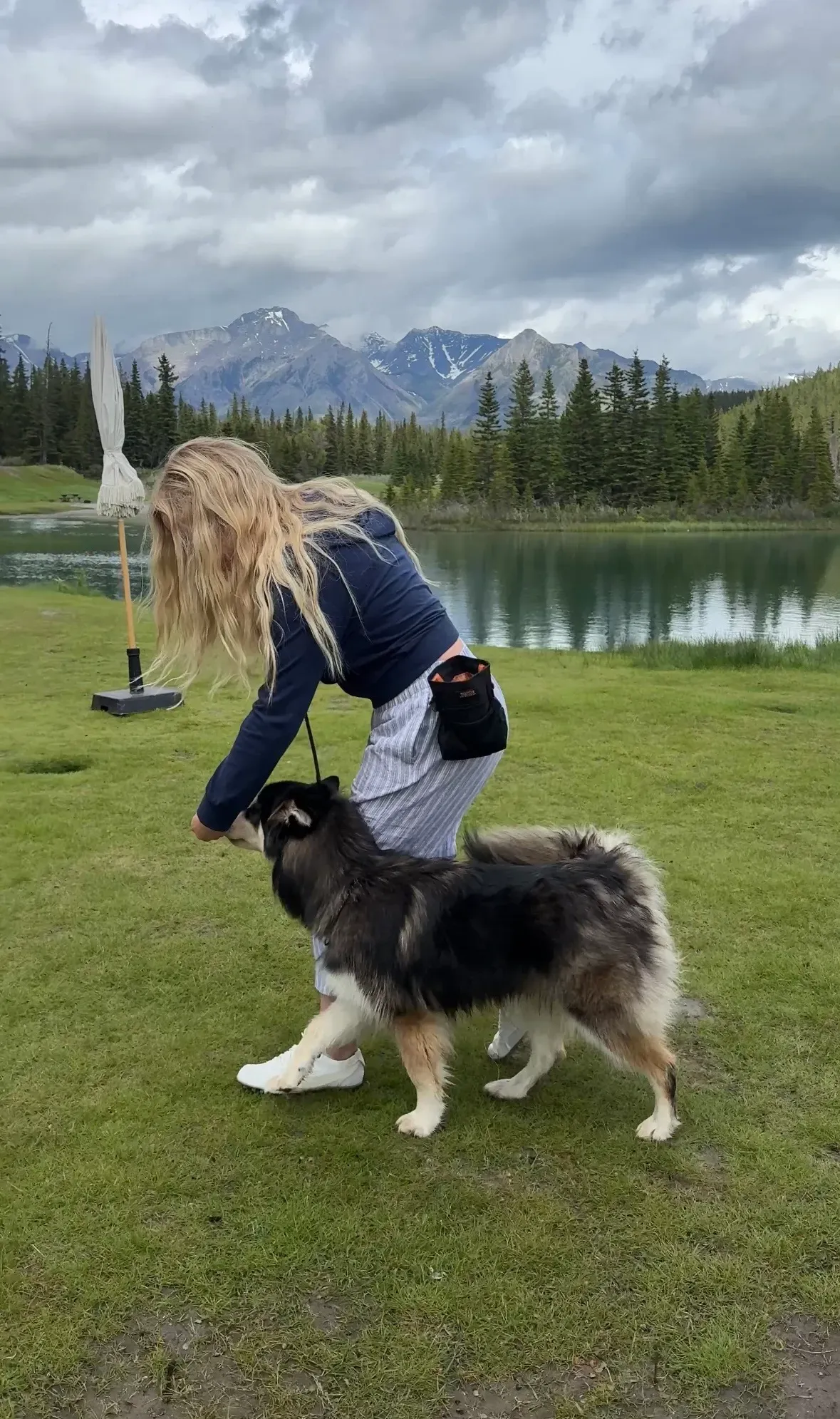
Watch for the crouch, the fixed stare at feet, the low creeping approach. That is the moment to act, not after the teeth land. With the dog on leash, say a marker word, step away, and reward the dog for turning toward you. Then cue something incompatible with chasing: a place command, a sit, or carrying a tug toy while you walk a few slow steps.
Herding and terrier types often need a sanctioned way to chase. Flirt-pole sessions with clear start and stop cues, tug with rules, and scent games give the drive somewhere legal to go. If nipping breaks skin, targets children, comes with stiff body language, or keeps escalating despite management, stop and book a professional assessment. Our Private Training sessions, $150 + GST per hour, include a written plan built around your home's routines.
Asked and answered
The questions people ask us.
Why does my dog nip at my heels when I walk?
Movement is often the trigger. Many herding breeds are inclined to control moving things, and many young dogs treat trailing feet as a toy. The approach is the same either way: prevent rehearsal, interrupt the stalk, and offer a better outlet.
Should I stand still when my puppy bites my ankles?
No. Standing still while being grabbed hurts and still lets the dog practise. Calmly step behind a gate or lead the dog away on its leash, then redirect to a toy once it settles.
Is heel nipping in herding dogs aggression?
Often it is drive rather than aggression, but that cannot be judged from a description. Stiffness, hard bites, or nipping aimed at children are reasons for a professional assessment, and a sudden change in behaviour is worth a vet visit.
Can my kids help train the dog not to nip?
No. Children should never take part in training or testing for this behaviour. Keep them on the other side of a barrier while an adult handles the dog, and let them enjoy the dog during calm, supervised time.
Keep reading
Put the herding to work
Book a consultation and we will look at your dog's nipping, your household's busy moments, and the plan that fits.
From real owners
Rated 5.0 on Google.
Real Northline dogs