
Problem behaviours
How to stop a dog licking people
Plenty of owners do not mind a lick or two. The trouble is the dog who greets every guest with a tongue bath, licks the toddler's face on repeat, or works over a forearm late at night. There is no single trick for that. We set up greetings so licking has less chance to start, read what the licking might be doing, and reward the contact we do want. Here is our approach.
Last reviewed September 29, 2026
Greetings first
Arrange the greeting before reading the lick.
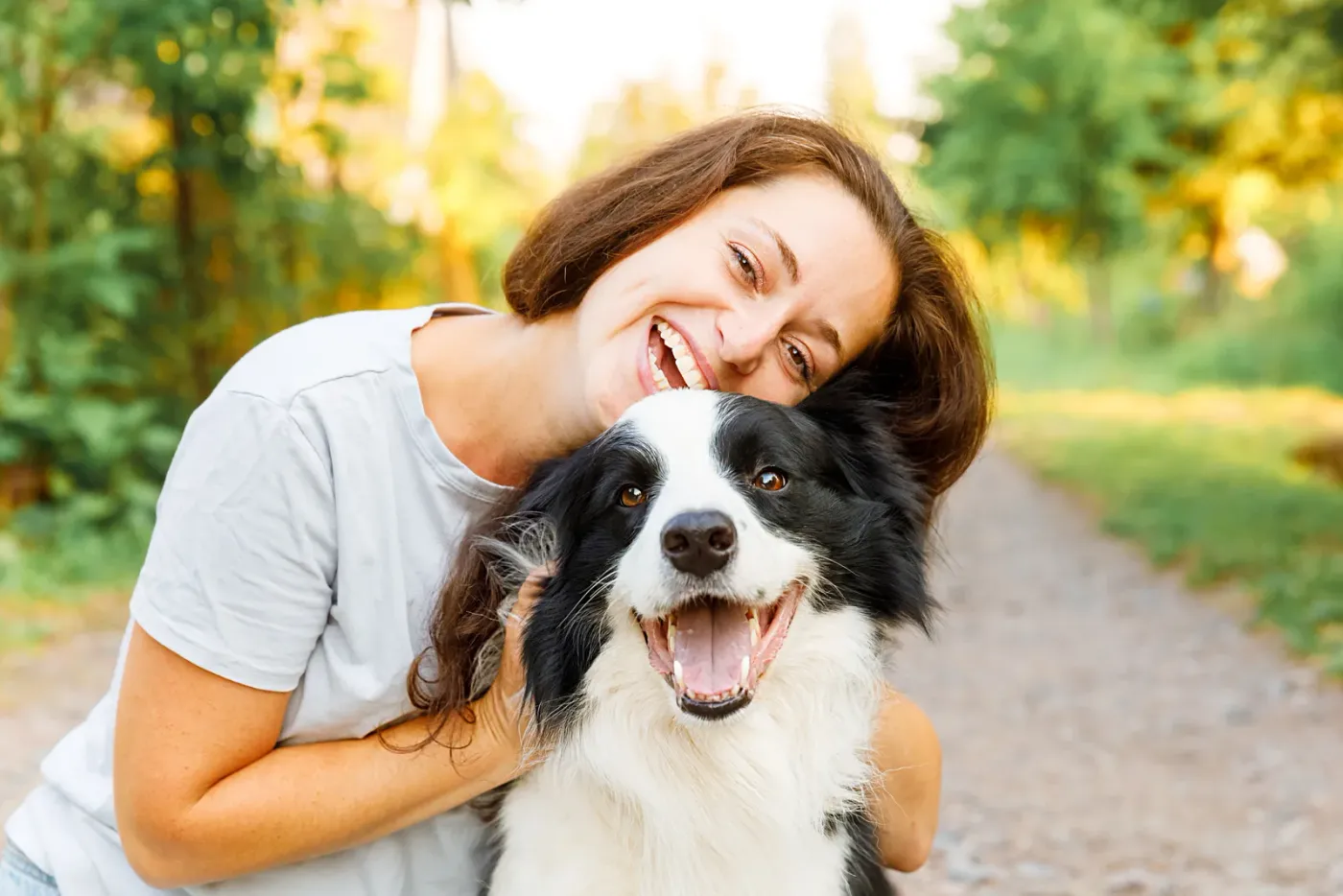
We start with the door, since that is where a lot of licking tends to happen. A leash or a place bed before the door opens gives the dog somewhere to be, and visitors greet only once the dog has settled, sitting rather than crouching over it with hands near its face. Less pressure and fewer face-level hands leave fewer moments where a lick is the easiest answer.
Then we read the context, treating licking as a clue rather than a verdict. A loose, wiggly dog who licks and moves on may just be saying hello. A dog with a low posture or ears back may be trying to smooth things over and needs less pressure, not a correction. Where licking looks like a bid for attention, we withdraw the attention and return it for comfortable contact without licking. A panting mouth is fine; we do not ask for a closed one.
- Leash or place bed at the door
- Visitors sit, hands away from faces
- Less pressure for the unsure dog
- Reward contact without licking
Kids and vets
Children, guests and the licker who cannot stop.
With children the work belongs to the adults. We never ask a toddler to manage a dog, so a gate or a pen keeps the dog and floor-level play apart, and an adult stays actively watching whenever the two share a room. A shrieking, wriggling child can be an exciting target, which is why the adult steps in, not the child. With guests we set expectations before the door opens: leash or place bed, and hellos once the dog has settled.
Licking that is constant, that moves onto floors, walls or the dog's paws, or that started suddenly in an adult dog is a question for the vet before it is a training question. Where licking sits alongside pacing, clinginess and trouble settling, we suggest a professional assessment. Behaviour Rehab is built for anxiety, reactivity and aggression, with the plan and price set after a full assessment; a Private Training session runs one hour at $150 + GST and comes with a written weekly plan.
Asked and answered
The questions people ask us.
How do you stop a dog licking people?
We begin with the setup: a leash or place bed at the door, visitors who wait until the dog has settled, and less looming over the dog. Then we read the context, withdraw attention if the licking looks like a bid for it, and reward comfortable contact without licking. Sudden or constant licking is a vet question first.
My dog licks everyone who walks in. Why?
A dog who licks every visitor may be greeting, trying to smooth over an unsure moment, or asking for attention, and the context tells us more than the lick itself. We manage the door with a leash or a place bed and let guests say hello once the dog is calm, with hands away from its face.
Why does my dog lick me so much?
Many dogs lick their own person more than anyone else, partly because it tends to get a response: a word, a scratch, a shift on the couch. Frequent licking can also be a way some dogs settle themselves, so we look at the whole picture rather than reading the speed of the lick. If it is new or relentless, we recommend asking a vet.
Is constant licking something to see a vet about?
Yes, we would ask a vet if it is new, relentless, or has spread to floors, walls or the dog's own body. We do not rule out a physical cause without one. If the vet finds nothing, a professional assessment is the sensible next step.
Keep reading
When the licking will not stop
Book a consultation and we will look at what the licking does for your dog and recommend a program, smaller if that is enough.
From real owners
Rated 5.0 on Google.
Real Northline dogs