
Problem behaviours
How to stop a dog getting overexcited on walks
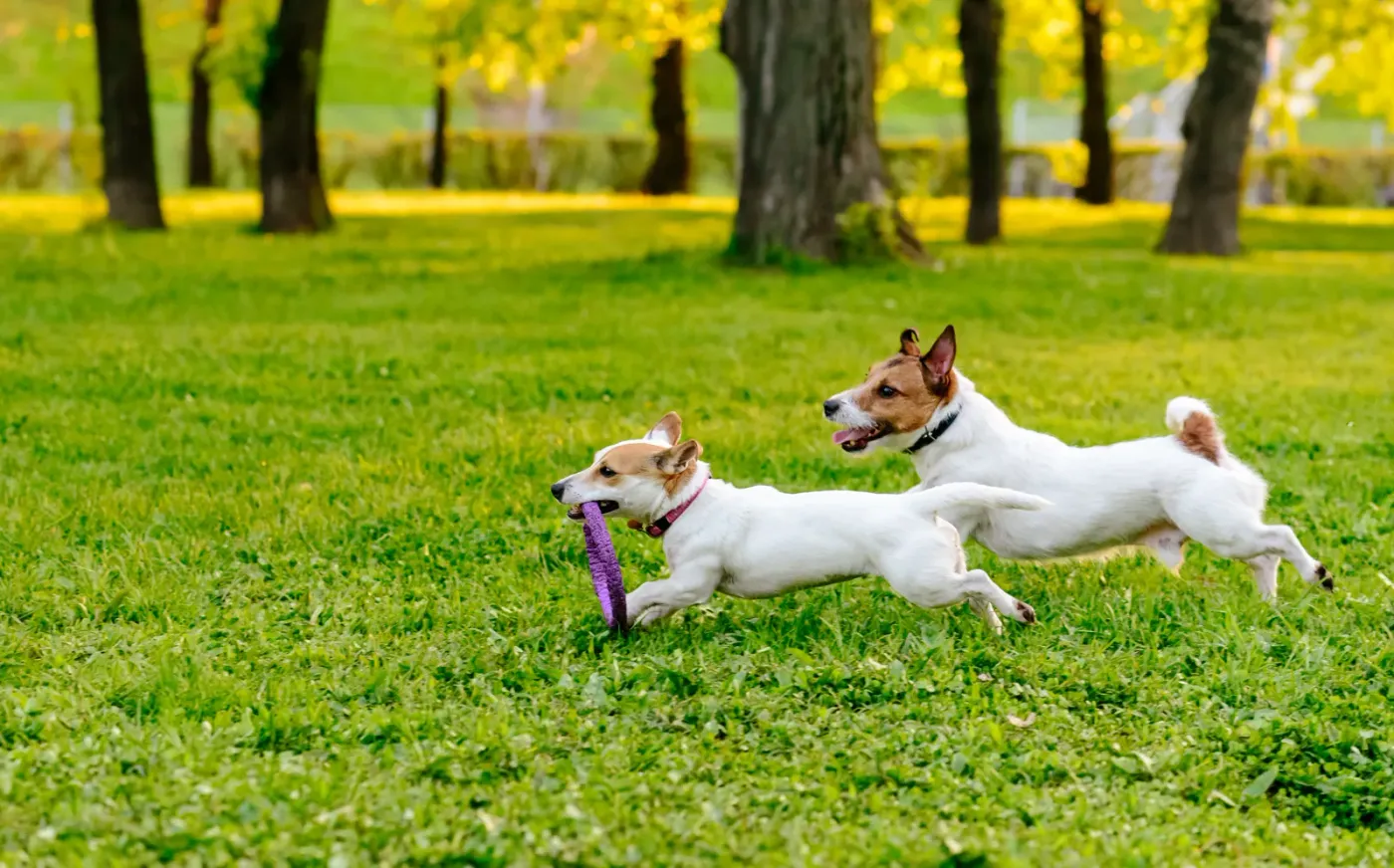
For many dogs the walk is lost before it begins. The jingle of keys, the jacket, the leash coming off the hook: by the time the door opens, the dog is already at full volume and pulling toward the street. Overexcitement on walks is often an arousal problem that starts inside, so that is where the training starts too.
Last reviewed October 4, 2026
Before the door
Lower the volume indoors first.
Safety first: the leash goes on before any door opens, held by an adult, and the door is never closed on a dog that rushes it. Use a gate in the hallway if the dog bolts. Then defuse the cues. Pick up the leash and sit back down. Put on your boots and make a coffee. When the ritual stops predicting an instant departure, many dogs stop winding up at it.
Clip the leash on only when the dog has four paws on the floor; if it leaps, simply pause until it settles. At the door, with the leash held, ask for a sit and reach for the handle. If the dog surges, take your hand off the handle and step back together; open only when it holds position. The calm dog gets the door. The frantic dog gets a pause, never a scolding.
- Leash on before doors open
- Defuse the leash and keys
- Four paws before clipping
- Door opens for calm only
The first minute
Start slow and earn the dog's attention.
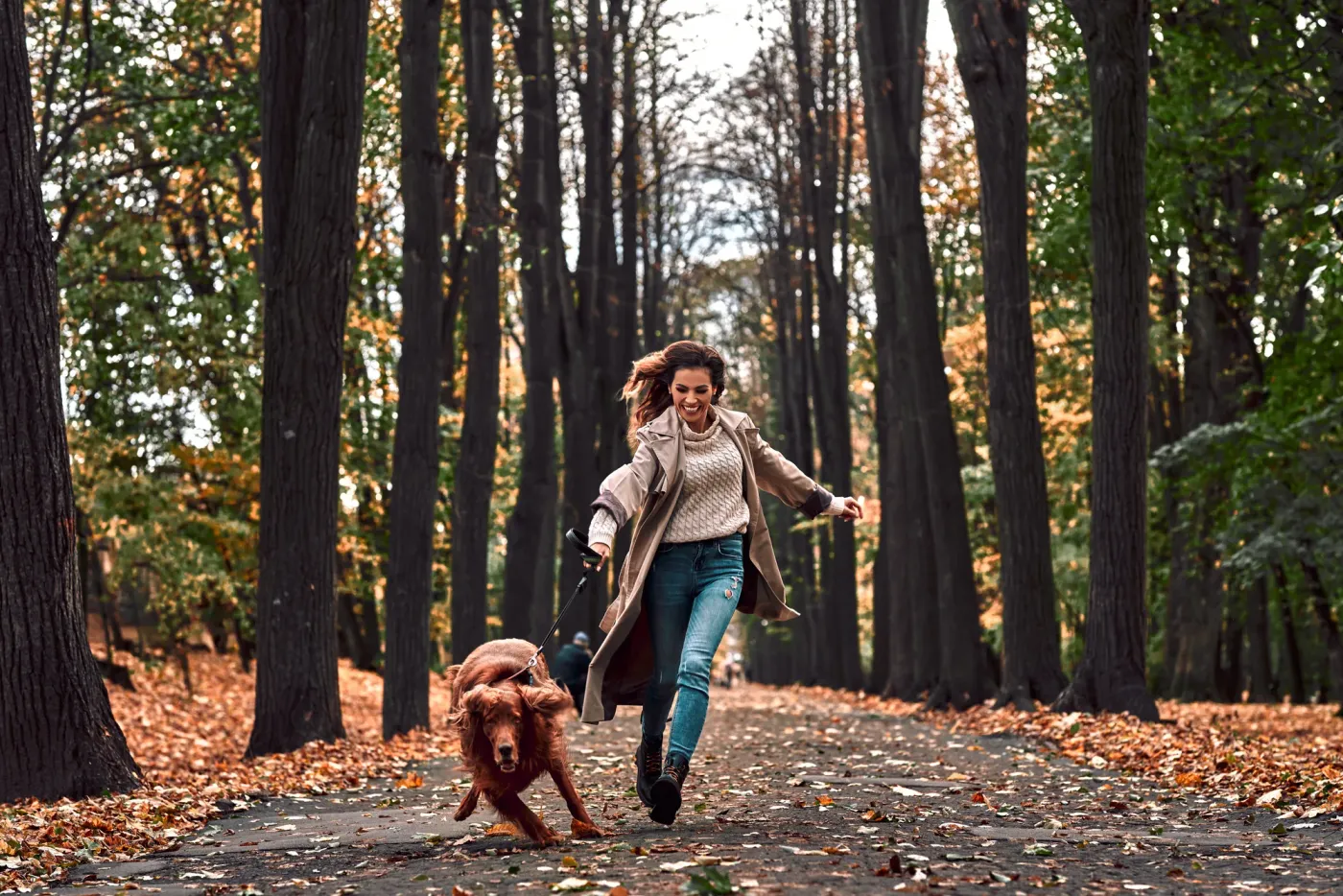
The first minute outside sets the tone. Rather than marching off, stand on the step or driveway and let the dog take in the street, then reward any glance back at you. Walk a few slow steps, change direction, and mark the dog for following. Short, quiet routes with fewer triggers suit this stage better than a busy path; you are rehearsing calm, not covering distance.
Some excitement is normal, and a dog short on exercise may struggle with any of this, so a sniff game or play in the yard beforehand can help. If excitement tips into grabbing the leash, lunging at people or dogs, or you cannot hold the dog safely, get professional help. Our On-Leash Foundations program, a two-week board and train, works on loose-leash walking, heel and everyday distractions.
Asked and answered
The questions people ask us.
Why does my dog go crazy when I get the leash out?
The leash has become a reliable predictor of something exciting, so the dog winds up at the first cue. Picking it up often without leaving helps take the charge out of it.
Should I tire my dog out before a walk?
A short sniff game or play session can take the edge off for some dogs. Exhausting a dog first is not a substitute for teaching a calm start, though, and very fit dogs may simply get fitter.
How do I calm my dog down at the start of a walk?
Pause outside the door, reward glances back at you, and walk slowly with direction changes before heading anywhere busy. Keep the opening stretch short and quiet.
Is my dog overexcited or reactive on walks?
Excitement tends to look loose and bouncy; reactivity often looks stiff and fixed on a trigger, with lunging or barking. If you are unsure, or it involves people or dogs, a professional assessment is the sensible next step.
Keep reading
Calmer from the first step
Book a consultation and we will look at your dog's pre-walk routine, the first minute outside, and which program fits.
From real owners
Rated 5.0 on Google.
Real Northline dogs